
As the COVID-19 death toll in the United States approaches 180,000 people, the pandemic is under control in Hillsdale County, according to Hillsdale Hospital CEO J.J. Hodshire.
Since March, Hillsdale County has seen 294 cases and 26 deaths, including six new cases in the last week, according to Rebecca Burns, health officer for the Branch-Hillsdale-St. Joseph Community Health Agency. Michigan has reported more than 100,000 cases and more than 6,600 deaths.
The majority of Hillsdale cases have been tracked to their origins and there is no community outbreak, said Hodshire.
Initially, many Hillsdale cases stemmed from the Hillsdale County Medical Care Facility, an elder care home that saw several deaths early in the pandemic. Burns added the facility is testing their staff on a “routine basis.”
The current spread—the county has added six new cases since Aug. 21—is mainly community-acquired. People in the community who are “choosing to do whatever they do, are getting exposed,” Burns said.
On campus, an interdepartmental team was assembled in mid-May to determine a back-to-school plan.
“We wanted to bring students back. We’re called to be here. We’re called to be in community together,” said Brock Lutz, director of Health Services and a member of the team.
Many colleges and universities have closed or mostly closed their campuses this fall, including University of Michigan-Flint, Michigan Technological University, and Jackson College.
The team spoke with epidemiologists, organizations, and leadership at the Hillsdale Hospital. They determined the best solution was masking students for two weeks so “it’s more easily determined who is symptomatic and we’ll isolate those people,” Lutz said.
After two weeks, and if everything goes according to plan, Lutz said he hopes restrictions can be eased.
“We want to take a tough approach because we want to do this. We want to stay here,” Lutz said. “If we have to inconvenience ourselves to do it, so be it.”
On Aug. 1, the college announced that a staff member had tested positive for the virus. The team immediately interviewed the individual. People who had been in sustained contact with the individual were quarantined. No other staff members have tested positive for the coronavirus.
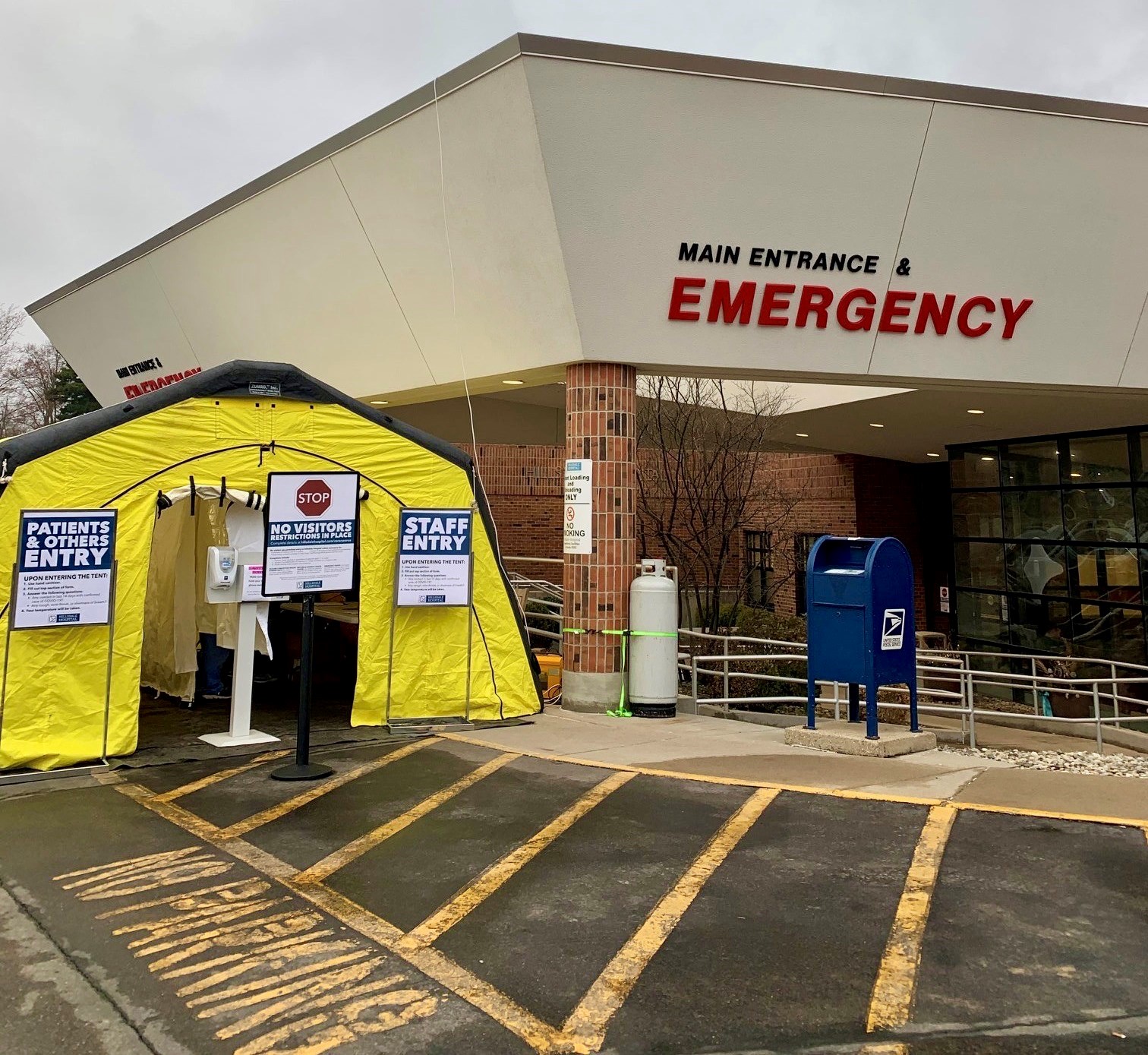
At Hillsdale Hospital, there have been no transmissions of the virus from patients to staff or vice versa, said Hodshire. He credited mandatory masking and the hospital’s screening station that vets visitors and employees for symptoms before entering the 40-bed hospital.
“During this whole period, we’re very proud of our staff who have taken the necessary precautions and taken this extremely seriously,” Hodshire said. “Through this effort we’re able to ensure our patients are safe all the time.”
Hodshire made waves in late April when he signed an open letter to Michigan Gov. Gretchen Whitmer, asking her to reverse her executive order that banned elective surgeries in the state. Whitmer claimed the ban on non-essential operations was to mitigate the spread of the virus.
Hodshire noted that decisions like that cannot be made widespread because some counties had less than 10 cases and no outbreak. Without the ability to conduct procedures and surgeries, local hospitals suffer financially and face closure. The letter notably said, “When rural hospitals close, people die.”
Hillsdale Hospital makes 60% of its revenue from the operating room and before changes were made to the order, it was projected to cost the hospital $10 million in a three month period and have a “significant impact on our ability to stay viable in the future,” Hodshire warned.
The executive order expired and hospitals are conducting “non-essential” operations again, but many rural hospitals are still struggling financially. A 2019 study discovered that death rates in surrounding communities skyrocket by nearly 6% after a rural hospital closes— this was before the 2020 pandemic.
“You cannot broad-brush this closure to every hospital in Michigan, it’s not fair,” Hodshire said of the now-expired executive order. “If I was sitting in the shoes of a president of a Detroit hospital, I’d be nervous, but I’m in rural Michigan.”
One impact Hodshire has seen over the past few months is people not going to the hospital over COVID-19 fears, despite needing to for other health reasons.
“People are afraid. We’re seeing sicker patients than we ever have before,” he said. “The hospital right now is the safest place you can be because we’re taking significant extra precautions.”
Businesses across the state have struggled over the past few months. The Hillsdale Daily News reported in April that most businesses had scaled back operations and staffing and many had closed their doors.
Hillsdale Economic Development Coordinator Kelly LoPresto said most Hillsdale businesses were making about 20 percent of their normal sales during the height of the pandemic.
A May survey by the Small Business Association of Michigan found 14 percent of the organization’s members were not confident they would survive through the pandemic and 60 percent had already laid off at least one employee.
“Businesses in our community have worked very hard to think outside of the box during this time,” LoPresto said. “Some changed their hours, some started delivering … they were willing to do what they could to provide to their customers.”
In just two Michigan counties, Ottawa and Allegan, 852 small businesses reported being negatively affected by the events and lockdowns surrounding the virus. Some Hillsdale businesses still haven’t been able to reopen and the current limits on seating capacity are still hurting bottom lines.
These businesses are eager for the school year to begin, which brings thousands of customers to the area.
“These local businesses are happy to see students back in town,” LoPresto said. Many local shops saw relief over the summer when a great influx of customers came during the college’s graduation weekend in July.
In fact, the July 18 Hillsdale commencement ceremony not only aided the local economy, but has also not contributed to the spread of the virus, or even created a single case.
Both Burns and Hodshire agreed there have been no cases linked to the event—despite Whitmer saying she was “gravely concerned” about the in-person event and Michigan Attorney General Dana Nessel calling it a violation of the law because more than 100 people attended.
The event featured socially distanced seating, temperature screenings, and masks.
“[The college] immediately engaged us, took every recommended precaution we gave them, and there has been no spread of COVID from that event,” Hodshire said.
Staff members of the college and the hospital have worked diligently together to plan and prepare for the school year to go as successfully as graduation. This includes measures such as teachers, students, and staff wearing a mask for the first two weeks.
“We’re not doing this out of some obligation or fear,” Lutz said. “We’re doing this out of love.”
