
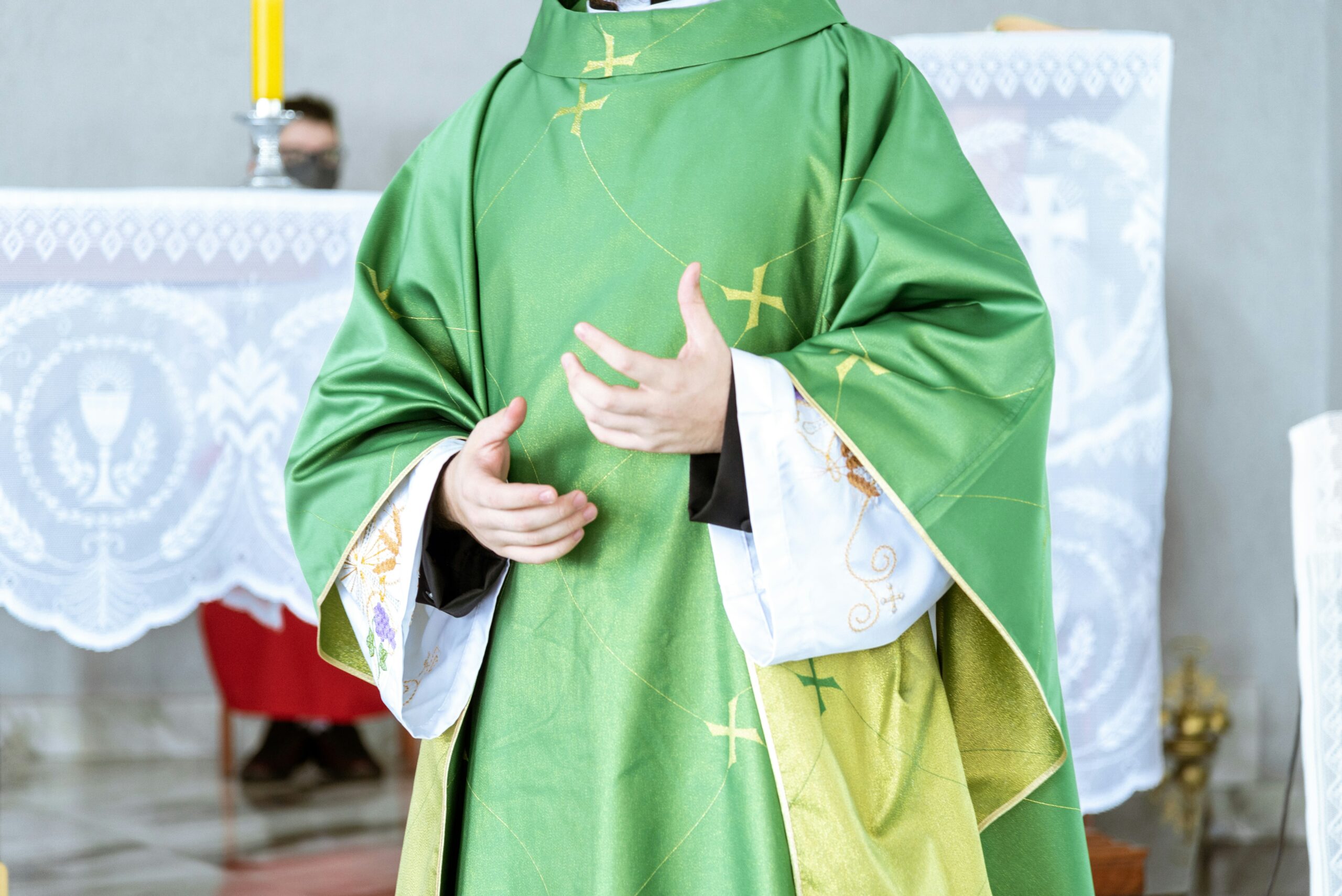
Courtesy | Unsplash
Hillsdale College strayed from its stated mission by inviting Helen McGowan Orr to speak on campus April 14.
According to posters around campus advertising her Drummond Lecture on “Theosis,” Orr is a Cambridge-educated, Anglican “poet, priest, and singer.” She was entrusted with two benefices by the Bishop of Ely around 2021 and has since served as the vicar of Bassingbourn and Whaddon in England.
To be entirely clear, this op-ed does not question freedom of speech or advocate for gatekeeping women from public intellectual activity. This piece merely points out that Hillsdale’s decision to invite and advertise for Orr takes a stance on the Christian faith which is at variance with the Bible, the unanimous witness of the church through the ages, and thereby Hillsdale’s own mission statement.
Now, the freedom of a speaker to say what he or she wants in front of a crowd of college students is critical to a free and reasoned academic exchange of ideas. After Hillsdale made the decision to invite Orr, it became our job as students to hear her out politely.
But Hillsdale should not have invited Orr in the first place. Indeed, the college’s mission statement seems to veto officially inviting — and thereby platforming — a woman who calls herself a priest as a speaker at all.
In our own words, “as a nonsectarian Christian institution, Hillsdale College maintains ‘by precept and example’ the immemorial teachings and practices of the Christian faith.” The Drummond Lecture series, which “presents faculty, staff, and students with lectures on faith, learning, and related issues of the day,” is a much larger affair than a student club’s or ministry’s invitation. Like it or not, Hillsdale’s advertisement for and choice of Orr constitutes a public, institutional endorsement of Orr’s claim to priesthood.
To invite a woman who claims the office of priest, and then to advertise for her as though she were a valid priest, is for Hillsdale to implicitly affirm — by example, if not explicitly by precept — the idea that women can really be priests and can hold priestly authority in the church.
But this is in direct contravention of the “immemorial teachings and practices of the Christian faith.” That is, it is a contravention if one assumes that “immemorial” means longer than a generous two centuries. To be fair to proponents of women’s ordination, examples of the institution date back to the misty days of the early Church in 1814 or 1970.
The question of whether women are in some sense priests or ministers is not at stake here. All the baptized are, of course, a “royal priesthood” according to 1 Peter 2, but that is not at issue, except equivocally. Calling Orr a priest does much more than merely affirm her status as a servant of God — it asserts that she may lead the church.
Women have served God and his Church brilliantly throughout history: Just look at Deborah, Monica, Perpetua, Thérèse, or the Virgin Mary herself. Women have not, however, historically served God as ordained priests, nor have they been permitted to be the shepherds of God’s flock. Neither the Scriptures nor church tradition permits women to hold priestly authority in the church, whether they would go by “priest,” “minister,” or some other title.
The Apostle Paul rules out the possibility of women holding the offices of overseer and deacon in 1 Timothy 2-3 (“I do not permit a woman to teach”) and Titus 1 (which includes the qualification of being “the husband of one wife”). That teaching is historically confirmed by Christian confessions and practice: See, among many, the Lutheran Augsburg Confession and its Roman Catholic Confutation in 1530, or the 16th-century Reformed Belgic Confession in its various permutations. The Catechism of the Catholic Church affirms that “only a man validly receives sacred ordination,” and Pope Francis, the predecessor to the current Bishop of Rome, firmly reiterated Rome’s opposition to ordaining women. Regardless of whether some Christian denominations — including Orr’s own — permit the ordination of women, Hillsdale should not implicitly affirm it.
By precept, Hillsdale has announced to its students that women can be priests with dual benefices. By example, the college has affirmed a woman’s claim to the authority of teaching the Church. There are plenty of valid priests who could have delivered a lecture on theosis — pick any Eastern Orthodox pater you like — and there are likewise other, less official capacities in which Orr could have spoken at Hillsdale that would not have affirmed her unscriptural, untraditional, and ontologically incorrect claim to the holy ministry.
Hillsdale aspires to be a guardian of tradition and to maintain the immemorial teachings and practices of the Christian faith. Platforming women pretending to be priests directly undercuts that mission.
Zachary Chen is a junior studying Greek and Latin.
