
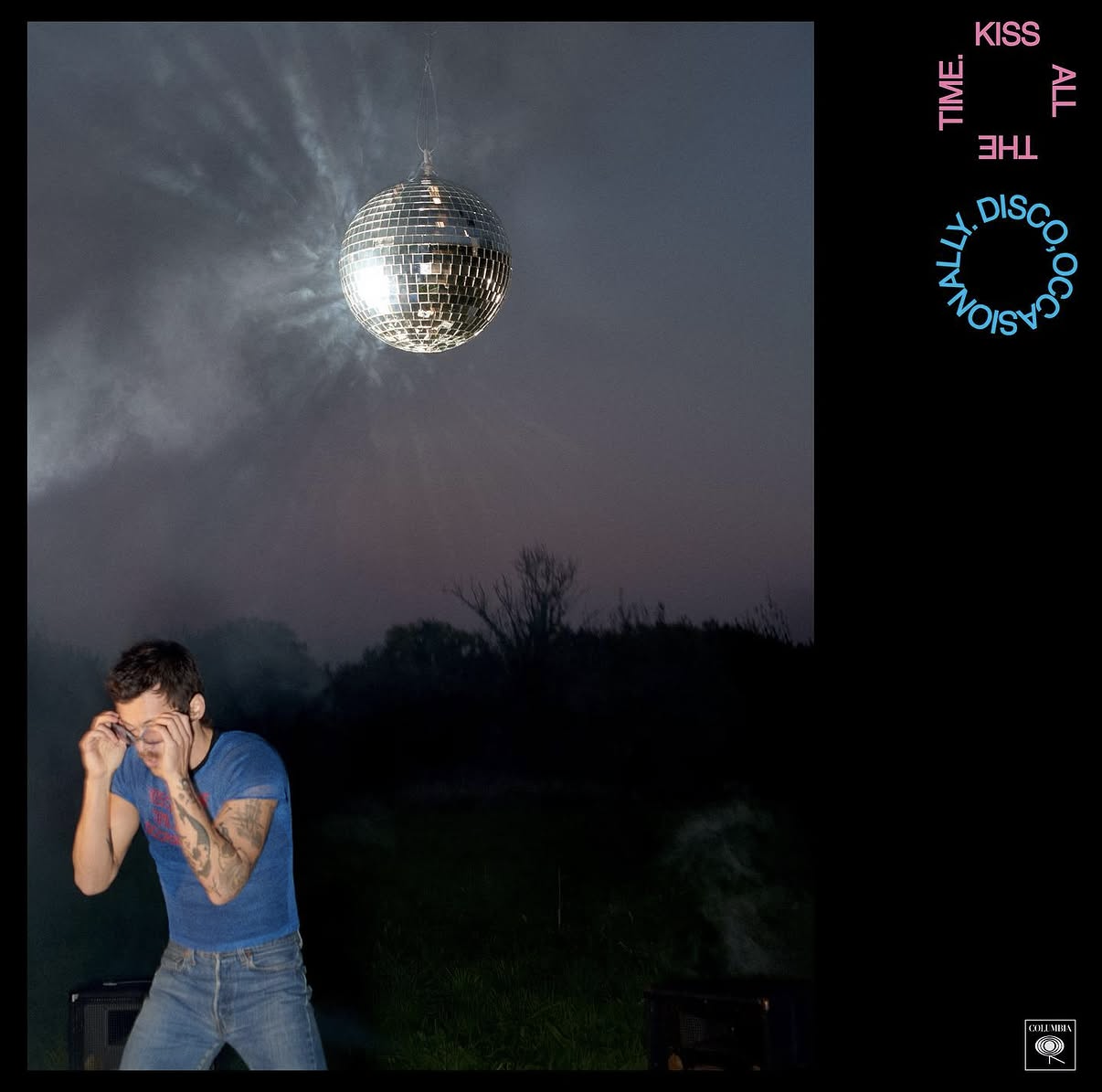
Harry Styles’ new album “Kiss All the Time. Disco, Occasionally.” fuses electronic, dance-pop, and intimate ballad-driven aesthetics to explore his journey of self-reflection, romantic grief, and diving into the unknown.
If you are looking for music that can be both a cathartic soundtrack to a night out with friends and an exploration of heartbreak and identity, this album is for you.
Released on March 6, Styles’ fourth studio record arrives just shy of four years after his Grammy Award-winning “Harry’s House.” Following a two year break after the conclusion of his Love on Tour run, Styles has come back in full force.
With the opening track and lead single, “Aperture,” Styles sets the mood of the record with his signature blend of melancholic lyrics and an upbeat production. Embracing vulnerability and the unknown, he uses a camera lens as a metaphor for openness. The lyrics, “It’s best you know what you don’t / Aperture lets the light in / We belong together,” mark a shift toward earnest vulnerability and hope that was missing in his earlier works.
In a recent appearance on Apple Music with “The Zane Lowe Show,” Styles recalled his experience at a Radiohead concert, which he said helped inspire the immersive tone of the album.
“The record for me is about, ‘How do I still have my experience while I’m playing it?’” Styles said. “It was like, ‘what kind of music do I have to make for me to be on stage feeling like I’m in the middle of the dance floor?’”
The production creates the sense of motion that Styles intended, shifting between what you would hear at Berghain — the Berlin nightclub he frequented while creating the album — and what you would hear while sipping coffee in the streets of Rome.
Recorded with his long-time music producers Kid Harpoon and Tyler Johnson, the album finds Styles balancing familiarity with experimentation. Rhythms, layered textures, and loud beats dominate songs like “Pop” and “Dance No More,” almost begging to be played at maximum volume, whether at a party or through one’s headphones.
Though Styles’ vocals remain natural, they are enveloped in heavy production, which enhances the album’s sonic consistency. True to the theme of connection, his breathy delivery constructs an atmosphere that evokes crowds, memories, and the overwhelming nostalgia of past relationships.
Other vocalists such as Ellie Rowsell, the lead singer of Wolf Alice, and the London Community Gospel Choir are credited on multiple songs like “Taste Back” and “Season 2 Weight Loss,” which add layered harmonies to contrast with Styles’ subdued vocals.
Similar to many club classics, the lyricism of “Kiss All the Time. Disco, Occasionally.” at first appears to lack substance and is a bit nonsensical. The lyrics may be scattered, but each song builds on the others to construct a fragmented narrative of self-reflection spanning multiple years.
In an interview with The Sunday Times, Styles described the album as “an audio representation of a long diary entry.” Some entries are short and precise, while others unravel into chaos, mirroring the ebbs and flows of this album.
And it would not be a Harry Styles record without at least one emotional ballad featuring rich instrumentation.
“Coming Up Roses” is the only self-written track on the album, with the tragic orchestra piece disguising itself as a love song. Styles sings, “Now I see your tears on account of my wants, and now it appears / That I’m feeling guilty and worried, dear / That you think that I might not want you here.”
The track serves as one of the album’s more intimate, clear “diary entries,” offering a moment of clarity and emotion amidst the more chaotic disco medleys surrounding it.
With “Kiss All the Time. Disco, Occasionally.,” Harry Styles continues to push the boundaries of contemporary pop while firmly maintaining his unique, artistic identity.
