
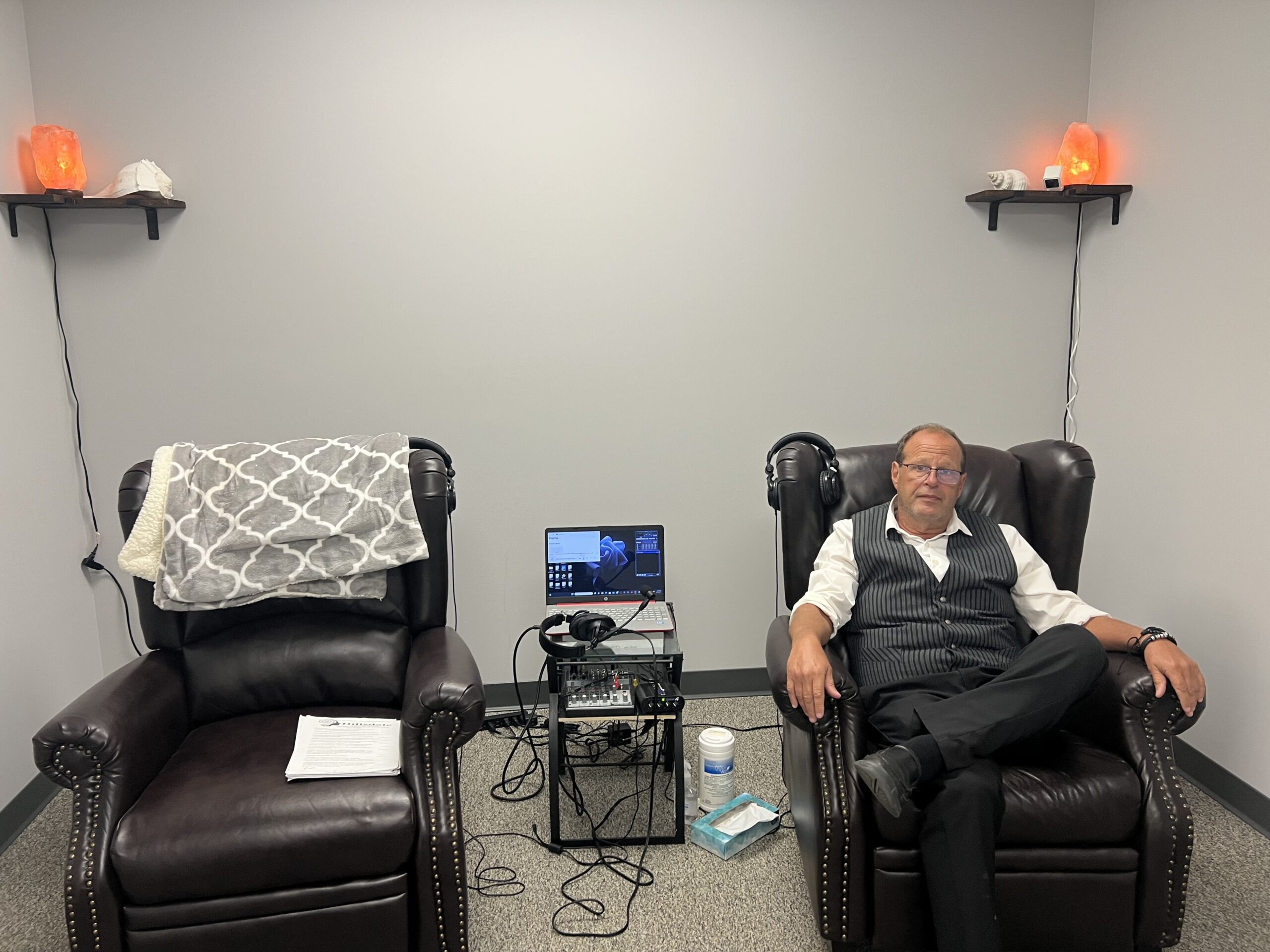
Paul Taylor sits in a chair where he often hypnotizes people.
Eleanor DeGoffau | Instagram
Julie Karr knew how to lose weight. She knew she needed to eat less and eat healthier, but no matter how much she knew, she couldn’t quiet that urge inside her to eat quickly and reach for that bag of chips. The problem wasn’t in her lack of knowledge — it was in her mind.
So when the 55-year-old Hillsdale resident saw a business card for a local hypnotist, who was also a coworker of hers at the hospital, she called the number. Karr never expected hypnotherapy to work for her — she was just willing to try anything. But after one month of treatment, Karr was shocked to find she lost 24 pounds.
“I just did not expect to lose that much weight,” Karr said. “I was pleasantly surprised that I did lose the weight, and it’s still coming off.”
Karr attributes her success to Paul Taylor, Hillsdale’s local hypnotist at the Hillsdale Hypnosis Center. Through hypnotherapy, Taylor said, he has helped other people like Karr quit smoking, lose weight, reduce anxiety, sleep better, and make other life improvements.
“I’m working with anxiety, phobias, smoking, weight, and some athletes,” Taylor said. “Everyone has his own limiting beliefs. If somebody thinks, ‘I just can’t do that,’ they’re not going to be able to do that. I help them do that thing.”
As a hypnotist certified by the International Certification Board Of Clinical Hypnotherapy and practicing in Hillsdale for more than three years, Taylor said he’s helped many people find lasting change in their lives through hypnosis.
“These people get in their head, and they don’t know what to do to get out of it,” Taylor said. “So I give them a simple tool to get away from that and get them out of there. And it works.”
Taylor is used to people silently judging his career choice. For many people, the idea of hypnotism conjures up images of mind-control, mesmerizing clocks, and creepy doctors. But Taylor said a hypnosis-like state is more normal than people realize.
According to Taylor, people enter into a shallow hypnosis state anytime they are simultaneously relaxed and focused. This happens when people zone out while watching TV, or even while driving on the highway. Many people have experienced the sensation of traveling on a familiar route, arriving at their destination, and then completely forgetting the drive there — that is a hypnotic state.
“I always like to tell people that we’re hypnotized 60 to 80% of our waking hours anyway,” Taylor said. “Whether it’s in a daydream, stuck in a good book, or watching a movie, it’s a light trance. I hate the term ‘hypnosis’ because of Hollywood, so I like to use the phrase ‘trance state’ instead.”
Taylor induces this trance state with specific phrases, objects, music, and other tools. Once a person is in a trance, the conscious part of his mind, or the “critical faculty,” according to Taylor, turns off, making the person highly open to suggestion. This allows Taylor to influence the subconscious part of the mind, which often drives harmful habits like smoking or fearful thinking.
“After you speak to the subconscious for a while, the message gets put back in the subconscious part of the mind, and you change your behavior,” Taylor said.
In this way, hypnosis is like a powerful placebo effect — it persuades the mind of a new reality. Taylor once convinced a man through hypnosis he was eating hot dogs in a hot dog competition, despite no hot dogs being present. It worked so well the man nearly got sick.
“He was a diabetic, and his mind was so convinced that he was eating hot dogs, his blood sugar shot up 180 points,” Taylor said. “He actually was getting sick, and his actual blood sugar went up. The mind is a powerful thing.”
Although hypnosis can even stop bodily pain, Taylor said hypnotism is not mind control. The subconscious can only be influenced to do something it already wants to do to a certain extent, Taylor said.
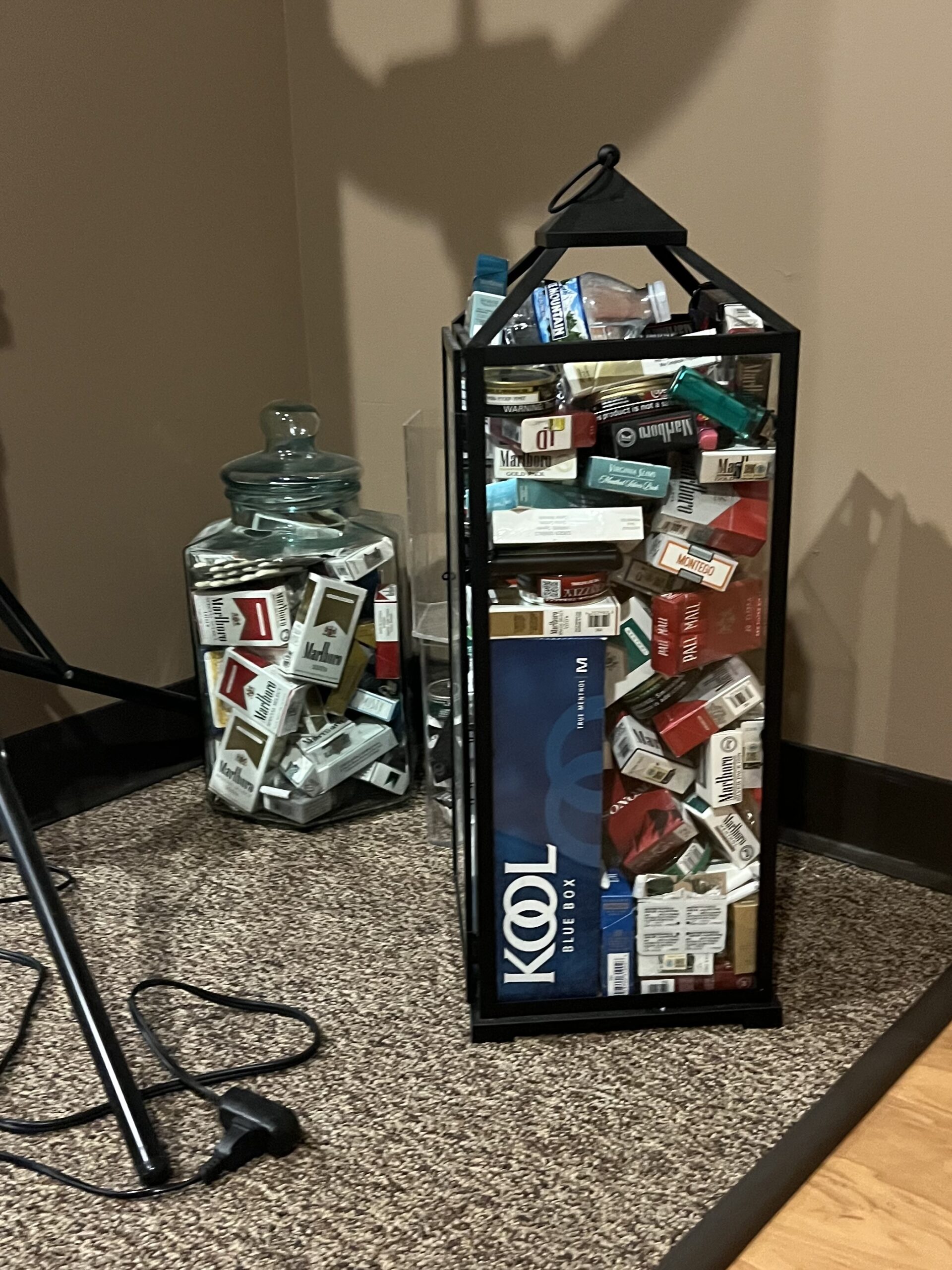
Eleanor DeGoffau | The Collegian
“I can’t make you do something you don’t want to do,” Taylor said. “I don’t have the kind of power to control someone’s mind. Otherwise, I wouldn’t be here. I’d be on my own island somewhere, going to the bank again, saying, ‘Hey, give me another million dollars.’ You have to really want to change.”
Additionally, some people are more easily hypnotized than others. Taylor said some patients see change within one hypnosis session, others require six, and some cannot be hypnotised at all — it all depends on the person.
In Karr’s case, Karr chose to save time and money by using Taylor’s custom-made audio recordings instead of going into his office. Every morning and evening, Karr would listen to audio of Taylor’s voice encouraging her to eat healthier.
“He starts off and he says, ‘Get into a comfortable place,’” Karr said. “And, ‘Sit down, relax your face, relax your jaw’, and you just start relaxing. There’s one part that he says, ‘You feel yourself melting into the chair.’ And I literally do feel like I’m melting.”
Karr said being hypnotised doesn’t feel like she is losing her consciousness.
“I’m still aware of what’s going on around me,” Karr said. “It’s not like the movies where they put you in a trance and you just don’t have any clue what’s going on. I know what’s going on around me.”
After listening to the recordings, Karr said she felt more motivated to make healthy choices.
“I do want to have less pain in my life, so I make better choices although I didn’t always do that.” Karr said. “I would go for a bag of chips or something like that. Now I’ll get an avocado. I don’t cheat nearly as often as I used to.”
Recent clinical research has found some support for the benefits of hypnosis. One meta-analysis of several studies on hypnosis and clinical pain found that the average hypnotized patient reduced more pain than 73% of all non-hypnotized people.
“Our findings strengthen the assertion that hypnosis is a very efficacious intervention for alleviating clinical pain,” the study said.
According to Jared Parker, assistant professor of psychology, research literature shows evidence that hypnosis improves conditions such as pain, anxiety, and sleep problems, but there is little evidence surrounding smoking and weight-loss conditions.
“Meta-reviews of clinical research have found no clear evidence that it helps with smoking cessation,” Parker said in an email. “With other issues such as weight loss and personal improvement, the research literature is very sparse.”
Parker said hypnosis is good at producing rapid, focused changes altering perception-related conditions — not for causing deep psychological reorganization.
“My understanding is that hypnosis can be good at changing specific, short-term states of mind, like helping people with a fear of needles right before a blood draw,” Parker said. “With deeper or more pervasive psychological problems, like severe depression or ingrained habits, I am doubtful that hypnosis could do much.”
Karr said she highly recommends the treatment, especially for relaxation.
“It’s worth every penny,” Karr said. “I’m very busy, but the relaxation alone was worth it. Losing weight is great too — that’s what my goal was. But the relaxation I get from it is just amazing.”
