
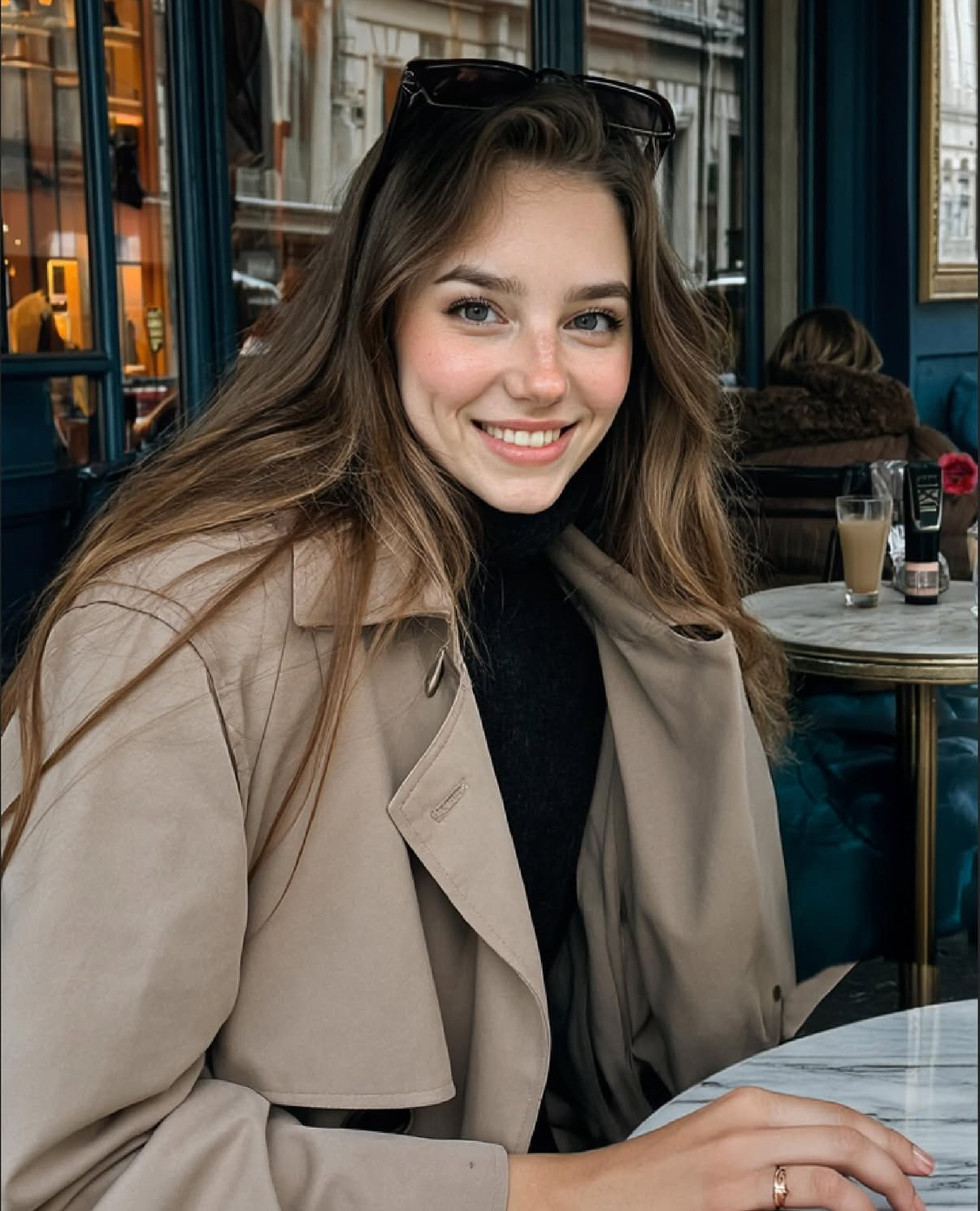
Tilly Norwood is not a real person.
Courtesy | Tilly Norwood Instagram
Tilly Norwood looks like any other Hollywood hopeful. She’s pretty, slim, brunette, and age can’t touch her. Seriously.
That’s because “she” is not human.
Norwood is the first AI-generated actress being marketed to talent studios for film. Based on the handful of clips available to the public, the avatar seems as boring as it is perfect.
But the backlash it has caused in Hollywood deserves some attention.
When newly launched AI talent studio Xicoia unveiled Norwood at the Zurich Film Festival in September, actress Emily Blunt called the innovation “terrifying,” concerned it would steal jobs from real actors. Actors union SAG-AFTRA also pushed back on Norwood’s creators, saying creativity is and should remain human-centered. Whoopi Goldberg even waded into the fray on her show “The View.” “Bring it on,” the personality told AI entertainment pioneers. “You can always tell them from us.”
Norwood’s creator, Eline Van der Velden, said in a statement that her creation is “not a replacement for a human being, but a creative work — a piece of art.”
The debate over digital likeness and AI protections were a key factor in last year’s actor strikes from unions WGA and SAG-AFTRA when actors boycotted contracts while asking for safeguards against replication of their voices and images without consent.
Because U.S. copyright law does not allow the copyright of most generative AI output, Norwood raises a whole new wave of questions in intellectual property law. Professor Jessica Litman of the University of Michigan Law School told The Collegian these questions will have to be answered, but the rise of AI in entertainment is inevitable if the market can support it.
“AI performance will become mainstream entertainment if audiences have enough of an appetite for it,” Litman said in an email. “The legal uncertainties are far from the largest impediment.”
To find our more about what this development means for filmmakers, I asked the Hillsdale’s Film and Production club to weigh in on the future of AI in entertainment:
I personally think that AI is inevitable. However, instead of resisting, we should shift it to its own place. Like how mass production impacted handcrafts, and fast-food chain restaurants impacted home-owned restaurants, they didn’t kill hand making craftsmanship but instead made it more important, since people are willing to pay extra for that human touch. I believe that in the future, even if AI progresses to a level where people can’t easily tell the difference, people will still prefer movies made by humans simply for that sense of sincerity and authenticity.
— Charlie Cheng, senior, Film and Production Club president
Is AI replacing the human artist? This idea, once only in dystopian sci-fi, has now arrived, and
we as humans are still desperately hesitant to grapple with the only question worth answering.
This question is “Does the creator of art really matter?” When I say creator, I am referring to the actor, writer, painter, producer, storyteller, and composer. The creator is the one who gifts the world with his or her art. The creation itself is, of course, paramount, but it is not ultimately prevalent to the problem of AI. I believe that this new invention will eventually possess the full ability to create any variety of art. One will be able to walk through endless galleries of AI paintings. Studios will produce full feature films made of entirely AI-generated images. And yes, actors will easily be replaced by artificial projections masquerading in human form. Bleak as that may sound, the art itself is not the problem, nor is it the solution. It is whether man still respects and demands the relationship between a creator and his creation. Do we still crave the beauty of an actress, unique and organic, putting her own heart, mind, and soul into a performance? If the answer remains no, or a feeling of passive indifference, then welcome Tilly Norwood.
— Joseph Johnson, senior, Film and Production Club vice president
AI in the creative industries can be used either as a creative substitute or simply a logistical aid, taking on monotonous and repetitive tasks that are non-creative. The issue is not that AI generations are not wholly original (no artwork ever can be), but that these Large Language Models are simply scraping existing work and churning out a statistical approximation of the average. This is not creativity. While these generations can and will improve, there is no genuine vision rooted in human emotion and experience.
However, AI is cheap and powerful — it is going to be used. But in what respect? One of the major demands of the strikes by Hollywood writers and actors in 2023 was to restrict the use of AI to replace their work in major Hollywood features. The pushback from artists, unions, and audiences won’t prevent the emergence of AI “filmmaking,” but it is more likely that AI tools will speed up VFX, animation, and virtual filmmaking. Where AI is more likely to outpace human creativity is in the worlds of commercial advertising and digital content creation.
In general, AI will decrease the cost and time, which will increase the amount of content on the market. While some responsible use of AI in non-creative roles may ease the burdens on independent creatives, it will likely also lower the value of entertainment in general, reduce the assistant jobs that most creatives use to break into Hollywood, and also reduce the commercial jobs that pay the bills of most independents. AI may also allow for more invasive and targeted advertising based on consumer data.
In the end, AI isn’t going to destroy the industry, but it will disrupt it in significant and perhaps damaging ways.
— Joshua Burnett, senior, Film and Production Club equipment manager and producer
