
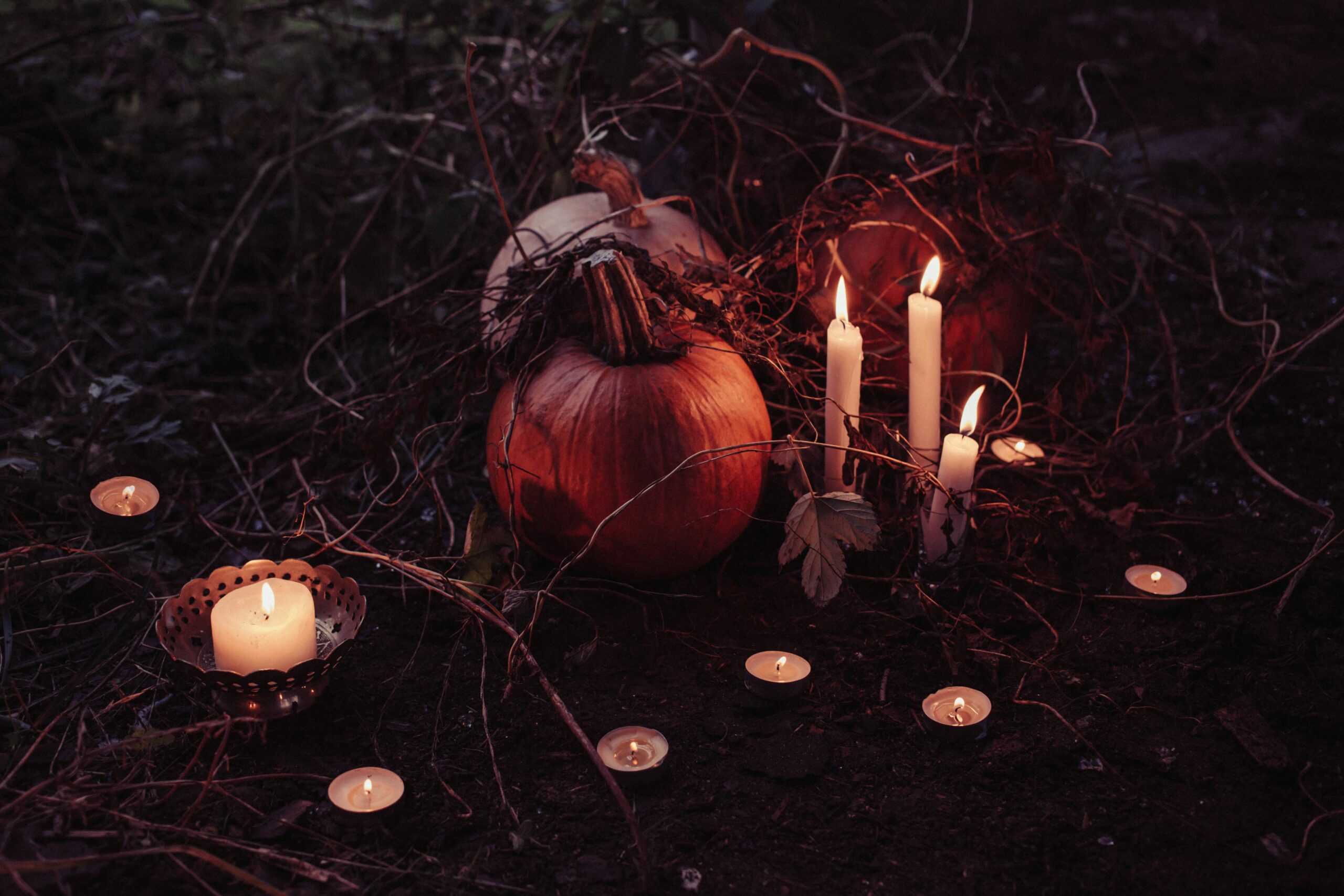
Courtesy | Unsplash
Baby dolls covered in red paint hung from the trees. I couldn’t look away, but I wish I had. Years after seeing this Halloween display in a neighborhood near my home, I can still feel that sickening twinge in my stomach.
I never should’ve looked.
Many Americans say Halloween is harmless, and that it exists for kids to dress up and trick-or-treat. While this is true, it is hard not to notice the disturbing costumes, morbid displays, and gory movie trailers that appear each October — or earlier. And we don’t know how to look away.
Humans are fascinated by what ought to disturb them. When a car barrels into the concrete barrier on the highway, traffic slows as passersby gawk at the wreckage. True crime junkies listen to graphic details of brutal murders. Maybe they just want to know what happened, or they want to learn about sociopaths. But we need to look away more.
Fifty years after its release, “Jaws” is a treasured film, but when it was first released, it was considered horrifying. Director Steven Spielberg described watching an audience member exit a 1975 preview viewing to vomit after watching the titular shark devour someone. Yet “Jaws” changed the film industry — it desensitized audiences to the films of the 21st century, which make it look harmless by comparison.
Curiosity is natural and not in and of itself evil, but we rarely consider the damage of allowing our eyes to repeatedly examine the morbid. It marks our souls. With every breaking news clip of a brutal murder, we forget we are witnesses to someone’s last moments on earth. For example, millions witnessed the gory death of the political activist Charlie Kirk, whose assassin shot him in cold blood. The prevalence of clips like this normalize our loss of precious innocence.
Crime coverage used to focus on factual evidence rather than psychoanalysis, and movies like the aforementioned “Jaws” were disturbing to all audiences for their graphic scenes. Now children play violent video games as a social activity, and there are entire genres of TV devoted to the crimes of serial killers. Is it really for the interest of true crime to have two 2025 documentaries on the graphic crimes of John Wayne Gacy?
Our experience is different from older generations: We are numb to violence, entertained by horror, and unaffected by gory scenes. And as we lose sensitivity to the violent and morbid, our tolerance of evil’s thrill grows. For those who like to be scared or disturbed, things must become scarier and more disturbing, murdering our innocence.
As horror movie trailers and crime podcast ads are plastered across our feed, most exposure is inevitable. But consider how you spend your time and what you consume: Is it spent fixating on the disturbed? Is the innocent part of your soul uneasy after you watched an assassination video or clicked down a rabbit trail of violent videos on YouTube?
Protect yourself. Look away from the ugly images — even those people normalize — avoid violent and grotesque media, and don’t make evil your entertainment.
Halloween is optional, but protecting your innocence is not. I spent my entire childhood disregarding Halloween, with our house cloaked in darkness so neighbors wouldn’t come by or think we participated in the holiday. I resented my parents for not allowing me to wear a princess tiara and parade around asking for candy. But I understand now there was a darkness to Halloween my parents did not want to expose me to, because images like those bloody baby dolls hanging from the trees never really leave your mind.
Anna Broussard is a senior studying politics.
