
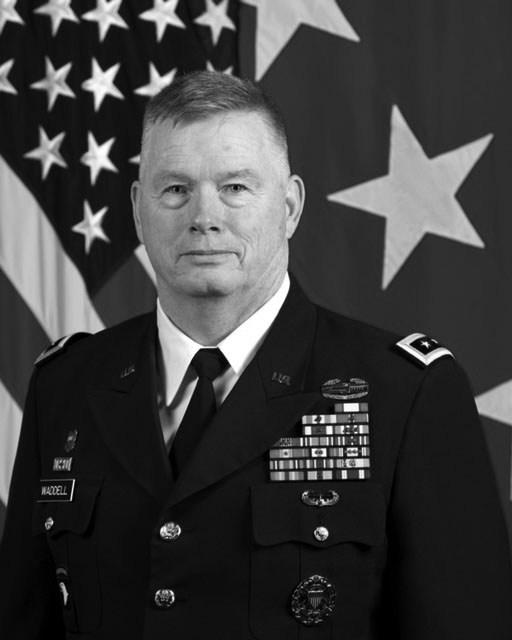
Courtesy | Rick Waddell
Major points of conflict have remained the same since the advent of sailing, said retired Lt. Gen. Rick Waddell on Sept. 23 in Lane Hall.
In his lecture, titled “Around the World,” Waddell spoke on global hotspots prevalent in American economics, foreign affairs, and news headlines.
“We have, as a nation, at least two courses of action. Do nothing and do something,” Waddell said.
Waddell, a member of the U.S. Army Reserves and Distinguished Fellow of Hillsdale’s Center for Military History and Strategy, served active duty in the Army for 12 years. This week, he is teaching a one-credit course titled “U.S. National Security Strategy” at Hillsdale.
Waddell began the lecture by speaking about international trade tensions in the South China Sea.
“In a worldwide sense, there’s about $5 to $6 trillion of international commerce that flows through this maritime choke point,” Waddell said. “Do you really want to cede all of that to one country?”
He addressed America’s concerns surrounding China’s naval expansion and pressure on Taiwan.
“Disruption of this area has a massive economic impact to the entire globe,” Waddell said.
He described America’s practices of “strategic ambiguities” and deterrence. While critics might advocate for reduced American intervention in the Pacific, Waddell explained that American military presence in Guam, Japan, and other countries, deters acts of war.
Waddell spoke about the start of prolonged military involvement in the Middle East following withdrawal of American troops from Europe at the close of the Cold War. He also outlined the strategic focus on nuclear facilities in Iran, and Israel’s actions against Gaza and Syria.
“Part of this is buying time,” Waddell said. “The Israelis have always used the phrase ‘mowing the grass.’ They take an organization, whether it’s Al Qaeda, Hamas, Hezbollah, and they knock them back two or three years, and they get two or three years of respite, and then they have to do it again.”
He noted the reapplied European sanctions, the dampening of potential Iranian retaliation, and the politics of the Ukraine and Russia war.
“It’s reminiscent of the Western Front of World War I,” Waddell said. “The difference is, when you look at World War I, they’re standing shoulder to shoulder down in the trench with their bayonet pointed up waiting for the whistle to go over the top. Now, you can’t get people closer than about 50 meters to each other in these trenches, and there’s normally about two of them hunkered down and hoping the drones don’t find them. This has become drone warfare.”
Students interested in international business, foreign affairs, and military strategy attended Waddell’s lecture.
“So much of what happens in geopolitics is outside of our control in the hands of a few people and it’s fascinating to see how one wrong word can set so many things in the wrong place,” freshman Joel Lee said.
Junior Lenny Fritz believes that American citizens should be informed about foreign affairs.
“It’s the duty of every citizen to be well educated on what’s going on in the world and to understand what America is doing out there, because at the end of the day we have a vote in our government and it’s important to make that count,” Fritz said.
