
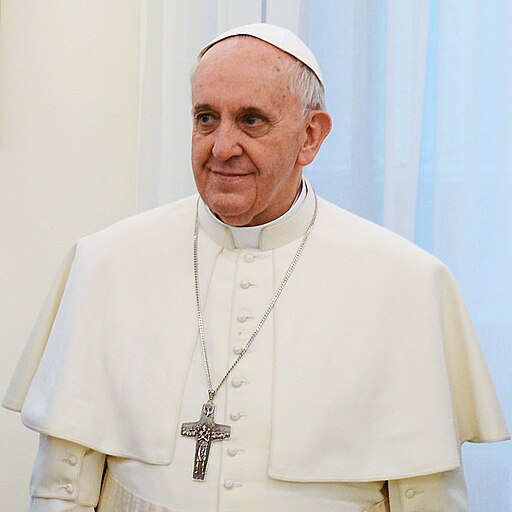
A March 20 Collegian article (“Deportation upholds Catholic social teaching”) appealed to the Thomistic principle of ordo amoris or order of love, which Vice President J.D. Vance used to justify his disobedience to the pope on the issue of deportations. This is misguided.
When the Papal See rejects deportations of illegal immigrants, it is condemning the indiscriminate nature of the Trump administration’s deportation policies — not condemning deportation ipso facto.
Pope Francis wrote in his Feb. 10 letter to American bishops: “I exhort all the faithful of the Catholic Church, and all men and women of goodwill, not to give in to narratives that discriminate against and cause unnecessary suffering to our migrant and refugee brothers and sisters.”
The pope’s expression of charity is not outside of the hierarchy articulated by Aquinas, for he writes in the “Summa Theologica”: “In certain cases one ought, for instance, to succor a stranger, in extreme necessity, rather than one’s own father, if he is not in such urgent need.” Simply put, in cases of necessity, prudence, not proximity, should reign supreme.
From a Catholic perspective, there is no higher human authority than that of the Vicar of Christ, the pope. Consequently, his prudential judgment is paramount. Ultimately, Roman Catholics do not submit to Vance, President Donald Trump, or the opinions of political columnists. Catholics submit to the pope, who is “lower than God but higher than man, who judges and is judged by no one” (Pope Innocent III, “Sermon on the Consecration of a Pope,” 1198).
Even so, some say the pope ought to stay out of matters pertaining explicitly to politics. However, it is certainly within the pope’s jurisdiction, even most narrowly defined, to judge and correct matters of charity. If not, the neutrality of the papacy is so absolute that it is relegated to near impotency.
Similarly, some Catholics might argue that political decisions like deportation involve practical considerations in which disagreement is allowed. However, while political matters often fall under the principle of subsidiarity (which states decisions should be made at the most local level possible, only involving higher authorities when necessary), there are times when the pope must intervene to address a glaring moral issue. When he does, Catholics should submit in humility to the authority of Christ’s vicar, not cling to partisanship or pride.
Lastly, it is important to address those who claim the pope’s position on immigration is not binding in the same way as theological dogma. The issue is not whether the teaching is dogmatic, but whether Catholic doctrine affirms the authority of the one who proclaims it — which it does. As Vatican I states, “Both clergy and faithful… are bound to submit to this power by the duty of hierarchical subordination and true obedience, and this not only in matters concerning faith and morals, but also in those which regard the discipline and government of the church throughout the world.”
It is not often in this day and age that the Vicar of Christ sees fit to wade into our muddled politics. When he does, our Catholic response should be to lay down palm fronds of deference before him, rather than dragging his message before a Sanhedrin of political columnists and politicians to pick his teachings apart with an air of pseudo-intellectual individualism, as if secular decrees were impervious to the criticism of the supreme pontiff.
Josiah Davidson is a junior studying politics.
