
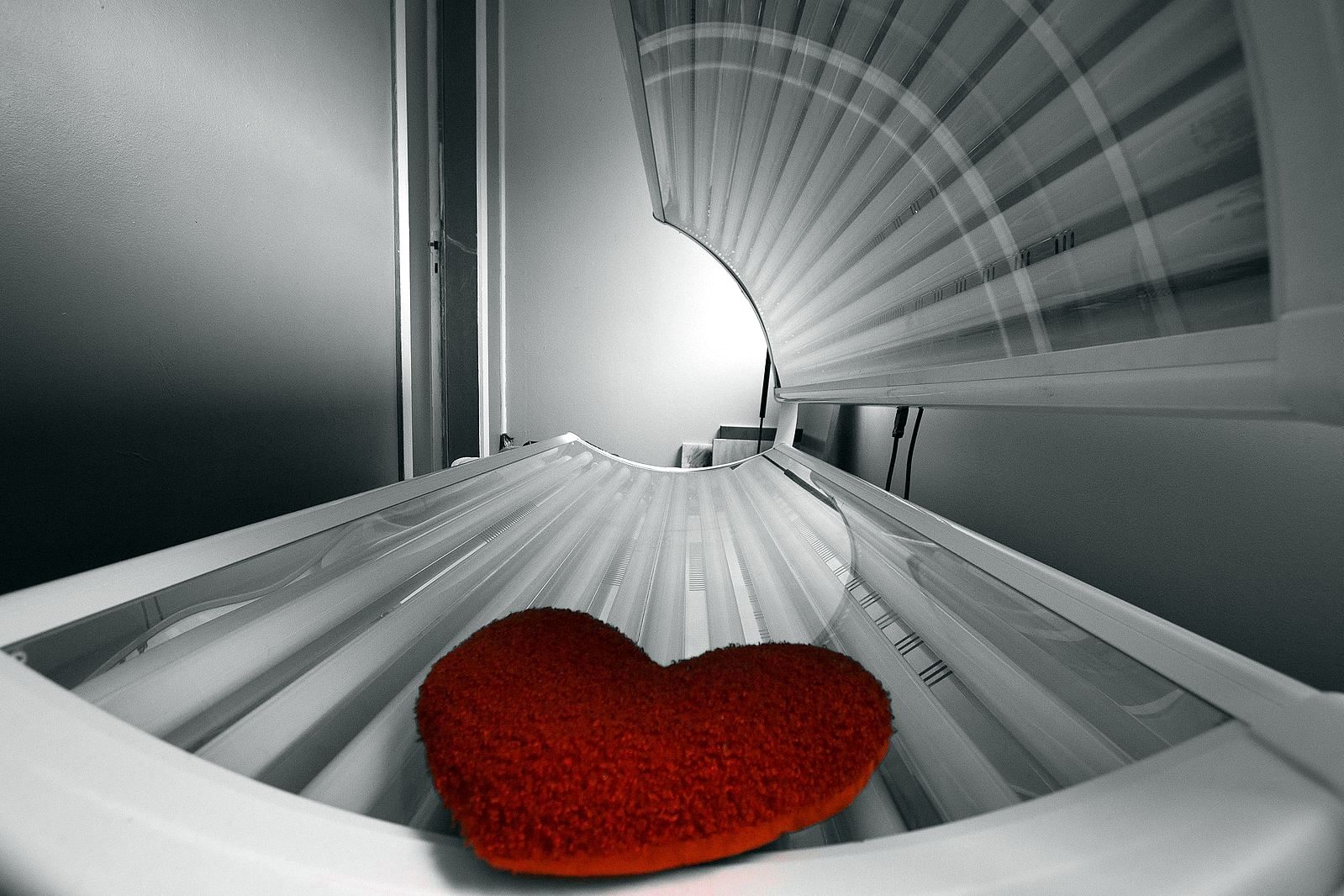
Hillsdale students turn to tanning beds to subdue their seasonal depression. Courtesy | Wikimedia Commons
Getting out of bed during the throes of Michigan’s long and dark winters is apparently so difficult that some women on campus just flock to another bunk — this one laden with UV lights.
Two freshmen, Reagan Kobach and Meredith Schmidt, made it to the end of November before deciding that they needed to head to Hillsdale’s Malibu Tan for a vitamin D fix.
“I need sunshine,” Kobach said. “Even in the dead of winter, I’m used to the sun still being out in Kansas. I’m not used to the sky being all one color. I found myself getting sick a lot, too. I was willing to try just about anything.”
The two had a tangibly positive first experience and plan to go again during this winter.
“We went for the vitamin D,” Schmidt said. “We went on a really gloomy day, and we were both kind of scared. But when we came out, we were both really happy. We actually felt it. It was a weird experience.”
Kobach was struggling to stay healthy during the first few months of school, and people in her life suggested it may be an option.
“I know they say freshmen get sick a lot, but it was bad for me,” Kobach said. “I felt so dead, and I felt legitimately better the day we went and the next day. I really felt a noticeable difference. I didn’t feel stuffy-headed or groggy.”
Schmidt grew up in Kalamazoo, Michigan, and is familiar with the extreme winters, but the shift to college life replaced her once-cozy basement and fireplace with cinder block walls and a sweltering room in McIntyre Residence.
It’s not just a freshman fad, either. Senior Sarah Katherine Sisk is a seasoned tanner at Malibu Tan and also started going her freshman year. Sisk has been going to tanning salons since she was 18, the age you have to be to legally go, even back in Texas. After Great Books a few times a semester, Sisk and her friends would head down West Carlton for a UV pick-me-up.
“When I came to Michigan, I lowkey didn’t think that seasonal depression was real. I thought people were making it up, because, even when it’s cold, we get sun in Texas,” Sisk said. “I realized that the sun doesn’t come out a whole lot here for many months, and I started feeling the effects of that.”
Seasonal affective disorder (SAD) is a type of depression that usually flares during specific season, most commonly in winter. Many students struggle with this condition or symptoms of it during the winter.
According to the Mayo Clinic, the reduced levels of sunlight during the day throw off the body’s internal clock, trigger a drop in serotonin levels, and can increase the amount of melatonin we produce.
“Your body’s circadian rhythm has a lot to do with how early in the morning you’re getting sunlight in your eyes, and I feel like here I was never properly awake,” Sisk said.
Sisk mentioned that after starting to go to Malibu Tan semi-regularly, she felt more energized and not like she needed to sleep all the time.
“I honestly think it probably gets kind of addictive at some point,” Sisk said. “Sometimes I’ll go months without tanning, but it’s less because I don’t want to do it and more because it feels expensive. All my fun money has to go toward it, so some months it doesn’t feel like it warrants that.”
Overexposure to ultraviolet radiation — specifically UVA and UVB rays — is proven to have deadly compounded effects as time goes on due to resulting skin cancers, premature ageing, and even eye damage. According to the American Academy of Dermatology Association, UVA rays, the type of light tanning beds give off, are longer in wavelength and penetrate deeply into the skin beyond the surface. The human body actually needs UVB light in order to make vitamin D, according to Harvard Health Publishing.
Studies have also suggested that there are potential adverse psychiatric effects associated with semi-regular tanning bed use. Similar to other temporary “fixes” like substance use, tanning may be being used to mask underlying mood issues.
Kobach, Schmidt, and Sisk all acknowledged the skin cancer risks involved with sunbeds, especially with consistent use over time. But to them, the felt results outweigh the risks. At least for now.
I was sold by all three women’s claims of a near-sudden increase in mood, so I headed to Malibu Tan for my first tanning bed experience. The temperature hadn’t broken twenty degrees all week, and every time I walked outside the air made my eyes tear up against my will.
The flurry of pink faces exiting the row of cubicles piqued my interest. They didn’t look frozen. People were milling in and out quickly, tapping the biometric check-in console as efficiently as the Saga line ID remotes. After the clerk looked me up and down and informed me that a mere six minutes was going to be all I could handle, I headed back to my room. I noted that there was a gap between the walls and the ceiling so I could yell for help if I got stuck like that scene from “Final Destination.”
If you’re interested in a loud, hot full body MRI, have I got the depression treatment for you.
The fan at the tailend of the bed had about as much horsepower as an average yacht, and it kept me from sweating myself into a panic attack. The lights are, you guessed it, blindingly violet, and they cast your body against the mirror tucked behind the lights in possibly the most descriptive way possible.
A little under ten minutes later, I crawled out of the glass chamber and back out into the dry Michigan air. Though the sensory experience was nothing short of harrowing, it was the first time my feet had felt warm in what felt like weeks. An hour later, my friend told me I looked tanner than usual. I felt like a thawed out slab of meat, and I considered going again.
Brock Lutz, director of health and wellness at Hillsdale College, was open to the idea of there possible benefits of tanning for mood, albeit cautious.
“My thought would be that if tanning seems to be an activity that someone enjoys and helps someone to feel a little bit better about themselves then great,” Lutz said. “With most things in life it seems to come down to the question: Why is the person doing it?”
How someone manages their mood is up to them, and with each treatment comes its own set of risks and rewards. It’s up to individuals and their health consultants to decide which treatments at what frequency are best for them to get through the winter months.
“If it’s been done in a pretty nonchalant way, then it very well might be OK — even beneficial — but if it’s being done to mask underlying stressors or more significant mental health issues then it might be better off to actually address those things head on,” Lutz said.