
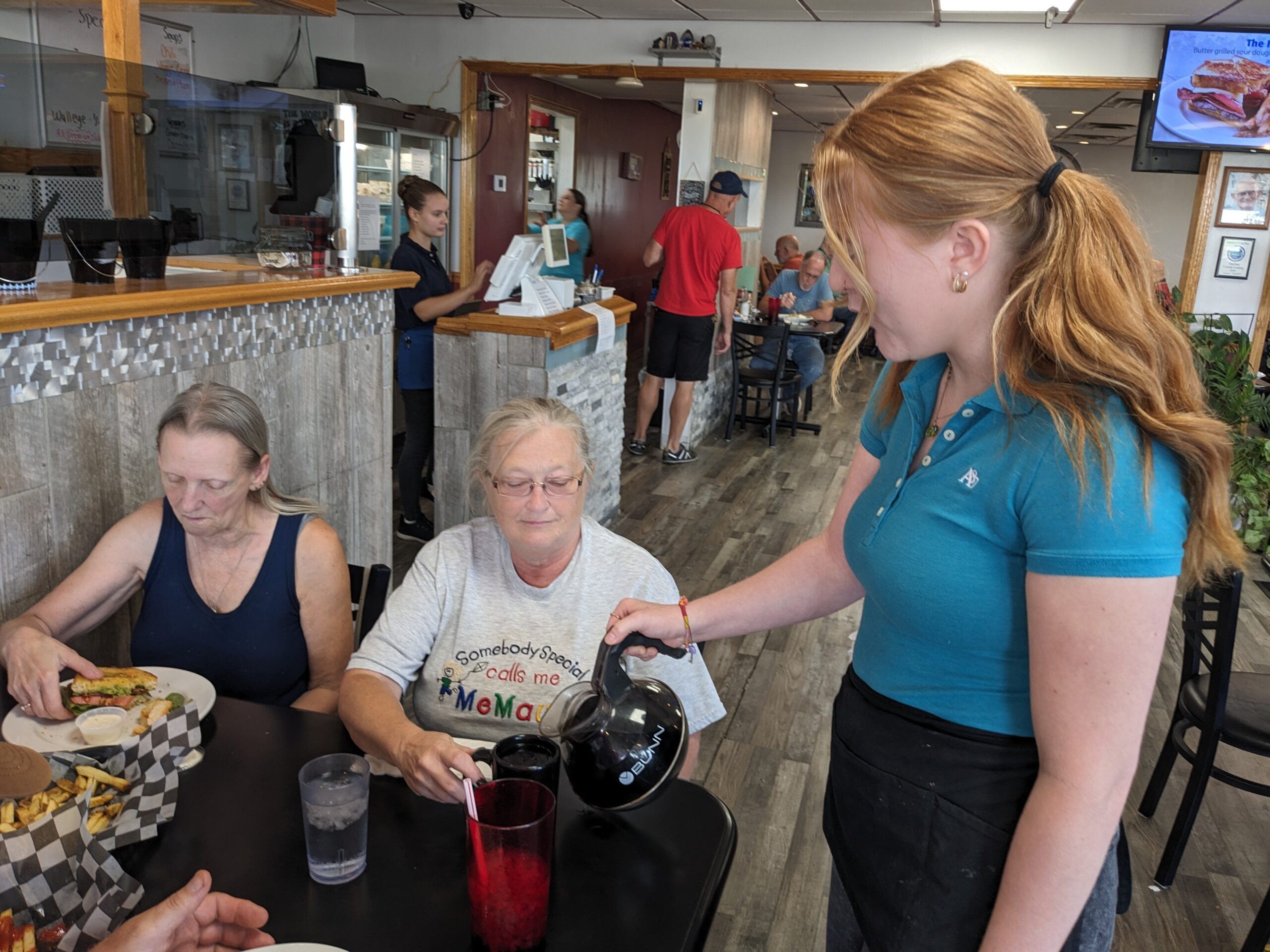
Aubrey Bumpus, a server at Spangler’s Family Restaurant, pours a cup of coffee. Thomas McKenna | Hillsdale Collegian
Hillsdale College student employees may see their hourly pay jump by as much as two dollars this February under a new Michigan minimum wage hike. But state lawmakers are working to slow the increase as local businesses say they would be forced to raise prices or cut employee hours.
The state minimum wage is set to increase from $10.33 to $12.48 in February after a Michigan Supreme Court ruling in August. The new law would also gradually increase the minimum wage for workers who receive tips to match the minimum for other workers, starting with a jump of more than 50% from $3.93 to $5.90 next year. Businesses would also need to provide more paid sick leave benefits for part-time workers.
About 750 Hillsdale student employees work in about 1,100 positions, according to the college’s human resources department. About 93% of those positions pay less than the proposed $12.48 per hour and would see a pay raise in February. A few exceptions include graduate assistantships, according to Director of Human Resources Nicole Williams.
“Michigan has increased the minimum wage nearly every year since 2016, so we have processes in place to make the necessary adjustments,” Williams said. “The proposed increase for February 2025 is far more significant than increases we’ve seen in the past, but I believe the college is in a good position to weather the change.”
Senior Liam Regan, who works as a student career coach in Career Services, said his hourly wage would increase in February.
“It might help encourage student employment,” Regan said. “I know a decent number of students who work off campus because they know they’ll make more.”
Pat Flannery, vice president for finance and treasurer, said the college is prepared to take on the increase.
But the college is in a better position than other employers to handle new wage hikes, Williams said.
“The college will continue to closely monitor the status of the proposed changes and plan accordingly,” Williams said. “We are hopeful that some legislative intervention will take place between now and February to mitigate the impact on employers.”
Local businesses — especially restaurants and other firms with tipped workers — say the increases would add to prices already heightened by inflation, forcing them to raise prices and reduce employee hours.
“We’re in limbo,” said Mitch Spangler, owner of the decades-old Spangler’s Family Restaurant in Jonesville.
Minimum wage increases would expand Spangler’s payroll by 30%, he said. Wage hikes would add to the burdens of inflation that have already forced him to raise menu prices multiple times in recent years. Ingredients cost more money, and finding new suppliers who charge lower prices costs time.
“It’s 10 times the work to decide who to buy from,” Spangler said.
The end of the tipped wage would make it more difficult to keep seasoned servers on staff, Spangler said. Tips allow them to make more with their years of experience and taking away that earning source could push them out of their longtime job.
Holly Armbruster, a server at Spangler’s, said patrons will tip less if they know her hourly wage has increased.
“It’s like when the owner waits tables, do you want to tip him?” Armbruster said. “He’s profiting either way.”
Armbruster has been a server for more than 20 years.
“I won’t be one,” Armbruster said, if she makes less in tips.
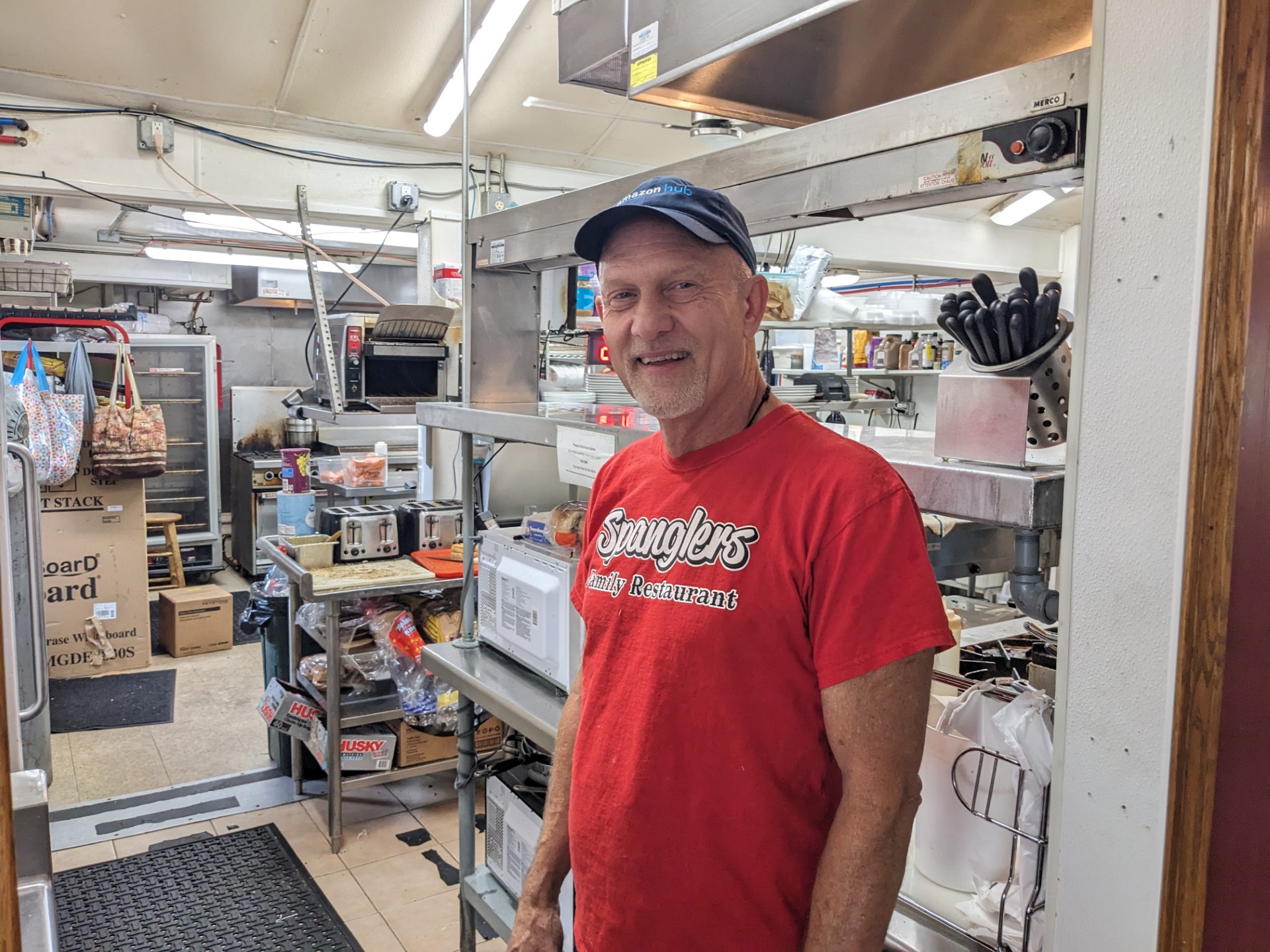
Spangler said he is also concerned about new benefit standards that would require up to 72 hours of annual paid sick leave for every worker without needing a doctor’s note.
“Employees can no-show for three days, then show up for work,” Spangler said. “You can’t fire them. You can’t discipline them. You have to pay them.”
An August survey by the Small Business Association of Michigan showed owners are worried about the February wage hikes while still battling inflation. Of the 500 businesses polled, more than 93% said their costs are higher than normal, and 78% said they have already raised wages by more than 5% in the past year.
In the state legislature, lawmakers are working to scale back the increases, with Republicans and some Democrats fearing that the wage hike could crush the hospitality industry.
John McNamara, vice president of governmental affairs for the Michigan Restaurant and Lodging Association, said his group and others are still talking with legislators and the governor’s office about what a deal may look like.
The MRLA proposes accelerating the non-tipped wage increases to reach $15 a year earlier while keeping the tipped wage at 38% of the non-tipped one, McNamara said. The state high court’s ruling would increase the minimum wage to $15 by 2030.
“My restaurant members are most concerned about the tip credit and minimum wage,” McNamara said. “My lodging members are most concerned about the paid sick leave standards.”
But McNamara said a deal is unlikely to happen before Election Day in November. Lawmakers will not be in Lansing often due to few session days this fall and some lawmakers would rather vote on a potential deal after their constituents vote.
“Hundreds of thousands of employees and tens of thousands of business owners across the state are losing sleep and under stress,” McNamara said. “The only people who can fix it are the 110 members of the Michigan House, the 38 members of the Michigan Senate, and Gov. Gretchen Whitmer.”