
Few people know sophomore Elizabeth Mitchell’s father is all over the headlines.
“It’s been really surreal seeing, for instance, the President of the United States put out a statement about his majority opinion,” Mitchell said.
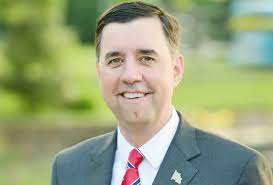
Mitchell, who goes by “Tully,” says she doesn’t often bring up the fact that her father is Justice Jay Mitchell of the Alabama Supreme Court, the judge at the heart of a recent headline-grabbing decision on in vitro fertilization (IVF).
“It’s funny, because I’ll have friends who’ve known me for over a year, and we’ll be really good friends,” Mitchell said. “It’ll come up in conversation. They’re like, ‘No, what?!’”
When a patient accidentally destroyed several frozen embryos in an Alabama fertility clinic in 2020, the parents of those embryos sued. The case made its way to the Alabama Supreme Court, where the justices ruled 8-1 that embryos qualify as children for the purposes of the state’s Wrongful Death of a Minor Act.
Justice Mitchell wrote the majority opinion. The 131-page opinion affirms the right of the unborn child to the same protections other children receive under the law, citing the 2018 Alabama constitutional amendment that “recognizes and supports the sanctity of unborn life and the rights of unborn children,” as well as previous rulings of the court.
“There was both a textual precedent and a court precedential history,” said Adam Carrington, associate professor of politics.
The Feb. 16 ruling caused national dissension, with groups on both sides of the political aisle responding with vitriol. The Alabama legislature passed two bills protecting the IVF industry from civil and criminal liability. Governor Kay Ivey has indicated that she will sign them.
Mitchell said she was happy to be at Hillsdale during the time the case was released.
“I’ve seen a lot of rage online from former classmates,” Mitchell said. “And I can understand where they’re coming from.”
The IVF case brought new questions to national attention, Mitchell said.
“It was the first time that an issue like IVF had been placed on the table as something that was up for debate,” Mitchell said. “I feel like it’s this national reckoning.”
Because of the case, Mitchell said she found herself questioning aspects of her pro-life beliefs.
“I was aware of IVF before this. I actually know people back home who’ve gone through IVF and they have beautiful kids. And it’s been such a blessing in their lives,” Mitchell said. “I can really understand where people are coming from personally, and on the other hand, I think I’ve been forced to grapple with it in a different way, just seeing the results of it.”
According to Mitchell, the case has changed the way she thinks about IVF.
“My opinion on it has shifted somewhat, really just in a process of asking myself philosophical and theological questions,” Mitchell said. “It’s forced me to think about things more basically in terms of, ‘Does life start at conception or does it start at implantation?’ I think if it starts at implantation, it kind of forces you to admit, you really can move the bar wherever you want it.”
To Mitchell, the case has revealed that many of her former peers misunderstand the justice system.
“Classmates who I had the same civics class with come out and say things like, ‘The Supreme Court in Alabama banned IVF,’” Mitchell said. “The court explicitly says in the brief that policy issues are not the responsibility of the court.”
Mitchell said she sees the same misunderstandings play out in national politics on both sides of the aisle.
“We’re seeing people on the right come out and say things like, “Good job. You just damaged our chances electorally,’” Mitchell said. “I, for one, am thrilled that the Supreme Court is not supposed to be concerned with questions of electoral liability.”
According to Mitchell, the case reveals a fault in American education.
“Probably my biggest takeaway from all of this is that civics in America need help. Civics classes need to do better,” Mitchell said.
Mitchell says she learned about the limited scope of the courts from a young age, when her father would quiz her about the roles of each branch of government on the way to kindergarten.
“I distinctly remember him in the car asking me, ‘Do you know what the protocol is if somebody blows up all Congress in the State of the Union address?’ and him telling me about the designated survivor.”
Mitchell said her father’s commitment to the Constitutional role of the judicial branch hasn’t wavered, even when the litigation attorney was elected to the Alabama Supreme Court in 2018.
“I’m really proud of my dad,” Mitchell said. “He’s stressed emphatically for so long that the court and judicial branches have a really limited function. Its job is to interpret the existing laws on the books, as they’re written, not to read into them what they would prefer them to say and not take into account policy concerns.”
Nathan Schlueter, professor of philosophy and religion, said the decision is the natural conclusion of a logical position.
“The logic of the opinion is perfectly sound. The fact is that the zygote is a human being. It’s a distinct organism,” Schlueter said. “That seems to me standard biology.”
According to Schlueter, the case calls national attention to IVF’s need for regulation.
“The whole artificial reproduction industry is a travesty,” Schlueter said. “It’s completely a wild west of unregulated technological engineering of human beings.”
Carrington sees the Alabama case as indicative of questions the post-Dobbs world needs to address.
“People who are pro-life are realizing there’s a lot of things that maybe they didn’t have to confront,” Carrington said. “Now, because it is in their power to legislate, they’re going to need to work them out.”
According to Carrington, pro-lifers need to discuss whether life begins at conception and what role technology ought to play in reproduction.
“In some ways, our technology has gotten way ahead of our morality,” Carrington said.
