
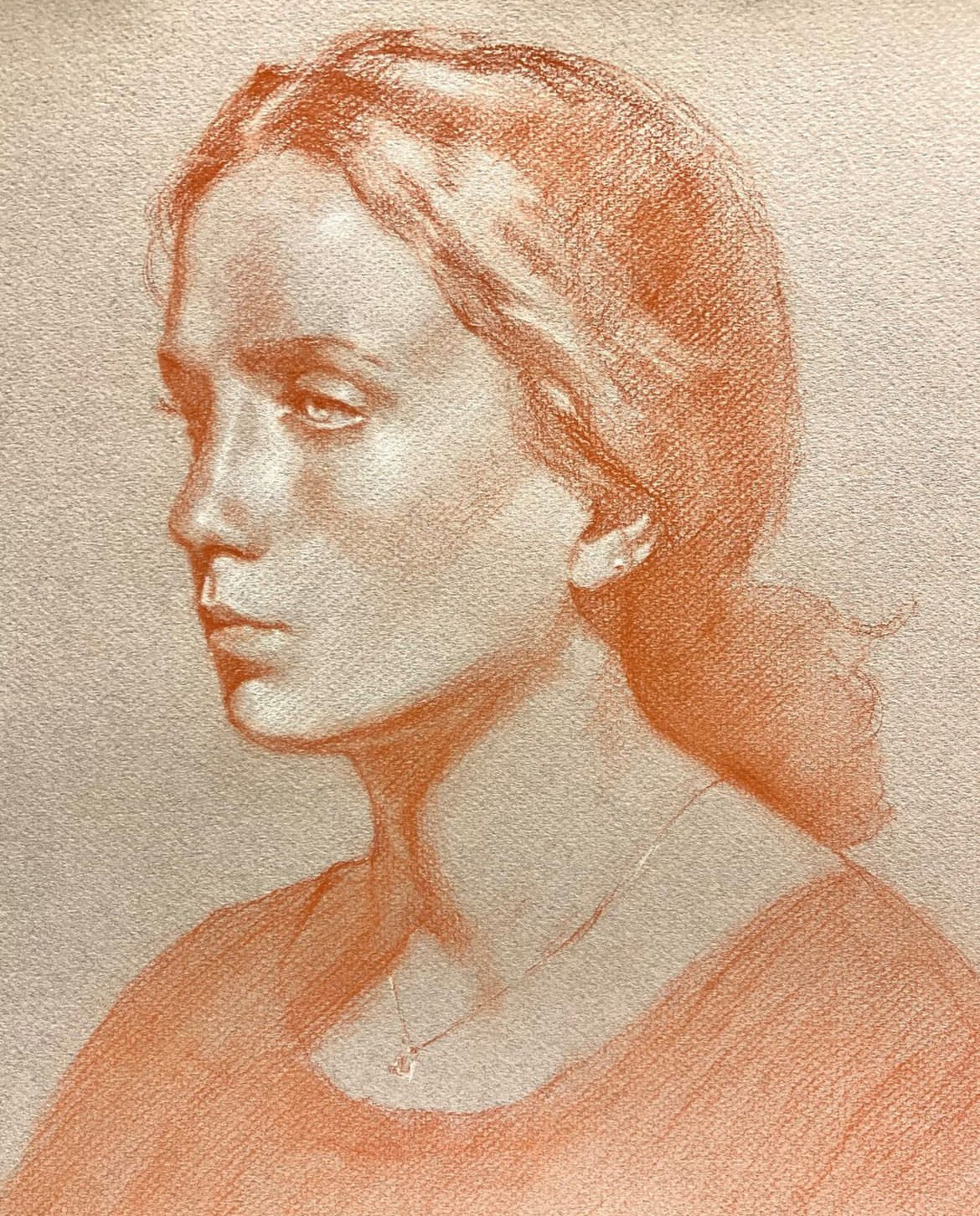
The Hillsdale College art department employs live models for upper-level studio classes like drawing, oil painting, and sculpture.
Senior Josefina Cuddeback has been a live model for the art department.
“I think it has transformed the way I see myself,” Cuddeback said.
Art professors recruit models through word-of-mouth, poster advertising, and Handshake — an app many students use to find on-campus jobs and events. According to Julio Suarez, chairman and associate professor of the art department, the student employees attend the studio classes twice a week and model for the three-hour classes with five to ten minute breaks every 20 minutes.
Anyone looking for a job qualifies to be a model, Suarez said. The art department is always looking for a range of body types to study.
Suarez said he believes the hardest part of modeling is posing. According to Suarez, some students have had issues with the poses being physically strenuous to maintain.
Upper level art classes have seven to 12 student artists and a professor who work with the model to find a dynamic yet sustainable pose.
In longer sessions, Suarez said the process is usually very organic with only a little guidance.
“I try not to pose them too much because we all have our own unique postures,” Suarez said. “Those are the most interesting poses, the ones models do naturally.”
Cuddeback said she began modeling in the fall of her sophomore year when a friend suggested it. She has continued to model as long as her academic schedule has allowed it.
Anna Bassols, a senior art major, said she has worked with many live models in both the classroom and in individual projects.
“You really appreciate all the beautiful qualities of a person,” Bassols said. “Art is visual problem solving and understanding. You’re looking at the subject without bias or preconceived notions and really just honing in on their actual form.”
Bassols said she has experienced major improvements in drawing skills that would not be possible without live models.
“Studying from life is something that you can’t compare,” Bassols said. “You can see it when people are working on their pieces. There’s not really a substitute.”
Bassols described the difference between working with live models instead of photographs and statues.
“When you’re studying something that’s in front of you, it’s completely different from studying a picture,” Bassols said. “There’s something you can’t always put your finger on. Even the way they move, the way they hold themselves somehow does get reflected into the piece you’re creating.”
Although she was nervous at first, Cuddeback said she has grown to appreciate the artistic process and the students who render her in different mediums and styles.
“At first you feel very self-conscious because everyone is looking at you very closely and specifically,” Cuddeback said. “But then you realize it’s not personal. It’s very much treating it as a specific type of skill development exercise.”
Both Cuddeback and Bassols commented on the professional relationship between the model and the artists. When the novelty of having or being a model wears off, the classroom atmosphere becomes relaxing, they said.
Suarez said he allows his models to listen to audiobooks or music during sessions.
“Most models, once they do it, really like it. It’s relaxing to be still and quiet for a time,” Suarez said.
Cuddeback said she has always deeply appreciated art, but she does not personally have the technical skills to render pieces in the lifelike way she admires.
“I had a part in this beautiful process of being in the realistic portrait of life,” Cuddeback said.
She also said she believes the technical approach the students take when using her as a model has changed her own perception of herself.
“I’m less self-conscious,” Cuddeback said. “It was really good practice for me to see myself through other people’s eyes. It’s easy to be self-deprecating about yourself, but it’s different when you get to see yourself in a medium that’s inherently beautiful.”
