
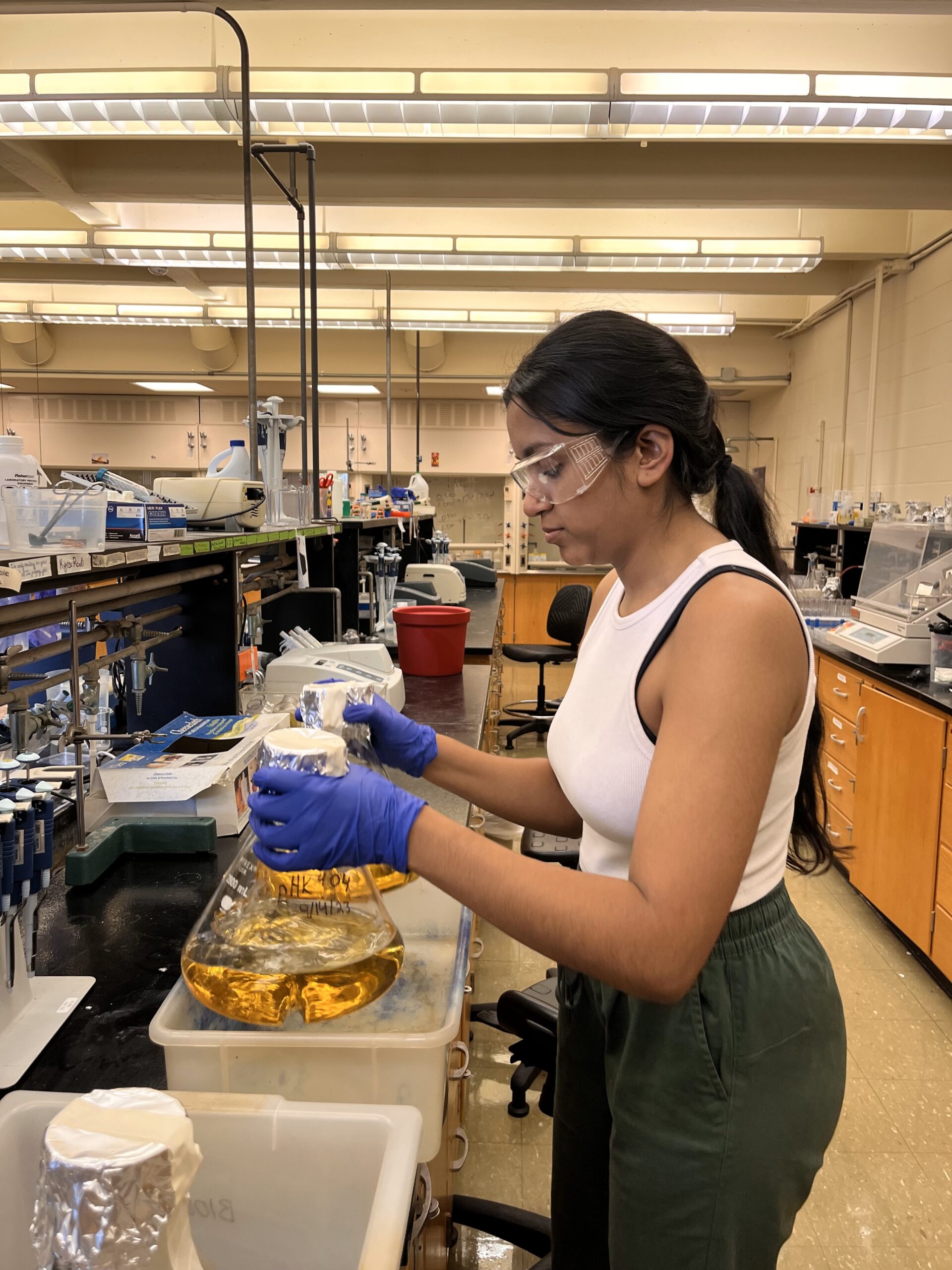
Aruna Harihara working in lab. Courtesy | Linnea Shiveley
For students majoring in the physical sciences, hands-on experience comes not only from laboratory classes, but opportunities to work as teaching assistants.
Senior biochemistry major Aruna Harihara has been a TA for biochemistry lab, physics lab, and physics recitation. Currently, she works as a TA for Professor of Chemistry Christopher Hamilton’s biochemistry lab.
“I said yes to being a TA because I wanted to have more lab experience and also be able to mentor future biochemistry majors,” Harihara said.
Junior biology major Hannah Arends said she enjoys supporting new students in Biology Core Lab Manager Kiralyn Brakel’s Biology 200 lab.
“Being a TA is required for the biology major, but I chose bio 200 because I wanted to get more experience with lab work,” Arends said. “Because they’re new freshmen, they’re excited about being in the lab. It’s fun to see them figure things out.”
For junior biology major Taylor Chen, being a TA in Professor of Biology Francis Steiner’s microbiology class supplements the learning he does and enjoys in class.
“They say that if you can teach it, you really know it,” Chen said. “I felt like I knew it decently, but going in there and teaching and helping the other students takes my understanding to another level.”
While a typical week in the life of a TA varies, a week for Arends includes a Monday afternoon TA meeting, attending the lab, and answering questions from budding biology majors, she said.
“Especially since this is their first biology class here at Hillsdale, the labs are new to them,” Arends said. “I get a lot of questions about science and understanding the lab and also just help them in general if they have questions about their biology class at large or the biology major.”
When preparing biochemistry labs, Harihara spends more time waiting for reactions. During the lab, she assists with technical equipment questions and ensuring students understand the lab.
“Last week, I spent around five hours on Wednesday prepping stuff and then seven hours on Thursday with the actual lab,” Harihara said. “Biochem lab especially is a lot of waiting for reactions to happen or organisms to properly mature and grow.”
While she has avoided any accidents in the lab, preparing materials sometimes takes longer than expected, Harihara said.
“I made agar plates and set them out overnight to harden and cool and they could be used the next morning,” Harihara said. “But mold grew on them overnight, which was sad because the process is kind of long.”
In microbiology, students spend the semester studying a Winogradsky column, which includes growing bacteria in mud from the Arboretum, according to Chen. While the semester has been tame so far, Chen warns about the bacteria’s smell when dumping the column at the end of the lab.
“The Winogradsky column has been growing bacteria for around eight weeks, so it smells really bad,” Chen said. “I’m definitely going to recommend some nose plugs. It reeks.”
