
St. Augustine can teach Hillsdale students many lessons on how to live — and how not to live.
College students seeking boundaries in their Hillsdating relationship can empathize with Augustine when he prays, “Lord, make me chaste, but not yet.” Or, when they steal fruit from Saga, students can relate to Augustine stealing pears for the fun of it — though he would later call it a sin that made him “gratuitously evil.”
But Augustine was more than a relatable pagan. His conversion — an experience which all Christians undergo in some way, shape, or form — and its fruits have had a lasting effect on the Western tradition. Because of this, Augustine deserves a spot on Hillsdale College’s Liberty Walk.
In one of Augustine’s greatest contributions to the Western tradition, the “Confessions,” he documents in great detail both the build-up to his conversion and his conversion itself. Suffering under temptation, feeling “mocked” by the examples of chaste young men and women, Augustine came to Christianity when he heard the voice of God telling him to “take up and read” the scriptures.
After that, he sold all he had, gave it to the poor, and followed Christ. Any student, regardless of denomination, can learn from Augustine’s example.
Given Hillsdale’s commitment to nonsectarian Christianity, most people would argue that placing religious figures on the Liberty Walk would further religious divides. But as an early Christian father, different denominations of Christianity — whether they be Lutherans, Calvinists, or Catholics — claim Augustine as their own.
At present, Hillsdale only has political leaders, not spiritual ones, on its Liberty Walk. Margaret Thatcher and Ronald Reagan defended the West during the Cold War and tore down the Iron Curtain. George Washington, James Madison, and Thomas Jefferson protected the rights of colonists, forming a nation on the premise that all men have the right to “life, liberty, and the pursuit of happiness.” Abraham Lincoln, Frederick Douglass, and the Civil War soldier all fought to maintain those rights for everyone, not just the privileged few.
Having an Augustine statue would remind students of two important facts: first, that virtue is a necessity for any polity — a fact the founding fathers would agree with; and second, that God, not political liberty, is the primary end of this life.
“There is no virtue except that which is directed towards that end in which is the highest and ultimate good of man,” Augustine wrote in his other great work, “The City of God.”
A liberal arts education like Hillsdale’s should aid students in cultivating virtue, enabling them to see the “ultimate good of man” — God himself.
The blessings of “civil and religious liberty” which Hillsdale affirms in its mission statement cannot exist without a genuine Christian faith. Augustine and his contributions to the Western canon serve as a warning of the frailty of human endeavors divorced from God.
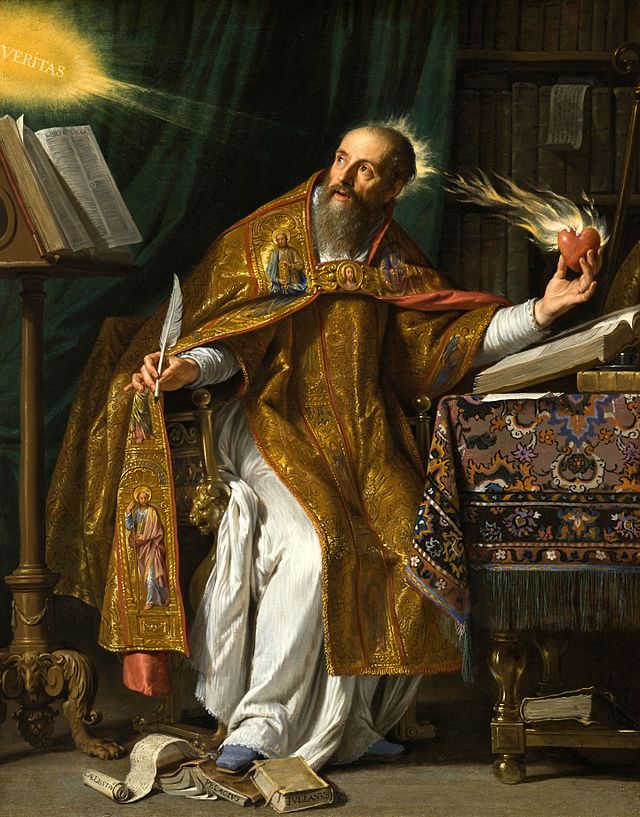
With his crozier in one hand and a flaming heart in the other, St. Augustine’s statue on the Liberty Walk would be a tribute to everything Hillsdale stands for. He’s the perfect example of the union between “Athens and Jerusalem,” and of the college’s commitment to maintaining “by precept and example the immemorial teachings and practices of the Christian faith.”
Let’s put St. Augustine on the Liberty Walk. Hillsdale needs him.
Elizabeth Crawford is a senior studying politics and journalism.
