
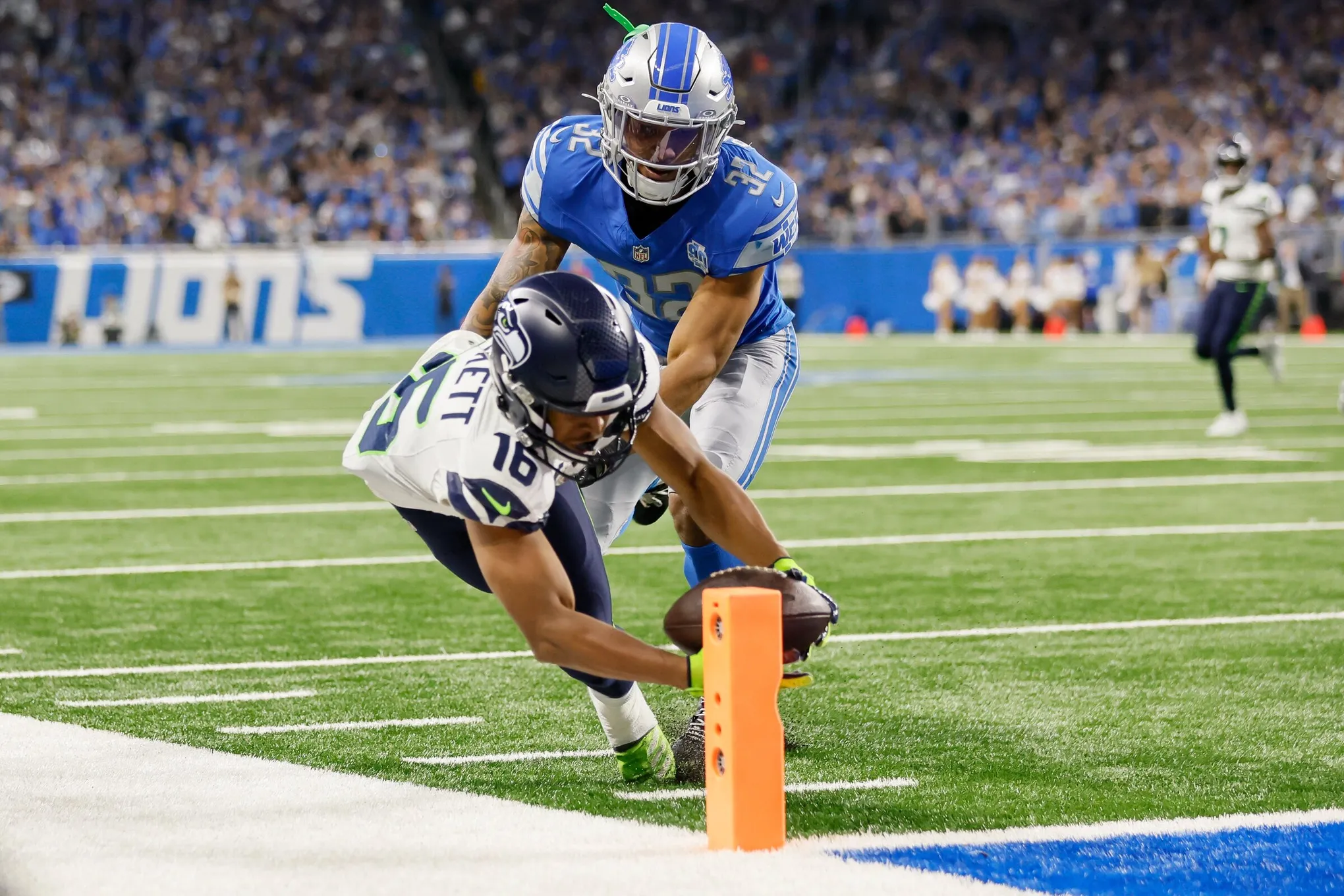
Tyler Lockett scores the game-winning touchdown over the Detroit Lions. Courtesy | The Seattle Times
The NFL’s overtime regulations should be a thing of the past, and a new system to determine the outcome of an NFL game tied after the first four quarters is long overdue.
The list of issues the NFL has yet to deal with as an organization seems to get more and more agonizing for its fanbase each year. The issue at the top of that list is the league’s rules for overtime. It’s a system that has frustrated fans of teams all over the league — most recently Detroit Lions fans — and should have changed a long time ago. Lions fans had the unfortunate pleasure of watching their team lose to the Seattle Seahawks last week, without quarterback Jared Goff getting a chance to win the game for his team.
Each overtime period begins with a coin toss to decide which team will receive the ball to start the 10-minute extra period, according to the NFL’s website. Each game in the NFL also starts with a coin toss to determine the same conditions.
The biggest issue with having this coin toss is that if the team with the ball first scores a touchdown on its drive, the game is over. If the team with possession of the football does not score a touchdown on its first drive, only then is the opposing team allowed a shot to either tie with a field goal — assuming that’s how their opponent ended their first drive — or win with a touchdown.
Imagine you are fighting in a boxing match, but your opponent is allowed to throw 10 punches at you without any retaliation. The only thing you can do is block the punches. That is not exactly what one would call a fair fight.
What makes this rule even worse is that it does not just apply to regular season games but playoffs as well. One very controversial playoff game that ended in overtime was the 2022 AFC Divisional round match between the Kansas City Chiefs and the Buffalo Bills.
After fighting against a very talented Chiefs team, the high-power Bills offense tied the game with a late touchdown in the fourth quarter. However, the Bills were not given a chance to put its offense on the field since the Chiefs won a 50/50 coin toss, giving them the chance to drive down and score a touchdown on their first drive. Chiefs quarterback Patrick Mahomes would lead Kansas City down to score the game winning touchdown, preventing Bills quarterback Josh Allen from ever getting a chance to tie or win the game.
Many football fans have their own opinions on whether they prefer the NFL to collegiate football or vice versa. Nevertheless, this is one area where the NFL could learn from the NCAA rules on overtime. Allowing each team the opportunity to score leaves little room for teams — or fans — to complain when their team ultimately loses in overtime.
This should be common sense to the NFL and its commissioner Roger Goodell, but if the past is any indication, common sense will have little to no effect on the rules of the game.