
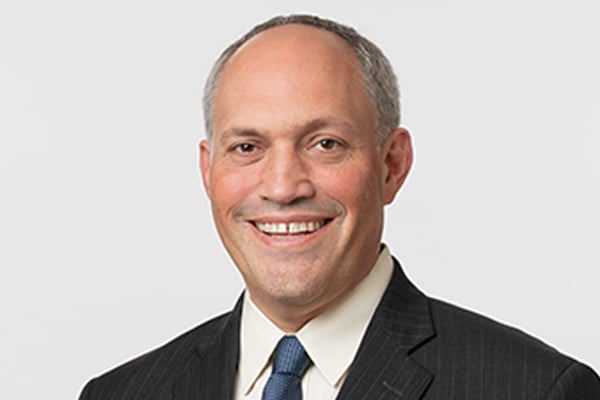
On Monday, Michael Rubin spoke to students about the inconsistency he said characterizes American foreign policy in the Middle East. Rubin specializes in the politics of Saudi Arabia, Iran, Iraq, Turkey, and the Horn of Africa.
Rubin said the first problem with American and international counterterrorism efforts is that the international community cannot agree on how to define terrorism.
“There is no single standardized definition of terrorism among U.S. agencies, or among the United Nations,” Rubin said.
Rubin also discussed how knowing the causes of terrorism can prevent future attacks.
“The strategic logic of suicide bombing is not about religion, not about ideology, it’s about occupation. And if you address the grievance, which is occupation, then terrorism goes away,” Rubin said.
This one size fits all model ascribed as the cause of terrorism does not always pan out in real life. Rubin noted it was often countries with higher levels of wealth that bred terrorism.
“Traditionally, most terrorists arise from the middle class and from the educated class,” Rubin said.
The Muslim Brotherhood in Egypt, who believed in purging their country of Western influence, exemplifies the tension between grievance and ideology as the root causes of terrorism.
“The key to power, the key to restoring Islam is to basically cut off everything that is Western and necessarily false,” Rubin said.
Rubin said failed American Middle Eastern foreign policy has often pitted one sect against another, backing whichever side suits any given interest.
“There’s absolutely no way in which you can counter that sort of extremism, unless you’re willing to go after the core of the ideological group, which can’t be compromised with,” Rubin said. “When confronted with two different flavors of extremism, it’s important to address both flavors rather than simply to ignore one. We shouldn’t try to promote one versus the other.”
Rubin said American foreign policy must shift from a solution rooted in excessive spending and over saturation of influence to a more nuanced approach that balances human resources, private investment, and military involvement to protect American interests in destabilized regions.
For freshman Avi Maljanian, Rubin’s words reiterated the key issues with how overseas and foreign involvement will always leave a lasting impact on the countries we involve ourselves in and raised many questions as to how to actually come to a solution that will not leave a problem worse than before.
“I was there to learn, and what I heard was just a lot of different things that I’ve heard from other various sources brought together brilliantly by one person who clearly has immense knowledge of the subject material,” Maljanian said.
Freshman Jackson Casey said he found the talk interesting and thought provoking.
“The problem of American overseas involvement is actually an overuse of wasteful resources rather than strategically placing human intel in the Middle East or in Africa, strategically competing for access to resources with China,” Casey said.
Maljanian said the talk raised excellent points as to identifying the problems with American foreign policy.
“It’s going to be very difficult to extricate ourselves from the situations that we’ve entered into without leaving those situations to just kind of collapse,” Maljanian said.
