
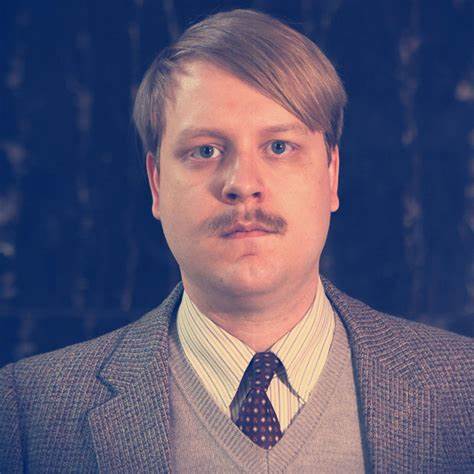
Matthew Walther is the editor of The Lamp, a Catholic literary journal, and a contributor to the New York Times. He was previously a national correspondent for The Week. The following has been edited for length and clarity.
What is The Lamp?
The Lamp was a response to two needs, real or perceived, in journalism. One was the absence of what I would call an orthodox Catholic print periodical, something distinct from the sort of horse race reporting on what the bishops are doing or what the pope is saying. That can be done very ably, but it’s not exhaustive of what Catholic journalism could be. So there’s a sense that we needed something that would fill that space, but there was also a sense that so many wonderful magazines like The Weekly Standard had either disappeared or existed only as in some kind of skeleton form. We thought there was plenty of room for a publication that was devoted to good writing on all sorts of subjects for its own sake. There was a strong sense that it needed to be a print product. People are interested in escaping what Cardinal Robert Sarah calls “the dictatorship of noise;” they want to be able to go lie down in a hammock and rest their eyes and read something.
Does The Lamp appeal to a larger audience beyond Catholics?
I think there’s a sense in which so many attempts to create a kind of relevant Catholic or Christian media end up being so cringe-inducing. There’s a sort of excellence that is intrinsic to certain genres. By pursuing that kind of excellence for its own sake, just writing well about bowling, or, you know, small town libraries or whatever, there’s a sense in which that’s Catholic journalism, both with a capital “C” and with a lowercase “c” since it’s universal, and it’s of interest to everyone.
Why did you decide to print The Lamp using metal plates?
The official reason is that our designer, who is very precise and fussy about these things, says that it looks better and that anyone who really knows you can tell. The secret reason is because it’s part of our deliberately cultivated fogeyish image.
What are you working on now that you are excited about?
For old magazine hands, the most interesting issue is always the one two out from the one now. The one that you just did you’ve totally forgotten about.The one that you’re about to put to press is tedious because it’s work. But two issues down the road is just whimsy and magic. So I’m thinking about The Lamp two issues from now.
Did you finish college?
I’m not sure about the status of my diploma because of a long-standing dispute about interlibrary loans that actually involves Hillsdale. There was a book, a very rare book by the philosopher F.H. Bradley. The only library in Michigan that has it is Hillsdale. They sent it up to me. I read it. I put it back in the dropbox, and they said I hadn’t returned it. So my school said that I had to pay $3,000 or something to replace “Aphorisms” by F.H. Bradley. I don’t know whatever became of it. I hope you guys have your copy of F.H. Bradley’s “Aphorisms,” but the school still maintains that I owe them $3,000. I’ve been lucky so far that I’ve never had anybody ever ask me for an official transcript, because I don’t think I can get one.
How did you break into journalism?
The summer after I graduated, I started sending stuff to magazines and newspapers. And apart from a little bit of writing for my college paper very early on, I didn’t have any sense of how to do this. I started writing book reviews occasionally for The Washington Times, and I wrote a long feature for the American Conservative. And I thought, “how do you get a job doing this?” I saw that there was this internship at the American Spectator, which in those days was in print monthly. I applied, and to me it was completely a shot in the dark. I had no idea whether I would be accepted. I was, it was unpaid, and I had to move to Washington, D.C., with no money. Those were heady days. I can remember trying to decide, “should I pay for Metro fare or have a pack of cigarettes today? Can I eat this afternoon?” I would not recommend doing an unpaid internship. You really should be paid for working.
Why did you decide to leave D.C.?
I had a general sense that in the space of only not quite half a decade, I had really lost touch with where I was from. The world of my Michigan childhood, which I remember in sort of idyllic terms, had disappeared, and I didn’t even know about it. I was just as out of touch as people who, in sort of Washington political terms, I would have thought of as my ignorant adversaries. I was blindsided by this. Just a few years had been enough to transform every aspect of where I lived. And having been back, the transformation has only continued to pace. We drive around and there are billboards for cannabis dispensaries, payday lenders, Dollar Trees. That’s what rural America is now, and it’s a shame, but it’s a shame I want to share in.
How did leaving D.C. affect you professionally?
That decision, it seems like this sort of a quaint, charming thing, but to leave the place where your job is and to go back home — it’s not an easy decision. It’s not one that I would take lightly. If you’ve been working in Washington or New York for a few years, you miss those connections: the people you go and have a drink with or you know, meet for lunch. That becomes a lot harder to do.
What is your advice to anyone who wants to go into journalism now?
What’s important now is expertise, or at least something that can plausibly be presented as expertise — mastery of some body of fact or area of inquiry. I think for students, whether they’re interested in, reporting or commentary or some mixture of both, it’s really important to recognize that it’s very hard now to be a generalist, to be the kind of person who wants to unburden himself with his opinions on classical music, sports, and the decline of cigarette smoking, and some Senate bill or whatever it is. It’s better to have an area.
