
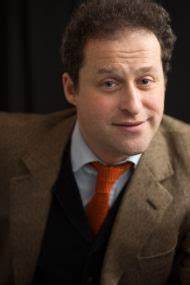
Dominic Green is Hillsdale’s spring 2023 Eugene C. Pulliam Visiting Fellow in Journalism. He writes for the Wall Street Journal and the Washington Examiner among other publications in the United States and the United Kingdom. He is the editor of the U.S. edition of The Spectator and the commissioning editor of The Critic. The following has been edited for length and clarity.
How do you write?
I start everything by writing with pen and paper, or pencil. I very rarely go straight to the computer. I often sketch a plan out in pen and paper as well. I think the best thing you can do as a writer is have minimal interaction with electronic devices. Pencil and paper, and I also use a typewriter. It’s most valuable tool of all when it comes to saying things efficiently, and a lot of journalism is about efficiency, and compressing the maximum amount of information and ideas into a very small amount of space. Even if it’s on a web page, you’ve still got a set number of words. The typewriter is your friend, and you can get one super cheap online.
How did you become a journalist?
Well, like most journalists, it chose me, in a sense. I worked professionally as a musician for many years, then became a freelance writer, picked up a doctorate on the way, taught a bit at colleges, then returned to writing freelance full time. I didn’t entirely deliberately set out to become a journalist. I know many people do. They tend to be found on the staff side and in the full-time editorial staff. The freelancers very often are a mixed bag. To me, journalism is a kind of writing, and a writer is a person who writes more than one kind of writing by necessity, but also by inclination.
How do you choose your topics?
I choose most of what I write, and it’s always been this way. This wasn’t because I thought it was a cunning strategy, although I later realized it was efficient time-wise. It was simply because I thought that’s how things were done. I was a musician, and if you want a gig as a musician, you go to the place and say, “Can we come and play here, please?” So I came up with ideas, and I sent them to an editor and said, “Can I write this for you, please?” I always recommend that writers do this because you write best about the things you know, about things you care about. You have to have some personal or intellectual or emotional investment in it, and then you’ll usually write something interesting.
How will the media change in coming years?
I think editing will go out of house. I think that’ll happen in book publishing as well. Indeed, this is how the 18th century worked: by subscription. You came up with an idea for a book. You found a patron. You got a subscription list. They each gave you a couple of pounds. You wrote the book, and that was you were paid that way rather than in royalties, out of a share of the sales. I think if you look at the quality of 18th century letters, it’s not a bad thing at all. So I am optimistic about the future of journalism.
Do you think the media is becoming more polarized?
We’re a little bit misled because the early Cold War period saw a very high degree of consensus politically about the American way being much better than the communist way. There was less to argue about, politically. In a way, the norm in American history is that there’s at least two sides, and everyone has violently different views . So, you could say that the digital shift has restored something which journalists fro
