
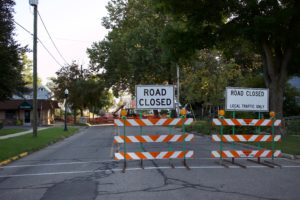
The City of Hillsdale’s road conditions have continued to improve despite little assistance from the state government, according to city officials.
Between 2017 and last year, the number of Hillsdale’s roads rated as fair or good has increased from 21.7% to 50.4%, according to data from the Transportation Asset Management Council. The gains come as city officials have attempted to fund road projects, according to Hillsdale Mayor Adam Stockford.
City Engineer Kristin Bauer said in an email lack of funding was the principal reason for Hillsdale’s crumbling infrastructure in past years.
“There is no direct assistance from the State except when grants are awarded to the city from State Departments,” Bauer said. “My experience is when funding is increased at the state level, it filters through the different state departments that utilize road funding, and there is little left for cities.”
Stockford said the city had received no aid from the state government since 2020. Instead, it has funded the infrastructure projects using budget cuts, money from special assessment tax districts, a voter-approved tax levy in 2019, and doubling the Board of Public Utilities’ payment instead of property taxes.
“That is how we are getting street work done. It’s not coming from the state or the governor,” Stockford said.
Democratic Gov. Gretchen Whitmer pledged during her 2018 gubernatorial campaign to fix the roads, yet most of this funding has gone toward fixing state highways, according to data from TAMC. Since Whitmer took office in 2019, state highways rated fair and good have increased by 4.6%.
“Since I took office through the end of 2022, we will have invested 70% more in our roads than the previous four years to fix over 16,000 lane miles of road and 1,200 bridges, supporting nearly 89,000 jobs,” Whitmer said in an Oct. 3 press release.
Recent city road projects have been expensive and time-consuming, Stockford said. These projects often entail a total replacement of the sewer and storm drains in addition to the roads themselves.
“We got mandates from the state that say that we have to replace all the lead galvanized pipes in the city,” Stockford said. “The last thing in the world I want to do is fix the street, then have to tear it up a year later because we have to pull out a pipe. We’re doing a complete infrastructure repair, not slapping on some cheap sheet.”
During a Meet the Candidates Forum Monday night, Professor of Economics and Ward 3 city council candidate Gary Wolfram said Hillsdale’s roads wore down because the state government cut revenue sharing in 2008. State revenue sharing happens when the state collects funds from the sales tax and distributes the revenue among various cities, villages, and townships.
Revenue sharing dropped from nearly $600 million in 2001 to $266 million in 2021, Wolfram said.
“That means that $400 million has gone away from the local unit,” Wolfram said. “That’s why your roads don’t look the way they should look.”
Stockford said the city would need to consider a combination of funding options to continue the momentum and minimize the cost to taxpayers. The city could consider increasing the BPU’s contribution from property taxes by one percent and explore further cuts.
“I think we can fix the streets without doing all the special assessments and raising taxes,” Stockford said. “I just think that people don’t want to sit down and make the tough decisions that have to be made.”
City Manager David Mackie said the special assessments enacted by the City Council have created greater momentum with road projects.
“City Council has begun to approve special assessment districts which have allowed us to complete the more recent reconstruction/rehabilitation with additional funds,” Bauer said.
Wolfram said when revenues decreased in 2008, the fixed costs of police and fire took up the majority of city budgets. So cities naturally cut road maintenance, leading to today’s crumbling infrastructure.
“It’s not a matter of, ‘Your city government has just been goofy and been spending the money when they shouldn’t be,’” Wolfram said.