
Social Security is a broken promise to the American people, and our generation will pay for it.
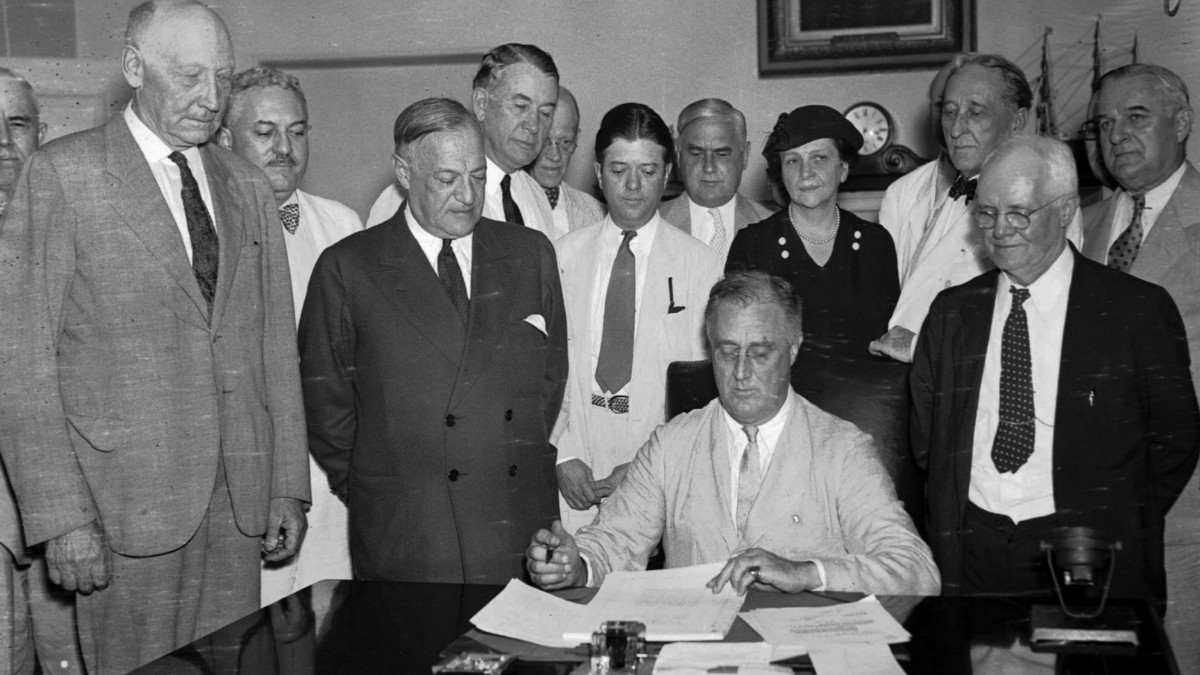
When President Franklin D. Roosevelt signed the Social Security Act of 1935 into law, he promised “protection to the average citizen and to his family against the loss of a job and against poverty-ridden old age.”
The purpose of Social Security was to reduce poverty among the elderly by funding an account with payroll taxes, which would pay workers upon retirement. The act was supposed to create a sort of public trust fund, paid for by itself.
Members of Generation Z whose parents’ generation receive Social Security benefits will front the cost of Congress’ unruly spending. One thing is certain: We students can’t count on Social Security benefits when we retire.
The Social Security Administration is incapable of keeping up with demographic trends and the federal government is spending far more than it is taking in.
According to Professor of Political Economy Gary Wolfram, this is partly because the Social Security system is struggling to keep up with America’s growing population. In the third fiscal quarter of 2020, America added 3.2 million more retirees, according to the Pew Research Center. With more people retiring — and retiring early — Social Security can’t sustain itself. The large number of retirees withdrawing payments is straining the system, to the point where the Social Security trust fund is projected to “decline steadily” until it runs out, according to the Congressional Research Service.
The root problem of this dilemma, however, is a bloated federal bureaucracy that spends far more money than it makes.
As explained by Wolfram, in the year 2022, the federal government is scheduled to use $3.735 trillion on mandatory spending, which includes entitlement programs. The net interest on the national debt is $305 billion. Simply by spending the bare minimum as required by American law and international financial obligations, the federal government will have to spend $4.040 trillion in 2022. The same year, the federal government will only take in $3.988 trillion. Even by spending the bare minimum, the federal government would run a deficit.
This year, Social Security has taken the same turn as the federal government. According to The Philadelphia Inquirer, Social Security now spends more than it takes in. Due to an increase in spending during the COVID-19 crisis, trustees estimate that the system’s trust fund will be empty by 2034, a year earlier than previously thought.
At that point, trustees say the Social Security system can pay only what it collects through taxes, which is just 78% of what it originally promised.
Contrary to its original purpose, the Social Security “trust fund” isn’t even a fund at all.
Rather, according to Wolfram, it’s much more like a stack of IOUs. The Social Security Administration buys non-marketable securities from the Department of the Treasury, which it sells back to pay entitlements. So peoples’ money isn’t being stored anywhere, rather, it is entrusted to the Treasury, which promises to pay this money back upon request.
As Hillsdale students, we know better than to trust government promises.
America’s mistake was to trust the bureaucracy to manage our money, because let’s face it: The government can never resist spending — or losing — a little extra money.
American youth already have their share of economic obstacles to overcome. On top of a national debt of nearly $27 trillion, young Americans will soon have to deal with this bureaucracy of empty promises.
Social Security is like a leaky ship built by poor craftsmen. The ship’s builders thought it was too big to fail. But when the storms rise and the waves begin to crash, the ship cannot hold.
