
Some clothes we’ll wear for the rest of our lives. Graduation gowns and caps aren’t among them.
As I walked home from campus last Thursday, clutching the clear plastic bag with the clothes I’ll wear for just a few hours at commencement on May 8, I felt the weight of this season. My time at Hillsdale is almost up.
Picking up my graduation garb, I felt heartache and gratitude.
I’ve worked on the culture page of the Collegian for two years now. In that time, I edited nearly 250 stories. Ironically, what initially drove me away from Hillsdale as a senior in high school is what keeps me up writing and editing nearly every night of my week: Hillsdale’s culture.
Approximately seven minutes into my visit day in 2017, I glared at my mom.
“There’s no way that I’m going here,” I muttered.
It was a dark, grey, day in the middle of February. Snow slush covered dead grass, but that didn’t seem to stop students from dressing in posh business attire. My worn jeans and knit sweater didn’t seem welcome on a campus like this.
The library was the most crowded spot on campus. I wondered where the students were. As it turned out, they rotted away in the library — or so I thought. Then there was the town. No shopping malls in sight. The nearest neighbors were cows. Any life outside of Hillsdale was blocked out by the trees, and trees. And more trees. As a native of Arizona, the only trees I’ve ever known are cacti. Despite my misgivings, I showed up for the first day of freshman orientation because Hillsdale was my most affordable option.
Four years later, I’ve realized some things. Aside from acknowledging how dramatic I was—albeit unsurprising, since I was 17— I was also so wrong about Hillsdale. I’d misconceived its culture as dull, or lacking flavor.
But the students and staff make this quaint, quiet town surrounding this special college a rich place. Only after writing and editing for the culture section did I see Hillsdale’s wealth. I struck a goldmine.
The things I complained about are what make Hillsdale great. Students talk for hours in the dining hall because talking about how the song “Dostoevski” changed your life or about how the hard things have made us better is more exciting than bottomless drinks downtown — there will always be time for those. The long, cold winter months invite us to count on people who make us smile on the grey days. Professors show us how to love learning, but also to be loyal and selfless family members. I see my professors sitting in church with their kids, and sometimes I walk to their houses for dinner. These meaningful interactions would be impossible if our town was any bigger or any busier. The simplicity of this small town has taught us to value each other more than we would in a glitzy city, and even more, to savor the quirky things that make Hillsdale unique: Thatcher Ball, Baw Beese Lake, Checker Records, great books, Galloway Feast.
And the students, faculty, and people of Hillsdale are always creating new, special things. This place is a canvas splattered with colors — literally, in some cases.
One gal in town started her own watercolor business. She was inspired by the mountains of Colorado and now she paints maps of Hillsdale. There’s an alumna who works for the college, and she makes homemade pasta for the town, too. Two more alumnae started a small business that celebrates Hillsdale through vintage shirts, mugs, and posters. Another staff member started his own coffee roastery.
There have been 39 concerts this year — and that’s despite all the ones cancelled last semester. Thirteen seniors are performing their own recitals by the end of the semester, only three of whom are music majors. We performed “Messiah” this month, something we do here every four years. I watched seven student bands perform on campus this semester.
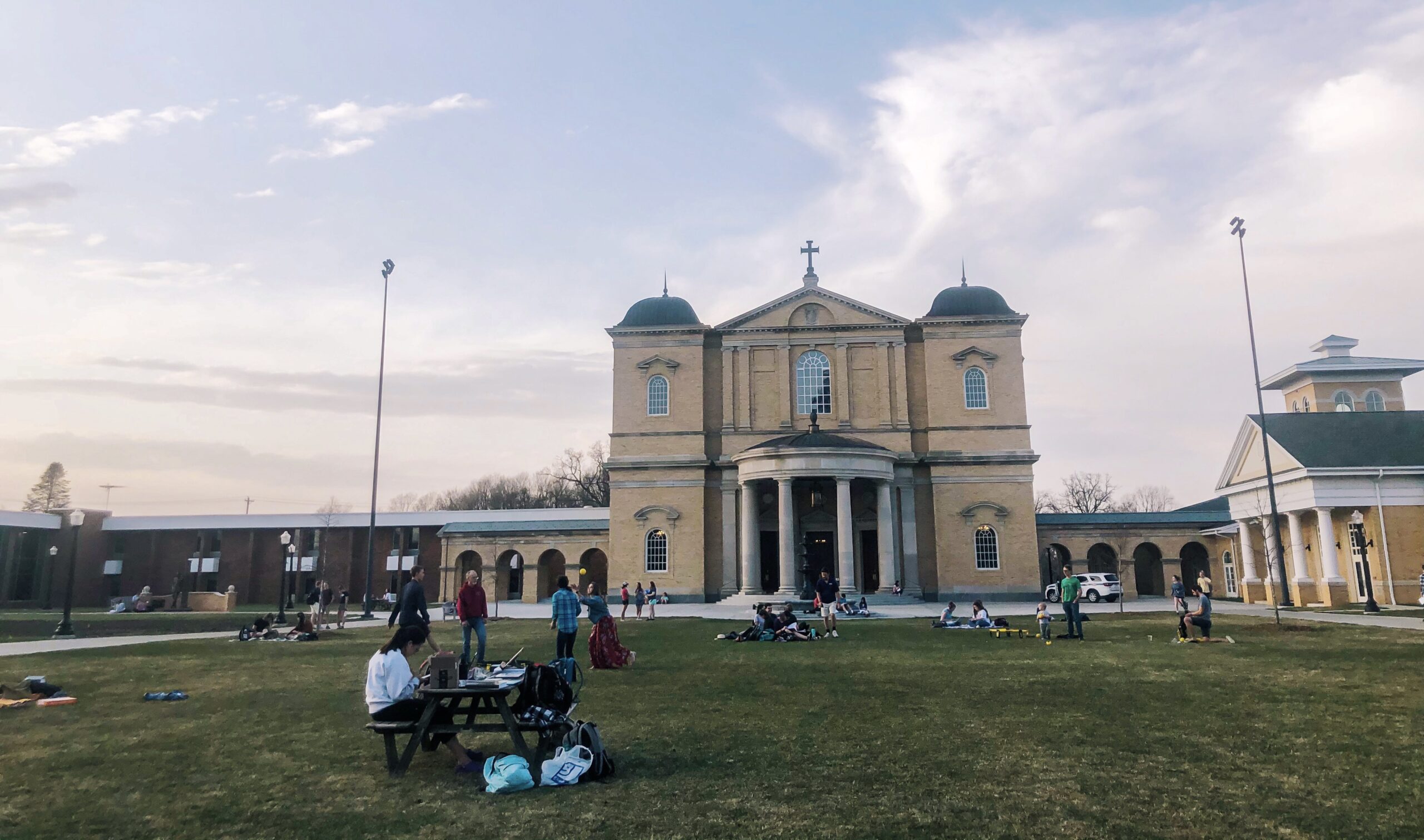
The architects and construction workers finished the Chapel while I was here. I interviewed them with a construction hat on my head, completely covered in dirt, and we laughed together as we marveled at the work they had almost finished. Two more weeks, they said, smiling. I was also there at the inaugural Curate summit — 27 alumni, staff, and faculty planned a womens’ summit for the sole purpose of uplifting and encouraging student women across campus. At the end of last semester I organized the first Hillsdale Half Marathon. “It takes a village,” is the old cliche. But it’s true — more than 80 students, multiple local businesses, and nearly 400 participants rallied around me to make that day happen.
Editors will come and go, but there will always be new stories for them to tell. To those of you who have told me your stories, to those of you whose stories I’ve read, and to those whose stories have yet to be written, thank you. As writers, we do not tell stories for the mere pleasure of writing— we write because there are stories that need to be told.
It has been a gift to share this glorious culture. I will never forget the rich stories of Hillsdale.
