
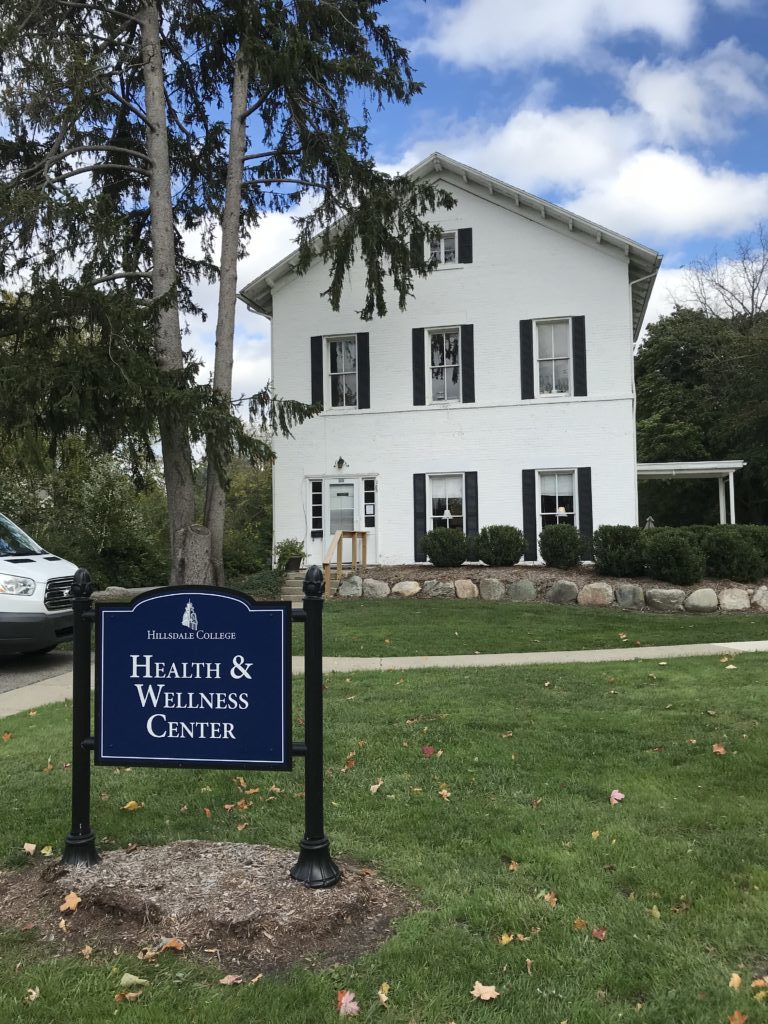
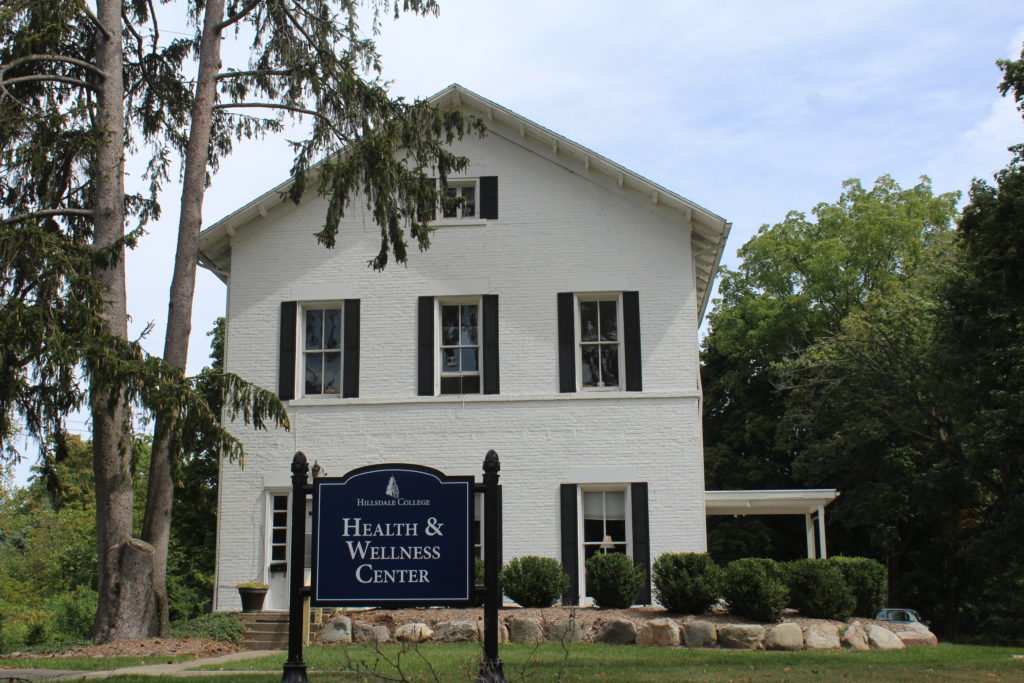
The coronavirus pandemic has ignited a national mental health crisis, but Hillsdale College’s Ambler Health and Wellness Center is equipped to help students face new and old challenges.
The Health Center strives to bolster Hillsdale’s community by providing counseling services at no cost to students, faculty, and staff. The center offers 115 hours of counseling each week, which is abnormally large for a college as small as Hillsdale.
“Most colleges our size don’t have the kind of counseling support we have,” Director of Health and Wellness Brock Lutz said. “It’s a tribute to the college: that we understand it’s a rigorous place, that we push people, and we also give them the tools to handle that.”
Following the recent departure of full-time counselor Kaitlyn Zellner, who moved out of state to be closer to family, Hillsdale hired multiple new part-time counselors.
One new counselor, Dustin Flores, finished his master’s in social work at Spring Arbor University in 2018 and has had a private practice as a counselor since then. Now, he’s joined the Hillsdale team part-time and is available for sessions all day Friday and during weekday evenings.
The recent hiring also allowed for the health center to diversify their staff, Lutz said, such as adding Art Therapist Hannah Walsh to the team. Walsh finished her master’s in Art Therapy Counseling at Emporia State University in May 2020 and started working for Hillsdale part-time this semester.
In their work with Hillsdale students so far, both Flores and Walsh said they’ve noticed the prevalence of anxiety on campus — especially in light of the coronavirus outbreak and national race riots. According to Flores, many students point to extra mental stress starting in the past six months.
“It’s very clear that [the national events] are affecting people and a lot of times they don’t realize it,” Flores said. “People are not coming to me and saying ‘I’m really struggling with COVID-19’ or whatever else What’s happening is they’re coming in because they have a problem they want to deal with and then [the impact of the last six months] comes out through the course of talking about it.”
In responding to the various anxieties, Flores encourages students to allow themselves time off from their obligations.
“Do the things you can feel are recharging you,” Flores said. “You have things you’re doing to be productive all day where you’re just pouring yourself out, and then you have the things that you need to do to, if not pour into yourself, just stop pouring out for a while.”
Walsh echoed these sentiments, noting that while the term ‘self-care’ is a buzzword, everyone needs to set boundaries so they have time to do things that are for themselves and not just for school or extracurricular activities — whether that’s relaxing alone or spending time with others.
Flores added that a lot of students’ mental struggles can also be alleviated by cultivating personal relationships.
“The thing that is most important is cultivating the types of relationships where you can be vulnerable about what’s on your mind and what’s bothering you,” Flores said, “which includes relationships with the counselors.”
As Lutz explained, the ability to attend classes in-person again is important to fostering the kind of community that alleviates the pressure of Hillsdale’s workload.
“Something really challenging with COVID-19 was yes, people had more time to work on homework at home, but they were doing it by themselves,” Lutz said. “Whereas, on campus, we’re all in it together. We can rally and take pride in the fact that we’re doing difficult things together.”
Despite the challenges of mask-wearing and physical distancing, Lutz encourages students to intentionally nurture and maintain that community during this time.
“One thing I have heard several people say, especially when we were still more restrictive with masks, is that because masks are such a pain they would rather stay in their room and study instead of going to the library,” Lutz said. “But we have to be careful with isolating too much…one thing we learned over COVID-19 is that we really need people and we operate better in a community.”
Additionally, the counselors serve Hillsdale to further foster that community that helps others handle the burdens of college life.
As Walsh explained, her job as an art therapist is to help others use creative activities to process thoughts and emotions.
“Art itself is healing, and the creative process is healing at its core,” Walsh said.
According to the American Art Therapy Association, art therapy is “an integrative mental health and human services profession that enriches the lives of individuals, families, and communities through active art-making, creative process, applied psychological theory, and human experience within a psychotherapeutic relationship.”
Like with all counseling, Walsh said, each art therapy session is an individualized experience. Some sessions are mostly talking, while other sessions she and the client do very little talking and just create art.
Overall, Walsh seeks to provide a safe environment where students can process thoughts and emotions and seek assistance in navigating college.
“Counseling is a partnership,” Walsh said. “We have some insight because it’s our job, but we’re there on the journey to self-discovery with you. We’re not going to diagnose you when you walk in the door. We’ll come alongside you with what you need in that time and continue on a healthy journey with you.”
