
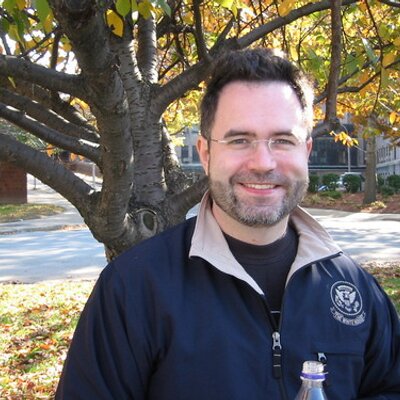
David Mastio is the deputy editorial page editor for USA Today. He started his career as an editorial writer and assistant forum editor for USA Today back in 1995. Mastio also worked as a founding editorial page editor for The Washington Examiner, deputy editorial page editor and senior editor for online opinion at The Washington Times, editorial writer for the Virginian-Pilot, and also served as the Detroit News’ Washington correspondent.
How did your journalism career begin?
I started with USA Today as a news assistant. I was a member of the editorial board, so I got votes on editorials. And I was editing columns, doing research for graphics, and going to get opposing views.
So you’ve worked for several different news outlets since then—the Virginian-Pilot, the Detroit News, the Washington Examiner, Washington Times—do you think that’s normal for a journalism career to move to different outlets?
It’s normal for somebody to move up the food chain. It’s not normal to move back and forth between liberal media and conservative media, and it’s not normal to start at a national outlet and then go to some local outlets.
And so what led you to that path? How did you decide to move?
Well, when I was at USA Today the first time, I’d been there about three years and I asked my boss if I could get promoted to editorial writer and he said I needed to have reporting experience. So I went to the Detroit News and worked in their Washington bureau to get reporting experience and then three years later, he hired me back as an editorial writer. And then I went to work for the Virginian-Pilot because my wife got a job in Norfolk as a prosecutor, and so I wanted to follow her and give her a chance to get a job that she was really interested in.
As the deputy editorial page editor for USA Today, what does a typical day in your life look like?
Well, the first thing is reading a fire hose of columns that come in without being solicited and trying to pick out the best of those. And then I read a bunch more columns that are from our regular writers that we’ve asked for, that they’ve pitched to us, and then try to come up with the best selection of columns for the next day’s paper that covers the news and then gives people some interesting topics that they might not have thought about. I am also part of the editorial board discussions for the opinions of USA Today. I try to guide those discussions to a more moderate path. USA Today leans left as an editorial board, but they’ve always been open to other views.
How did your experience as a reporter help your work on editorial writing?
Well, the core of good opinion writing is good reporting. You can’t do one without the other. And in fact, you probably need more reporting to do good opinion writing. You have to go a level deeper into the topic then if you’re just reporting, where you can get away with floating along the surface of an issue.
What is your advice to young people who want to pursue a career in journalism?
It’s a time of turmoil in journalism. You have to be very passionate and be among the very best to succeed in journalism today. A key thing to keep in mind is that what you learn in college is just the start. You got to keep learning all the way through your career— learn how to be an innovator and adapt to new mediums.
As someone whose career has always followed politics, do you think the rate of political polarization that we’re experiencing today is novel, like between the right and the left? Or has it always been the same throughout your career?
I think it’s much worse today than it ever has been. What’s really changed is that people used to really disagree vehemently about politics. But now, politics is a core part of people’s identity. I can’t remember the exact polling number, but a poll that really struck me was that Democrats object more to the idea of their children coming home with a spouse of the opposite party as opposed to a different race; that it’s a bigger deal to come home with a Democrat if you’re Republican or vice versa, than to come home with a different race spouse, and that says something really tragic to me about where our culture is going.
Who do you think is going to be the Democratic nominee?
I think it’s going to be Pete Buttigieg. I think he’s going to emerge as the consensus candidate between the moderate and the progressive wings of the party. He’s positioned himself really smartly there, and he’s a great contrast to Trump. Where Trump is bombastic, Buttigieg is low-key; where Trump is rambling, Buttigieg is articulate; where Trump is a draft-dodger, Buttigieg served his country; where Trump is not very bright, Buttigieg is obviously brilliant.
You have lived in eight different states, states that vary from California to Virginia. What have you gained from that experience of moving so much?
People everywhere are the same. Americans are good people. They’re open-minded, open-hearted, and willing to take you in just about anywhere
