
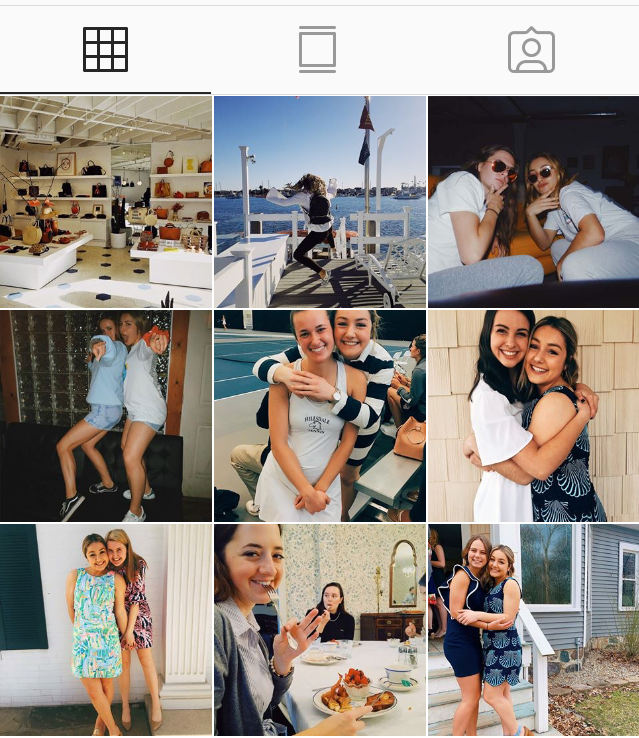
I felt lonely, disliked, and unhappy. So I decided to delete my Instagram, and now I’m more social than ever before.
Social media is not altogether bad. In fact, it offers many benefits: awareness for campaigns or events, connecting and staying in touch despite distance, bringing style inspiration to someone’s wardrobe or living space, or even a good laugh.
But in my experience, social media has caused greater pain than pleasure in its existence. So, I quit. And maybe, you should, too.
My Instagram story is unusual — at least in how it begins. Most people created an account in junior high or high school. For me, it became a college experiment.
My mother always reminded me to embrace privacy and the sacredness of anonymity, encouraging me to never make an Instagram account. Like any other teenager, I felt like I was missing out on something. Maybe, I thought, my social life would improve if I made an account. I wouldn’t feel like I’m always overlooked.
So, after my freshman year of college, I signed up for Instagram. I followed all of my friends, added photos to my feed, and threw out likes like Halloween candy. No longer would I be at a disadvantage. Or so I thought.
Over the next year, however, I began relying on this crutch. I would use Instagram to familiarize myself with people I went to school with, remember people’s names, and generally evaluate people based on their feeds, without ever meeting them. And because of this, I became socially-handicapped.
When befriending someone, after meeting, I would hit the follow button to reinforce the connection. If wanting to talk to someone with whom I don’t usually speak, I could easily comment on her Instagram story or send her a direct message, without ever having to make physical contact. When making a compliment, I could flatter someone from my phone, making exaggerated comments just to show how much I liked somebody’s outfit or their “squad.” Rarely did I compliment these aspects with the same vigor in person.
Eventually, my virtual life began to affect my actual life and emotions.
Last spring, I struggled between friend groups, and quickly saw the evolution of these friendships transpire across my Instagram, as I became disillusioned. Followers who once commented things such as “Omg *heart eye emoji*” or “Can I BE you” on my posts suddenly disappeared.
Quickly, as the likes, comments, and followers fluctuated, so did my emotions. This was when I knew it was time to end my little social experiment.
Within a year, I had about 800 followers, and a typical post — consistent with my well-cultivated aesthetic of blue-green hues — would receive over 300 likes. But, I felt lonelier and less liked than ever.
What were all of these things that became my source of pride and security in the social scene? Numbers. To many, though, these factors are not merely numbers. Followers, likes, comments originally seem to be a source of power, but end up becoming a source of depression and neuroticism.
According to the Child Mind Institute, a 2017 study found that “over half a million eighth through 12th graders found that the number exhibiting high levels of depressive symptoms increased by 33 percent between 2010 and 2015,” linked to increased media screen time.
A girl can become disconcerted if her crush doesn’t “like” her recent post or decide to follow her back, or a guy can casually ask his crush to come over to watch a movie with a quick DM which can easily be unsent if confidence suddenly loses its peak.
With social media, someone can think about his comment or message for minutes or even hours, speculating the different reactions or responses that each will create. And, in effect, the immediate and raw reaction in someone’s posture, shifting of eyes, and general demeanor are lost.
“When we interact with others, we are continuously processing wordless signals like facial expressions, tone of voice, gestures, body language, eye contact, and even the physical distance between us and them,” writes Liraz Margalit of Psychology Today. “We cannot understand the true meaning of an interaction if we do not have the ability to interpret these nonverbal signals.”
Our generation has become so tied to the securities of social media, feeling that it will reduce face-to-face rejection or allow us to create a persona so that others may like us more, when it is actually causing us to become more insecure and less capable of making real human connections.
When I deleted Instagram, I feared I would lose some friends. That’s not what happened. It allowed me to have a fuller social life. But this time, for real.
I no longer scroll through my phone for hours, or wait for a particular person to like my photo, with my state of happiness depending on it. Instead, I chat with a friend to figure out what vacation she just went on or to see who she’s dating. We, now, have actual conversations.
Today, when I socialize, I am able to be fully present. And those are the moments that, without the measure of followers, likes, or aesthetic, I am able to be remembered not by how my feed looks, but how I make the people around me feel.
Isabella Redjai is a George Washington Fellow and a junior studying political economy. She is the assistant opinions editor for The Collegian.
