
Fourteen years ago, my family flew to China to adopt my younger brother. It was a surreal experience, to say the least, even for an 8-year old: The cold absence of liberty and basic freedoms in Beijing was as chilling as a January night in Hillsdale.
But one city we visited in China stood out from the rest: Hong Kong. After spending a week on the mainland, where military guards greeted my family with suspicious glances and whispers, and people went about their day with dark clouds hanging over them, I immediately sensed the difference between Hong Kong, a city forged in freedom, and Beijing, a gloomy metropolis cobbled together by an oppressive regime.
One source of pride for the people of Hong Kong is the Lion Rock Spirit. Originating from a 1970s television drama, the motto expresses the solidarity and perseverance of Hongkongers. Despite the destruction brought upon the city during World War II and the looming communist giant to their north, the people of Hong Kong endured and transformed their city into a beacon of opportunity and economic growth for all of Asia. In so doing, the Lion Rock Spirit has become a source of cultural identity and pride for the citizens of Hong Kong.
On Wednesday morning, Chief Executive of Hong Kong Carrie Lam announced her decision to withdraw the proposed extradition agreement with the People’s Republic of China — a welcomed victory for democracy, and a slap in the face to Chinese President Xi Jingping.
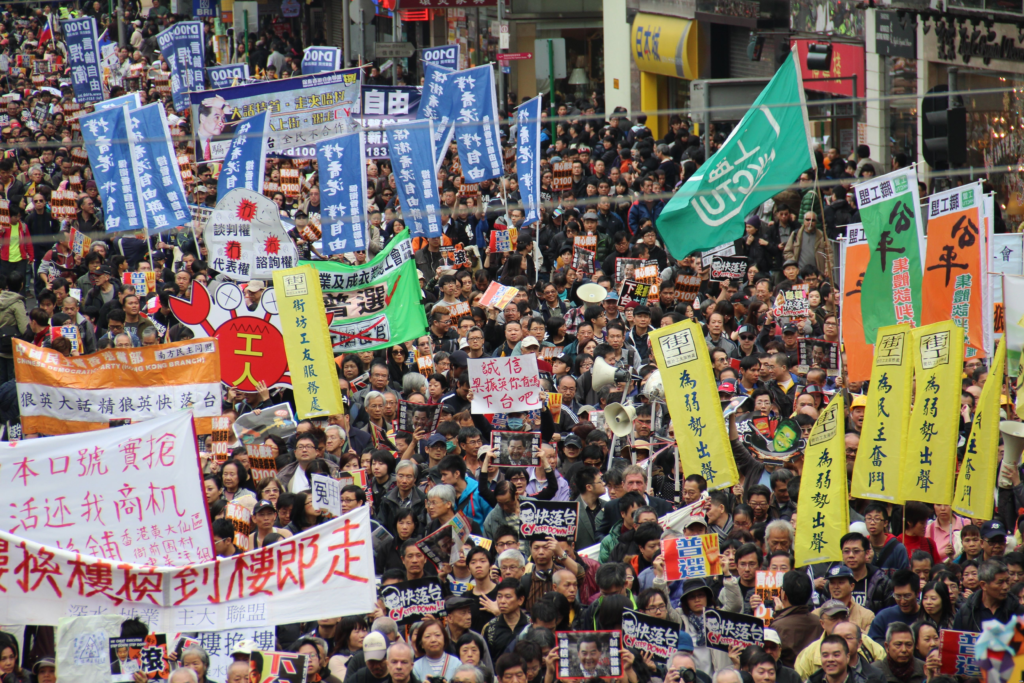
For the last 13 weeks, the world watched the Lion Rock Spirit on display in Hong Kong. Pro-democracy protests raged throughout the city against a controversial extradition bill which would have required any person in Hong Kong indicted for a crime in China to be immediately detained and sent back to the mainland to face charges.
But assuming this marks the end of Chinese meddling in Hong Kong would be the height of foolishness.
The origins of the extradition debacle in Hong Kong go back several centuries to the Opium Wars between the United Kingdom and China. Both powers eventually reached an agreement on a “One Country, Two Systems” policy that ceded Hong Kong to the Chinese in 1997 while allowing the growing island to remain a free market economy with universal suffrage and human rights. But growing turmoil over the extradition proposal led Chinese authorities to use water cannons against protestors and increase China’s military movements in the region.
President Donald Trump’s primary gripe with China is trade, and he isn’t wrong to highlight this concern. For decades, the Chinese have operated with impunity in regards to stealing intellectual property and dishonest business practices. However, as Trump and Xi squabble back and forth over trade, China has adopted an aggressive new foreign policy.
This poses two significant issues for the Trump Administration and entire free world.
First, China is already in a standoff with Japan over the South China Sea, where it has gone about the business of creating “artificial islands.” The Chinese military intensified pressure on Taiwan and South Korea in recent years. And now, it is beyond evident that Beijing is determined to slowly drag Hong Kong away from the west and completely into its fold.
Second, Hong Kong presents a human rights dilemma for the Trump administration. Some argue the United States bears no moral responsibility or right to interfere in the internal politics of China. Indeed, it would be one thing if the Hong Kong public supported a closer relationship with Beijing and full integration into the Chinese way of life.
However, the opposite is true. A recent survey of Hongkongers conducted by the University of Hong Kong revealed support for China is at its lowest point since the Handover in 1997. Fifty-three percent of those surveyed in Hong Kong identified as Hongkongers, compared to a measly 11 percent identifying as Chinese. Furthermore, 71 percent of Hong Kong residents answered “no” when asked whether or not they were proud to be Chinese citizens. The citizens of Hong Kong overwhelmingly disapprove of the proposed extradition deal and Beijing’s efforts to exert authority and control over the island.
The developments in Hong Kong are building to a potential watershed moment for the United States. If the United States sits on the sidelines while China gradually swallows up Hong Kong, it will only embolden Beijing in its mission to exert dominance over East Asia and the Pacific. Furthermore, U.S. inaction in the face of potential human rights abuses in Hong Kong would weaken the resolve of our allies such as Japan and South Korea while simultaneously signaling indifference concerning human rights to Beijing and the rest of Asia.
The course of action for the United States is clear. The Trump administration must resurrect the Southeast Asia Treaty Organization with Japan, South Korea, and Australia to present a united front against Chinese aggression. At the time of its dissolution in 1977, Southeast Asia Treaty Organization faced little to no major geopolitical threat from China. This is no longer the case. Democracies across the globe must confront China’s aggressive activity in the South China Sea and increasingly antagonistic tone with a united front.
The United States, and neighbors such as Japan, Australia, the Philippines, and South Korea, should declare any further attempts by China to infringement on Hong Kong’s internal affairs will not be tolerated. A broad military alliance with the United States, Australia, the Philippines, Japan, and South Korea would give that ultimatum credibility and hold Beijing in check.
President Trump should aggressively pursue closer trade ties with countries such as South Africa, which possess significant stores of untapped rare earth metals to replace the supply purchased from China. If the U.S. can begin importing its rare earth metals from other sources, it would force Xi to dial back his ambitious foreign policy agenda, turn his attention towards home, and rewrite China’s economic playbook for the next several decades.
Many fall into the habit of compartmentalizing international disputes as nothing more than squabbling over lines on a map. Yet when you visit these places, it becomes evident that there is a clear line dividing China and Hong Kong — obvious enough for even an eight year old to comprehend.
Just as West Berlin represented the struggle of the free world against the Soviet Union in the 20th century, Hong Kong now stands as a symbol of resistance. The Lion Rock Spirit in Hong Kong is the same spirit the free world must adopt as a new people struggles to preserve their liberty in the face of evil. It is now a matter of whether or not the United States will meet this challenge in Eastern Asia with the same spirit and determination as the protestors in Hong Kong.
