
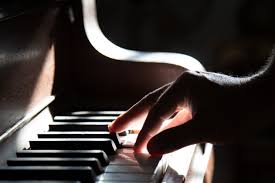
This is your brain on music.
When you listen to music and, even more so, when you sing or play music, your brain lights up. And it’s not just one locale along the neuro-super highway. The entire map erupts like fireworks. It’s not unlike a satellite time-lapse view of the eastern half of our country at night – bursts, and clusters, and veins of light connecting city to city. What’s especially interesting is that playing or singing music turns those fireworks into a gala event. It turns a backyard display into the Macy’s Fourth of July in New York City with seven barges in the East River launching pinwheels and pulsing hearts and swirling fountains. We know the brain does this from various imagery scans we can now do, like MRI and PET scans — something that wasn’t really looked at even twenty years ago.
Neurologists used to think that music happened in one side of the brain. Music in one side, language in the other. They now know that music, especially playing and singing, touches at once every part of the brain that has been mapped thus far. In fact, music has even been found to increase the capacity of the corpus callosum, the bridge between the brain’s two hemispheres. Neurologists also know that the neurons in your brain actually fire along with the tempo of music to which you are listening. Athletes, for example, whether or not they are aware of the science behind it have figured out that listening to music with just the right tempo can improve the physical actions needed for whatever sport they are participating in. Find a song with a beat a little faster than your normal running pace and it will be easier to increase your speed to match the song’s pulse. In other words, listening to and playing/singing music, engaging vast areas of the brain, gives it the equivalent of a total body workout.
I don’t have the space here to go into the possible health benefits of music, but if you get a free moment, google music and dopamine; or music and metabolism; or music and NK (natural killer) cells, along with music and T cells (pretty cool stuff); or music and mental health; or heck, just google music therapy and you’ll eventually come across all of this. By the way, music therapy is a blossoming field of study and if any of the college students reading this have an interest in it, there are more and more undergraduate and graduate programs getting started all across the country. Certainly, any pre-med students thinking about neurology who either play an instrument or simply have a love of music should consider the study of how music affects the brain.
I knew I wanted to be a professional pianist when I was a kid. And while I had no idea of the spectacular physical reaction to the brain on music, I was certainly aware of the emotional reaction. I can still remember being nine and watching Arthur Rubinstein performing the Grieg Piano Concerto with The London Symphony Orchestra and getting chills and thinking, I want to do that! Or being ten and crying tears of happiness listening to The Cleveland Orchestra performing a concert at Blossom Music Center. My first goal was to be a performer and I reached that goal through wonderful teachers, top music schools and summer programs, and practice, and practice, and more practice. At some point I understood that teaching would complete the circuit of music’s importance to me and I applied to and won the job here at Hillsdale College. It was that, a love for teaching, and I wanted to settle down with a steady music gig and have a family. It’s the perfect job for me because I can earn a living both performing and teaching. Fourteen years later, I still consider myself a student, I’m still learning every day, and I still get the same emotional reactions to music. And I hope that I can bring the love and passion I have for music to all of my students.
You might be thinking, “What do I have to do to get this connection to music?” The best part of all of this is that you don’t have to be a music major or a concert artist to reap music’s benefits. Not to go all Yoda on you, but the power of music lies within all of us. You know what music you like and you know when to listen to or play different types of music, based on your moods or desires. And if you want to learn an instrument or sing, then go do it. You’re not too old. Rhythm and melody are innate to human nature and have been a part of us going all the way back to our first appearance on this planet, regardless of how you believe that occurred. American composer Charles Ives once wrote, “Maybe music was not intended to satisfy the curious definiteness of man. Maybe it is better to hope that music may always be transcendental language in the most extravagant sense.” I like that a lot, though I’d change “man” to “humanity.” It makes me very happy to think of music having this kind of power. But maybe even more to the point, it was the virtuoso cellist Pablo Casals who once said, “Perhaps it is music that will save the world.” Wouldn’t that be something?
The editors invite faculty members to contribute to Office Hours, a weekly column dedicated to promoting relationships between staff and students through the giving of advice and stories. Send submissions to the Opinions Editor at kmcghee@hillsdale.edu.
