
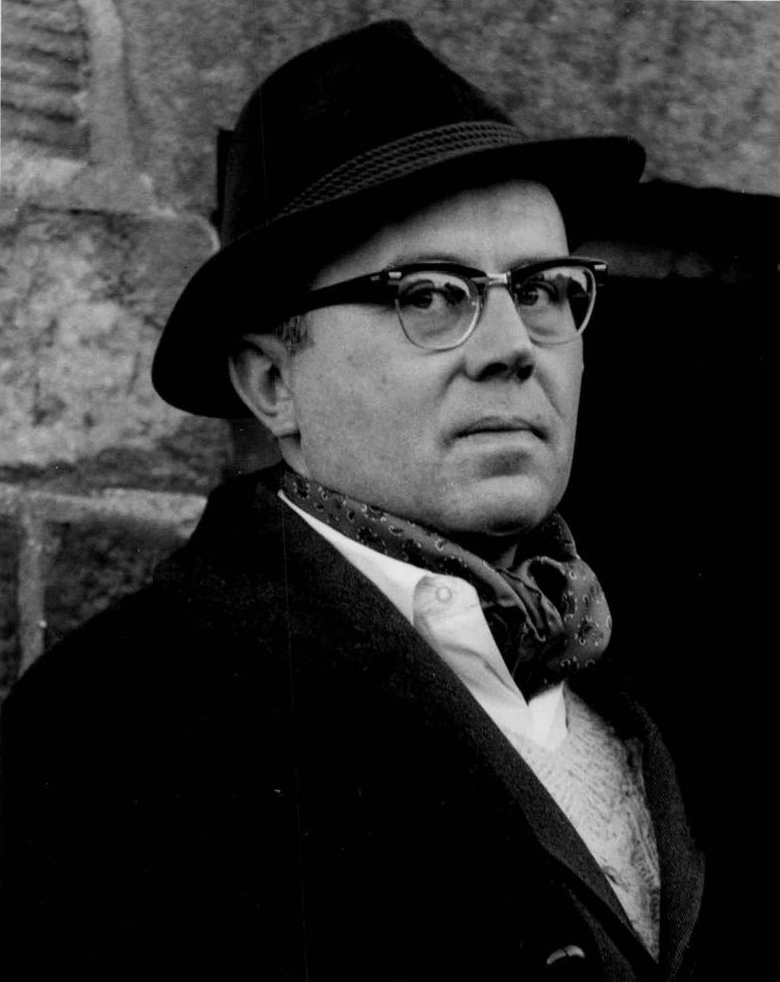
In the office of Hillsdale College library director Dan Knoch hangs a portrait of Russell Kirk. Painted shortly after Kirk’s death in 1994 by former art professor Sam Knecht, the portrait was meant to hang amidst Kirk’s archives and private library. Today, however, Kirk’s books sit in an off campus storage facility accumulating dust instead of contributing to new scholarship.
Hillsdale College should construct an archive to house the works of prominent thinkers. The college is regarded as a mainstay of conservatism, but it is missing the opportunity to be a research center for the intellectual history of conservative thought. If Hillsdale took the necessary steps to make the libraries and archives of thinkers like Russell Kirk available, it could have a great impact on academia.
Hillsdale purchased Kirk’s private library shortly after Kirk’s death in 1994. No one has had access to the books in years because Hillsdale doesn’t have room for them. Hillsdale librarian Brenna Wade remembers being trained as a student worker to retrieve Kirk’s books. But in 2005, the college removed them to make room for the Grewcock Student Center and Kirk’s books lost their home.
Linda Moore, an archivist for the college, said that since then, Kirk’s library has moved several times: From the basement of Delp to the fourth floor of Lane, and most recently, it was moved to a storage facility in Coldwater. In the Carr Library, formerly the college’s main library, Kirk’s books were treated like a special collection and students could request the material. But now, the library moves from basements to attics into storage facilities, and students have lost all access.
“I’m very glad to have Russell Kirk’s books at Hillsdale College,” Hillsdale College President Larry Arnn said in a 2013 Collegian article. “We’re going to build a place for them and we have a commitment to do it.”
Knoch said that although the project still hasn’t started, there are plans to build an extension onto the library that may serve as a place to display and store various special collections, including Russell Kirk’s library.
Kirk was a founder of modern conservatism and one of the most important thinkers of the century. He is regarded as a Burkean traditionalist, one who holds permanent things dear and who relies on prescription for authority rather than on abstract truths. In 1953, he wrote his magnum opus, “The Conservative Mind,” a book that gave American conservatism an identity. Kirk, in fact, was the first to use the word “conservative” to identify the varying streams of anti-progressive thinkers. His book was so momentous that Time magazine dedicated their entire book review section to it.
Access to Kirk’s library would give researchers the chance to learn who may have influenced his thinking. And who knows what hidden gems are written in the margins of his books.
Soren Geiger, Director of Research for the Official Biography of Winston Churchill, said Hillsdale has the opportunity to become a repository of conservative thought. And this only becomes more true as Hillsdale acquires material from other thinkers.
Along with Kirk’s library, the college has purchased or received several other collected works, archives, and papers from important thinkers within the conservative movement, such as William F. Buckley Jr., the founder of National Review; Sir Martin Gilbert, the official Churchill biographer; and Harry Jaffa, prominent conservative and former student of Leo Strauss. The college possesses 1,800 folders containing Jaffa’s correspondence as well as 50 boxes of other miscellaneous material, said Aaron Kilgore, Hillsdale’s Archive Manager. The college also has 243 file boxes of material Gilbert used to write the biography of Churchill.
An archive building would be expensive. “There needs to be climate-controlled space for the material as well as space for a reading room,” Geiger said.
The college’s current plan would add 15,000 square feet to Mossey Library. But Knoch said the college would also need to hire a full-time archivist, as well as additional staff to act as liaisons between the archives and the reading rooms. Geiger said the college is aware that it ought to improve in this capacity.
“When we say yes to receiving or deciding to purchase [an archive or library], we are ethically obligated to do something other than store it,” Geiger said.
Knoch said the college is still waiting to fund the archive project: “The money has not been forthcoming to add to the library.” In 2013, Vice President of Institutional Advancement John Cervini told the Collegian Hillsdale was waiting on a $3.5 million bequest to construct the archive center.
It may be worth the wait, but as the college grows in reputation and continues to acquire the works of prominent thinkers, the need for this building becomes more urgent.
Krystina Skurk is a graduate student at the Van Andel Graduate School of Statesmanship.
