
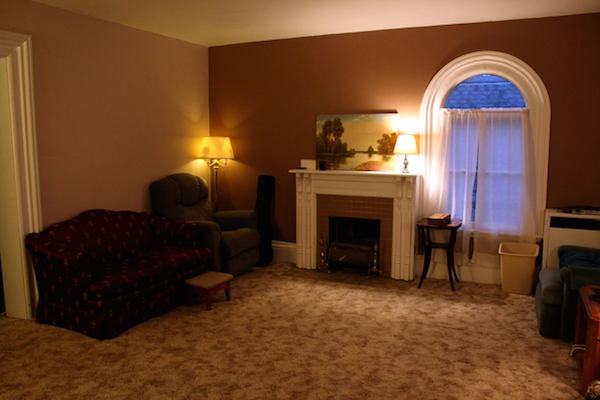
Michael Zabik’s room in an off-campus apartment is fairly plain. With deep purple carpeting and tan walls, the color scheme is hardly exciting. The Hillsdale College senior has hung two flags, Irish and Polish, as a nod to his heritage. A music stand with crumpled music faces a window, and a Bible sits on a small table.
Nothing is unusual about Zabik’s room — except the location.
Zabik lives in a funeral home: the Van Horn-Eagle Funeral Home in Hillsdale, Michigan, to be specific.
The apartment, which he shares with a housemate, consists of two bedrooms, a living room, a full kitchen, a bathroom, and a dining room. The main office of the funeral home is down the hall.
The second twist: He lives there for free.
“It’s a really nice place,” Zabik said. “It’s got a lot of amenities. It’s huge — more than enough for two guys to live very comfortably.”
Zabik and his housemate, former Hillsdale College student Nicholas Baldwin, work at the funeral home to pay rent. They wash and clean the home’s two-car fleet of a minivan and a hearse, remove snow, and, when on call, occasionally help in the removal of a deceased person from a home.
Zabik and Baldwin switch off which nights they are on-call. They also have the option to greet people at the door during visitations, a paid job that can sometimes have an emotional impact, according to Zabik.
“It’s moving to see people coming together again,” he said. “Sometimes you hear people talking about how they have been a little bit removed from the goings-on of their family and somebody passing away has managed to bring the whole family together again, get people talking again.”
According to Funeral Service Coordinator Marv Shull, the 19th-century apartment has its quirks.
“Everything is a good-quality build, but it has the character older buildings get,” Zabik said. “It’s old enough it doesn’t have three-prong outlets — it only has two for the most of the building.”
Zabik and Baldwin aren’t the first students to live in the home, however. The program actually started when its current owner, John Barrett, was attending Hillsdale College, according to Shea Dow, a funeral director at the home. Barrett was the first student to live in the apartment. He later attended mortuary school, bought the business, and continued renting to students.
Dow, part of Barret’s extended family, said the duties of the students have changed since Barrett’s time. Students that were on call used to have to remain at the home, but with the advancement of cellphone technology, it is no longer needed.
“They were more tied to being in the building,” Dow said.
Even with reduced work, Dow said he feels the program benefits students.
“I think what the students gain is a lot of involvement with and exposure to a lot of different people,” he said, adding that learning what families need can build confidence and communication skills.
Zabik agreed that working for the home has impacted him.
“It’s given me a different work ethic,” he said. “It’s encouraged me to be honest, work hard, and to be good to my employer.”
Zabik is also now considering going to mortuary school, although his current plan after graduation is to work as a general manager in North Carolina.
Regardless of how it impacts his career, Zabik said working in the home has given him a new gratitude.
“It makes you appreciate what you have more. It makes you appreciate being young and healthy, your family and your friends,” he said. “It sheds a new light on life that I feel people who are not around that regularly don’t really see.”
