
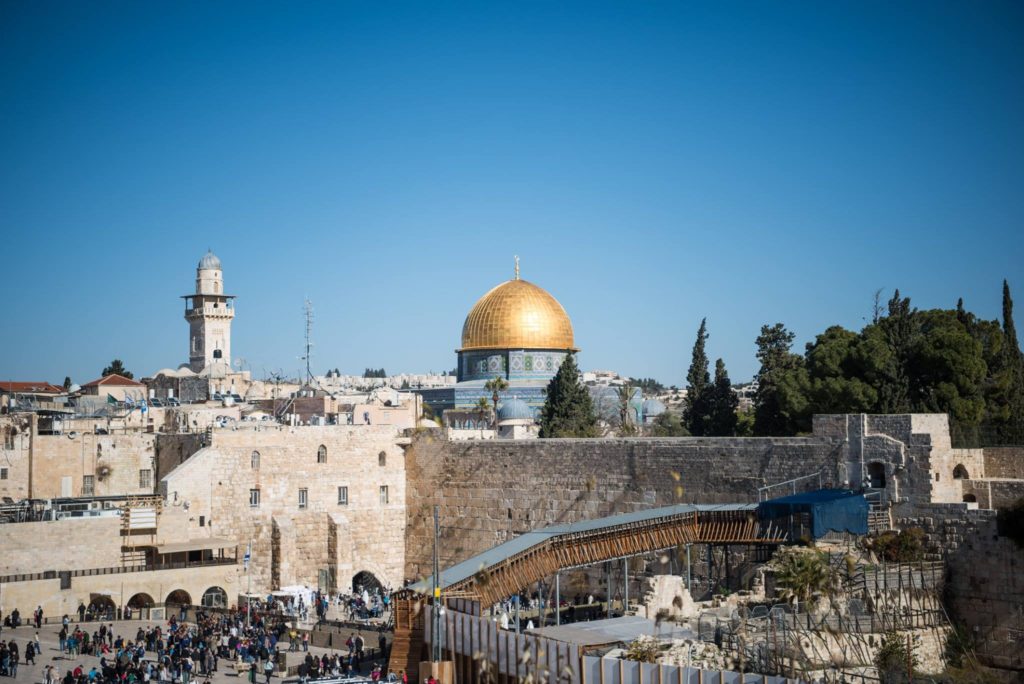
An ancient port city and a modern metropolis seem to be strange bedfellows. In the Israeli city of Tel Aviv-Yafo, however, the two stand side by side, as steel skyscrapers cast shadows on harbors that have been in use since the Bronze Age.
The contrast and coexistence of Tel Aviv-Yafo is a paragon of the Israel’s blending of ancient and modern, which leaves a story to be told and history to be learned with every step.
In one morning, you can find yourself exploring the excavation of the City of David and trekking through ancient water ducts before standing in the middle of Jerusalem’s Technology Park, which hosts prominent high-tech companies such as Intel, IBM, and Medtronic. In fact, Israel boasts more companies on the NASDAQ stock exchange than any country outside of the United States and China. But it is easy to forget this fact when standing at the edge of the Sea of Galilee or looking down through the layers of civilization at Tel Megiddo.
“It’s impossible to go nearly anywhere in Israel without seeing some vestige of the past,” sophomore Sammy Roberts said. “The multiple historical layers were so prevalent that we began to joke whether the McDonalds on the corner had been built on either a Crusader or a Byzantine McDonald’s.”
Jeremy Collins, who moved to Israel with his family over 10 years ago, guided a group of Hillsdale College students who travelled to Israel over winter break. Throughout the trip, Collins described the cultural, spiritual, and political ramifications of the amalgamation of the old and the new throughout Israel.
Collins explained that for the people of Israel, the fusion is more than an intriguing photo opportunity. Instead, the ancient is seen as an intricate part of who they are, while the modern is a sign of achievement and growth from whence they have come.
According to some of the students, experiencing the prevalence of the long history of the region provided an insight into the modern dilemma of the land.
Roberts said while he understands that sorting out the ruins often leads to conflict between involved parties’ stakes to the land, he also believes a better understanding of the ancient and old could help lead to a more stable present.
“Rather than a seed of conflict, the bones of Israel’s past can serve as a reflection on civilization’s temporality and the importance of securing peace in our own time,” he said.
With a better understanding of the Israeli people’s commitment to both their past and their future, perhaps the backdrop of skyscrapers and ancient harbors shouldn’t seem so strange, after all.
