
The Michigan right-to-work law, a bill signed amid controversy last December, will take effect on March 28.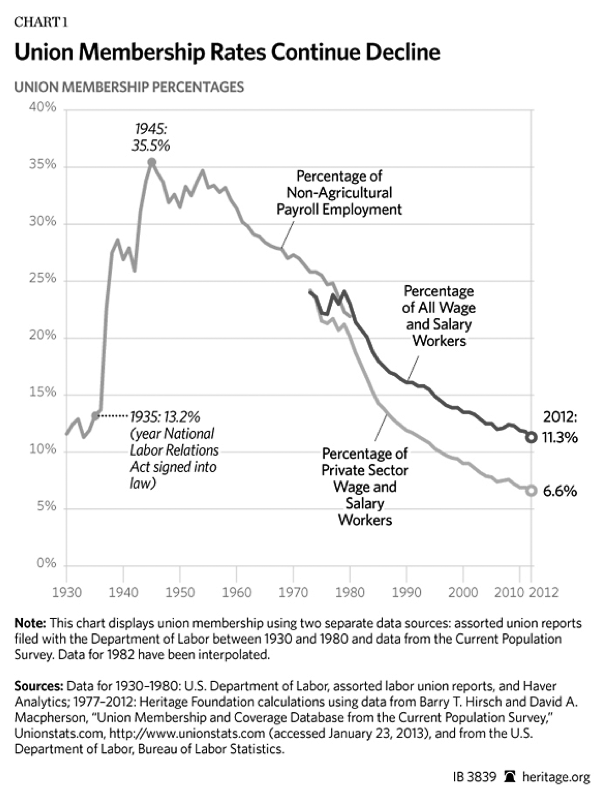
The measure will dissolve most labor unions’ ability to force workers to join and pay dues. It will not apply to police or fire departments or contracts that are already in place.
Michigan Gov. Rick Snyder said in a press conference in December that he signed the bill for two reasons: worker choice, and “more and better jobs.”
“I view this as an opportunity to stand up for Michigan workers,” he said.
He cited the success Indiana had with bringing in more companies and “thousands of jobs” after voting in right to work that same year.
“I believe the same thing will happen in Michigan,” he said.
Professor of Economics Gary Wolfram said he is in favor of right to work but not merely for the jobs it may bring to Michigan.
“I think the biggest issue is that it will reduce the ability of public sector unions to influence political outcomes,” he said.
Wolfram pointed out that the majority of union workers are in the public sector. Last year, the national public sector percentage of labor union members outnumbered private sector 35.9 to 6.6 percent.
“Essentially what goes on,” he said, “is your tax dollars go into a lobbying organization to lobby for more of your tax dollars.”
He added that right to work will promote individual liberty.
“I should be able to decide whether I want to join a union or not,” he said.
But unions disagree, and currently support two bills in the Michigan Senate, SB 95 and SB 96, that would repeal right to work.
“I can’t imagine this thing will go through without a legal challenge,” Wolfram said. “It’s a threat to their revenue.”
Union member and Hillsdale resident Lora Dietz sees this threat to revenue as a harmful thing. As treasurer of the Hillsdale County Intermediate School District Educational Association, she said she will see the decline in membership dues firsthand.
She said this will undermine teacher safety since unions act as insurance for teachers in the case of a lawsuit.
“I don’t like the union protecting the bad teachers, but they protect the good teachers, too,” Dietz said. “Without the union, who’s protecting anybody?”
Dietz has worked with ISDEA for 16 years, and currently teaches special education for cognitively impaired youth, ages 14 to 26.
In the occasion of a lawsuit, the union support would prove crucial, she said, since “in a court of judgment, everybody’s guilty until proven not guilty.”
Dietz sees right to work as an attack on public school teachers.
“Frankly, it makes me angry,” she said. “I take my job very seriously, but the government makes it sound like no one is trying.”
Mary Halley, a spokeswoman for the Michigan Education Association, said they oppose right to work in part because “it allows freeloading.”
Under right to work, she said, unions must still provide services to employees under contract, even if they do not pay dues.
“I don’t get the free choice of not paying my taxes,” she said. “So, why should public school employees be able to get all the benefits of the contract and services of the union for nothing?”
Phillip Patrick is the executive director of a major Michigan union known as Michigan Public Employees, Service Employees International Union, 517m. He said the decline in revenue will “erode” their ability to represent their members.
Because of this, he said SEIU is taking measures to educate their members on the benefits of having a union.
“The basis of our message is belonging to a union creates an opportunity for wages to be lifted, for you to have an effect on the way things are being done,” Patrick said.
He said Michigan workplaces are not the best place to operate, since employees often have to struggle by with sub-standard equipment. Unions, he said, give people a voice and protection.
“We’ve been able to afford our members decent health care, decent pensions, things a person could not hope to gain in another place without a union.”
It may be that unions face an uphill battle repealing right to work. Michigan is the 25th state to add right to work to its law code, and the number of people in unions has been on the decline for the past 10 years.
Last year, according to data from the Bureau of Labor, the percentage of workers in a U.S. labor union was 11.3 percent—the lowest since the 1930s.
From 2003 to 2012, the number of Michiganders represented by labor unions dropped from 23 percent in 2003 to 17 percent in 2012.
Hillsdale alumnus James Sherk (‘03), Heritage Foundation senior analyst for labor economics, explained his understanding of the trend. The shift away from labor unions, he said, is due to the inability of unions to fit individual needs in a modern working environment.
Unions are “unattractive to the modern worker,” he said. “The current model they are in is stuck in the 1930s. The economy has changed enormously since then.”
Today’s economy, he said, is much more competitive. This means that when unions try to impose above-market wages, the company has to compete with non-union companies who pay their employees less.
“It’s going to cost you more to build your car with union workers than with non-union workers,” Sherk said.
The decline of the unions as we know it, he said, will probably give rise to a more competitive system. It would be based on “voluntary association instead of forced association.”
“I think that almost has to be the model going forward, especially as more and more states get right to work,” Sherk said. “They have already demonstrated they are already not looking after your interest.”
Despite the decline, however, Patrick said his union will keep fighting.
“We are not going to sit back and cry in our soup. We will find a way to thrive in this situation,” Patrick said.
sgilman@hillsdale.edu
