
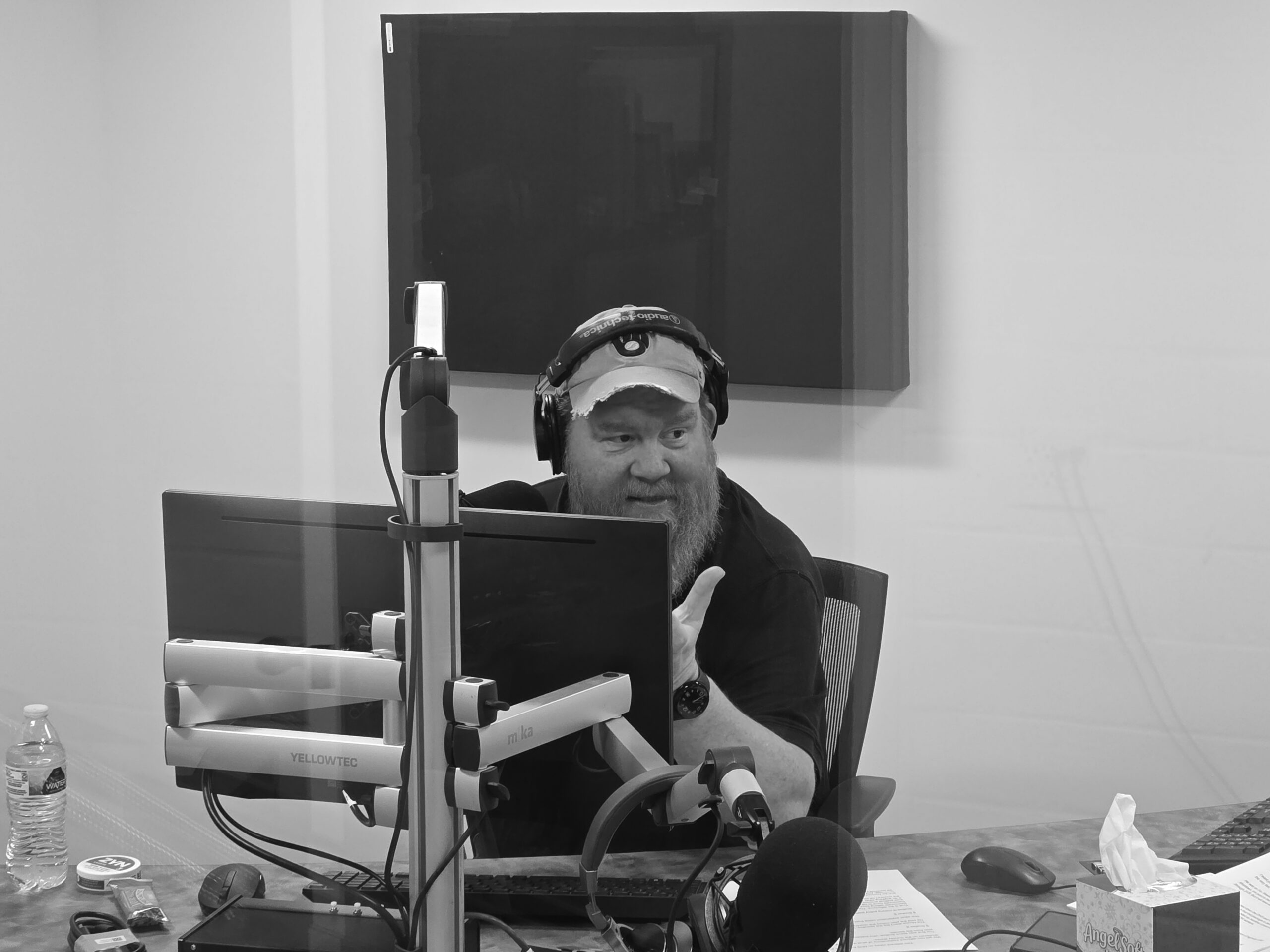
Benjamin Yount is the news director and a show host at News Talk 1130 WISN in Milwaukee, Wisconsin. He is also a contributing partner at the MacIver Institute, a free-market think tank. He has covered government corruption, daily news, and daily insights in Illinois and Wisconsin, and was an early-morning and midday host for top-rated news and talk radio stations around the country before becoming a morning host.
Q. Why did you decide to go into radio and not other forms of media?
A. The proper answer is because my father did radio. My mom was a school teacher, and those were the only jobs I knew. I don’t know what people who have office jobs do. My dad read the news out loud in Chicago, Philadelphia, and New York, and it was a really cool job. You could wear jeans, and he had a great speaking voice — better than mine — and so I fell toward that because I didn’t really want to be a school teacher and I didn’t have any other ideas of what I wanted to do.
Q. What do you love about Hillsdale College?
A. The all-around excellence. The first time I came it was like a J. Crew commercial, everybody’s dressed up, nobody’s in pajamas. I saw one kid on campus in shorts, and I think he was coming to or going from the sports complex or practice. And I was stunned that the college doesn’t take federal money, not even GI Bill money, and that stuck out the most to me. But Hillsdale is just a different place, and I can appreciate it.
Q. What’s your most memorable newscast?
A. It’s not the big stuff. When 9/11 happened, I was at home and I was getting dressed to go to work, and I saw that somebody flew the first plane in. We didn’t know what it was originally. We worked pretty much the next 24 hours straight. You don’t really remember the specifics of that, but that was the first time. I also remember 9/12, the day after, because you have this huge story, and everybody’s doing the story, so you have to try and do your small part. But there was nothing. Everything was closed. It was one of the only times in my life that I ever saw people just wake up and be like, “Well, what happens today? What’s coming today?”
Q. What is the value of journalism?
A. There’s a reason that freedom of the press is among the first things that the founders said you had, and that’s because they understood what it was like when you didn’t have that, when the king could chop off your thumb if you wrote something. These guys understood that the way to a free country is through a free people, people who can think for themselves. And so I’m a huge believer that there always needs to be somebody who can say, “This is what’s going on.”
Q. What role do you see artificial intelligence playing in journalism in the next 10 years?
A. AI is the devil. I won’t even use the voice remote for my television because I don’t want Roku to have my voice. AI, like all technologies and the internet, has some really bad parts for journalism. A lot of places don’t print newspapers anymore. Google and Facebook stole all of the local advertising. But the internet also makes it easier for you to get your story to someone. Substack is a great thing. You don’t need to work for a big paper to write. You can write, you can share it — X, Facebook, all the same things. It makes it easier to get it to people. So there will be parts like that where AI is helpful.
Q. Why should people cover state and local politics?
A. Ninety percent of the legislation passed in the country comes from state houses. What’s Congress done? This is what Congress has done — they shut down. They made you wait in line at the airport because they’re mad that ICE continues to exist, even though ICE is funded for another couple of years. Congress doesn’t pass budgets. Congress very rarely passes laws, and so if you go to Congress, you’re covering either horse race politics, because the midterms are coming up and the Tennessee’s third district is going to be competitive and Nevada’s 15th, or you’re covering personality politics, like “Chuck Schumer said this,” “Hakeem Jeffries said that,” “John Thune said this.” And there’s a value in that. The federal government is huge. But all of the work that gets done for roads, schools, university budgets, and vaccines is done at the state level, and there’s nobody watching.
Q. Why should students get involved with radio journalism?
A. It is a personal medium. I’m talking to you, even though I’m talking to whoever else is listening, but I’m talking to you, and that helps build a better relationship. It helps people feel more connected.
