
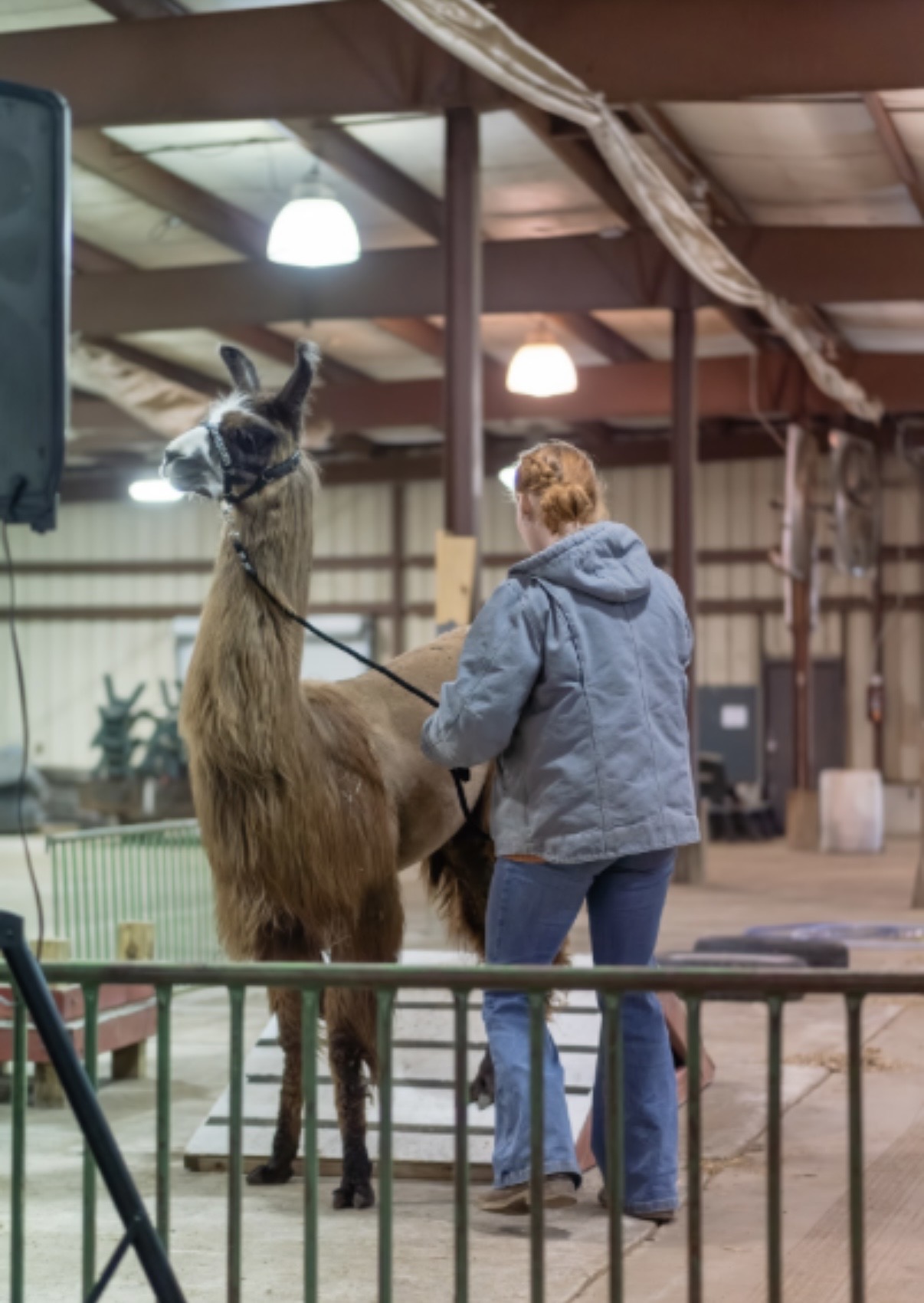
The llamas competed in nearly 80 classes. Anna Northcutt | Collegian
The Michigan Llama Association hosted the Hobo Hootenany Show last weekend.
The first llama was shaved like a poodle. The next had hair so long it looked like a dirty mop. Located at the Hillsdale County Fairgrounds, the Michigan Llama Association‘s Hobo Hootenanny Show featured 125 llamas competing in almost 80 classes Apr. 11.
The MLA hosted the show, and the Alpaca Llama Show Association and the International Llama Registry dual-sanctioned it, according to performance judge Cassandra Williams. The llamas were sorted into classes based on factors such as previous show experience, age, and physical characteristics such as hair length.
“MLA and ALSA are two national organizations, so the people here aren’t just from Michigan, they’re from all over,” Williams said.
Bob Minto, the show’s organizer, said he and his late wife started the show 34 years ago.
“It’s always been what we call ‘hobo,’ that is, people don’t have to groom their animals,” he said. “Most shows from here on out, the animals will be groomed, and they will look quite different, but mid-April in Hillsdale could be a blizzard, so we just said, ‘Hey, let’s make it so that folks can walk out to the pasture that morning, throw the llamas in a trailer, and come to a show.’”
Llamas, a South American cousin to camels, are pack animals that graze in grassy areas and provide wool and transportation.
According to Minto, llama handlers appreciate the show’s laid-back attitude as they get warmed up for the show season without the usual stress of grooming their animals.
In addition, Minto said about halfway through the day, the show will recognize a Hobo Hootenanny king and queen, awarded to whichever handler sported the most authentically hobo outfit.
“We bought the crowns at Hobby Lobby, and one of the gals made the sashes,” Minto said. “It’s sort of a big deal, but it’s sort of funny, too. For 20 minutes, we all take a break and get a laugh, and then it’s back to the show.”
Williams said llamas often get a bad rap, because they can spit and kick, but the stereotype isn’t necessarily deserved.
“Especially the llamas here, the ones that are used to being shown, they’re so friendly,” Williams said. “If somebody just walks up to a llama, nine times out of 10, they will not spit at you.”
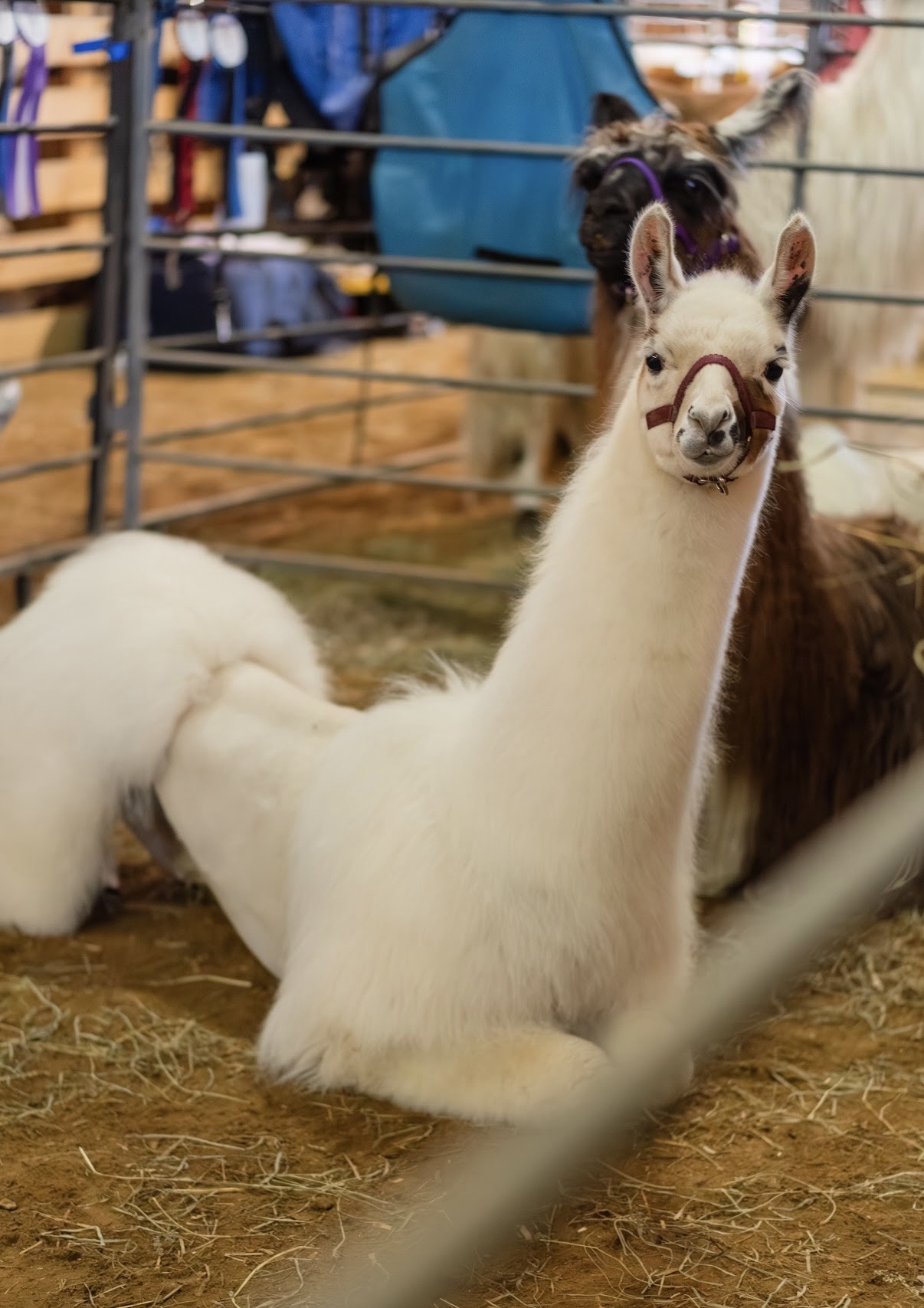
Twenty-four year old Megan Fruits, who has been showing llamas since she was 4, said all llamas may compete in three different types of classes: showmanship, halter, and performance.
“Showmanship is based off the person. It’s how well you as a showman can show off your animal to the best of its advantages and to kind of mask the disadvantages,” she said. “Halter is purely judged off of the llama’s conformation.”
Meanwhile, performance, Fruits said, consists of three different categories: pack, obstacles, and public relations.
“Pack is where we put a pack on the llama’s back, and they carry it through the course,” she said. “It’s supposed to simulate what they would see if they were on a trail, because they are good pack animals. Obstacles is just your baseline stuff like jumps and backing stairs. PR stands for public relations, so that’s if you’re out in the public walking through doors, being by balloons, having somebody pet your animal, and stuff like that.”
While Fruits has shown llamas for years, other attendees at the show competed for the first time or participated more casually through their local 4-H program.
Contestant Karen Hall said she started out showing llamas as part of 4-H growing up and stuck with it afterward.
“It’s a great place to start,” she said. “They give you a more trained animal and help you through the ropes.”
Williams said she also started showing llamas through 4-H.
“My best friend since second grade was doing llamas, and I went out to the farm with her one day, and I just fell in love with them,” Williams said. “They’re like big dogs.”
After becoming certified as a judge last year, the MLA Hobo Hootenanny Show was Williams’ first show to judge. So far, she said, it had been a great experience.
“The llama community is a lot different from other livestock communities,” Williams said. “Everybody here is like a big family, so just smiles all over the barn, and everybody’s really sweet.”
