
The Puritans can show modern Christians how to live wholeheartedly for God, so they are still relevant today, according to Joel Beeke, chancellor and professor of systematic theology and homiletics at Puritan Reformed Theological Seminary.
“The Puritans were strongest just where Christians today are weakest,” Beeke said. “In many ways, Puritans were ahead of their times. They speak into our age powerfully.”
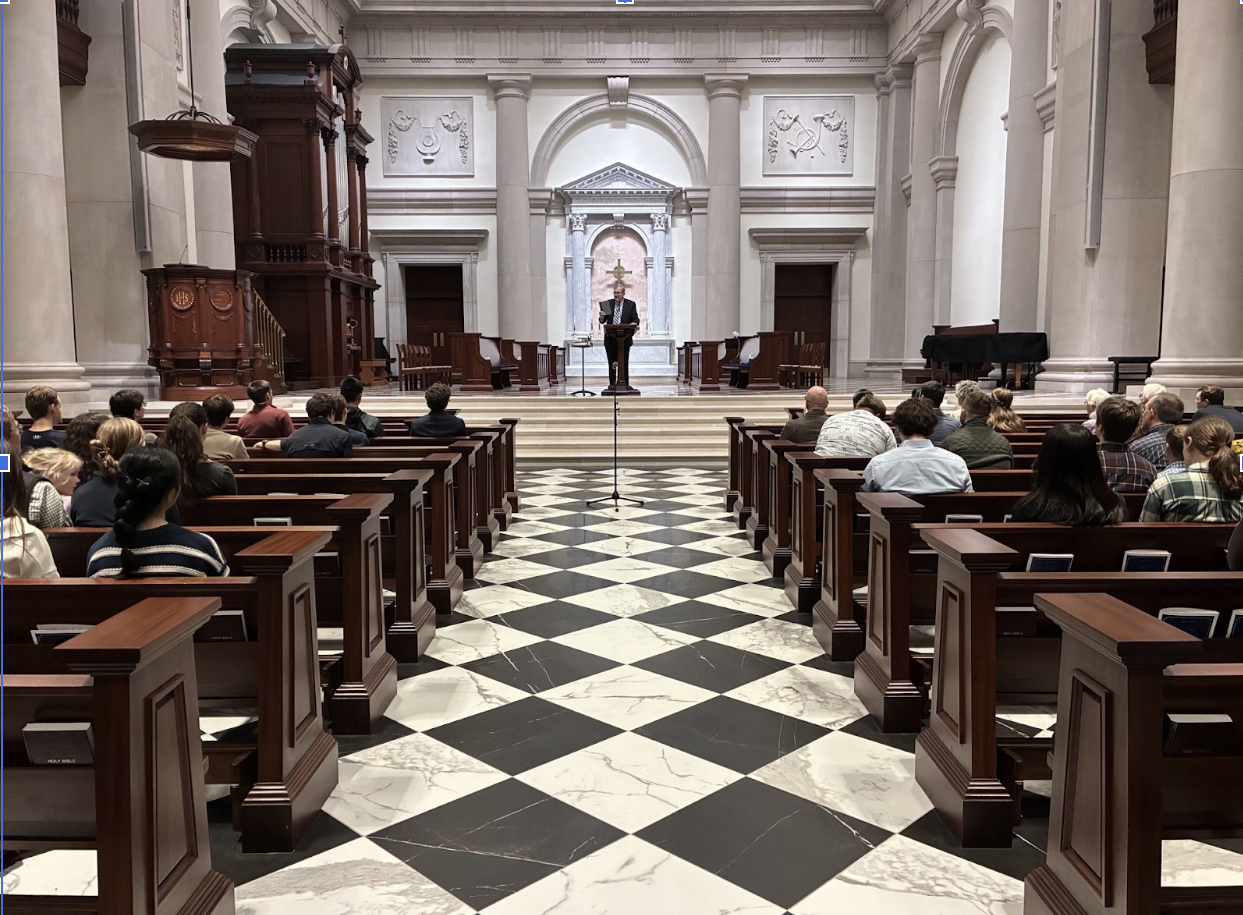
In his March 11 speech for Equip Ministries in Christ Chapel, Beeke said the Puritans’ greatest strength was their wholehearted desire to glorify God in everything and live life completely according to Scripture. This is an area where modern Christians fall short, according to Beeke.
“Halfway or almost Christians often feel uncomfortable with people who are, as George Whitefield put it, ‘altogether Christians,’ because of their zeal and their hunger for communion with God,” Beeke said.
Puritans are often misunderstood by modern Christians, according to Beeke.
“Many people today bat around the term ‘puritan’ as a kind of legalistic Christianity that borders on fanaticism. That’s a stereotype,” Beeke said. “You never hear people who actually read the Puritans say that about them.”
Beeke said the term “puritan” began as a reproach, but they adopted it as a sign of their desire to live purely according to the Bible, or sola scriptura. The Puritans followed reformed doctrine, such as the five points of Calvinism, but began to consider how their theology should practically affect their lives, according to Beeke.
“They wanted to simply apply all these points scripturally to their everyday lives,” Beeke said. “Reformers didn’t have time to do all that. They were busy giving out big doctrines.”
The Puritans can teach modern Christians how to pray, apply Scripture to every part of life, implement family worship, glorify the triune God, see the terrible nature of sin, and endure suffering, according to Beeke.
“Am I really living daily for the glory of God? That’s what the Puritans will teach us,” Beeke said. “We all come short. We all have a blind spot, and we’re all sinners. But what the Puritans do for me is they help me keep my conscience sensitized and my passions whetted to know God.”
Senior Patrick Scott, an officer on Equip’s executive board, said he helped design the posters. Equip’s banner in the union featured Puritan writers in a design reminiscent of “Star Wars” and “Lord of the Rings,” and Scott said it was intended to remind students of well-known fictional characters’ impact on culture.
The goal of the event was to show students that the Puritans should be as well-recognized as heroes from culturally significant movies, according to Scott.
“The poster wasn’t supposed to be either ‘Star Wars’ or ‘Lord of the Rings,’” Scott said. “The idea was just to have a poster that, if you’ve seen the cover posters of those movies, will do something similar with Puritan figures from history. The ‘Star Wars’ font kind of came with it.”
Scott said Equip wanted to get an idea of the student body’s opinions, so some of the posters advertising the event asked, “What do you think about the Puritans today?” The accompanying QR code led to a survey which asked if students approved of the Puritans.
“We got around 60 responses,” Scott said, “It was around 60% positive, 21% negative, and 19% indifferent.”
People become more invested with the QR code, and it brought in student attendance, according to Scott.
Freshman Cayden Gibello said the lecture inspired him to be more intentional about reading the Puritans’ works.
“The emphasis on how the Puritans were so zealous for God and his glory in every aspect of his life is a great reminder to us, especially in modern Christianity,” Gibello said. “We like to cruise. The Puritans remind us that Christianity is intense. We’re meant to sacrifice for it, and Christ doesn’t promise easy living.”
