
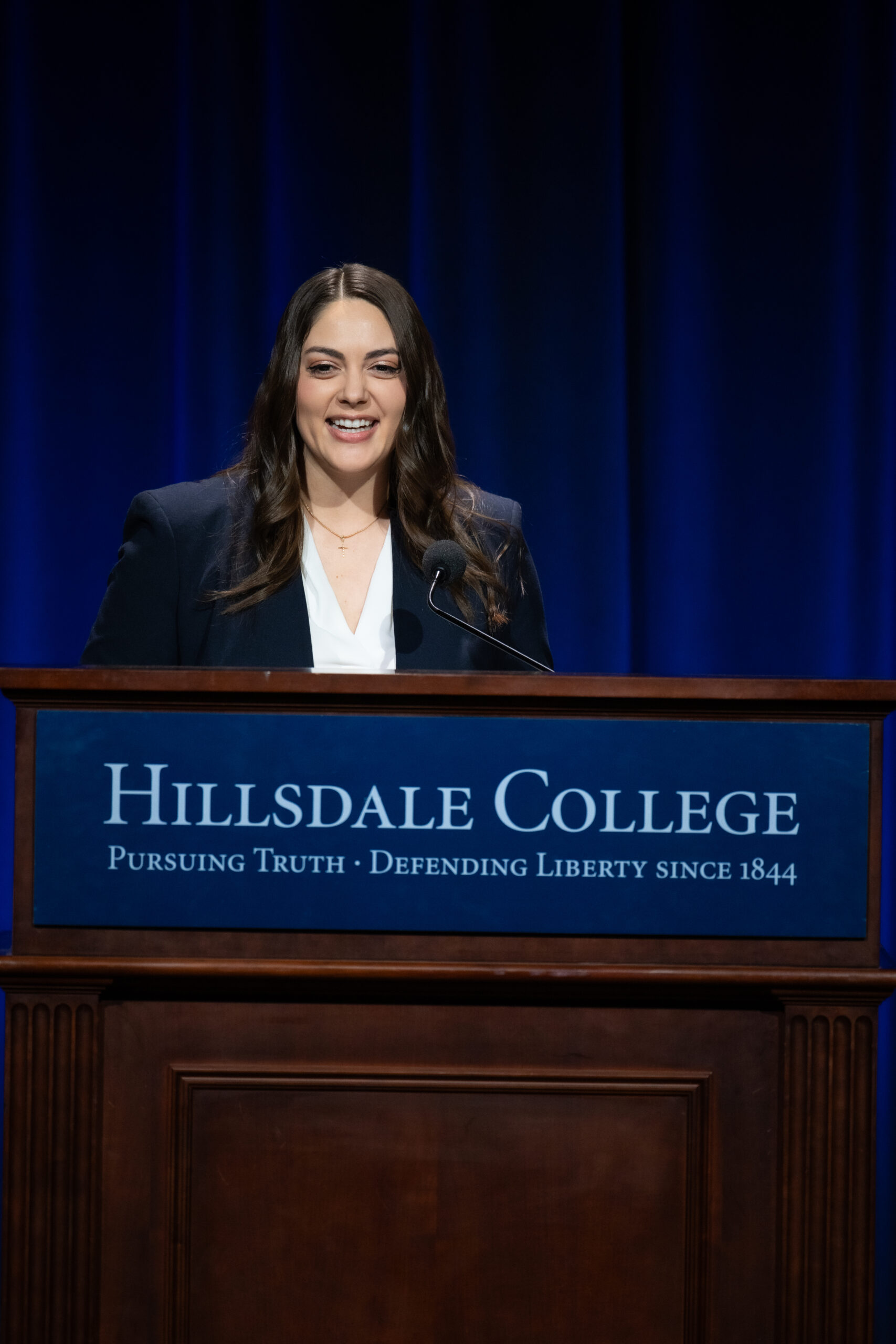
Amber Duke is a senior editor for the Daily Caller. She gave a speech titled “The Rise of the New Media” at the CCA on Tuesday night.
Q. How did you get into journalism?
A. It was kind of by accident. I was graduating from Georgetown, majoring in economics and government and wanted to be an economic researcher. I was applying to a whole bunch of conservative think tanks in D.C. and various nonprofits, and wasn’t having much luck finding a job. I was very insistent that I did not want to have to move back home after graduation, so I just started applying to anything vaguely conservative. I got two callbacks from journalism outlets: Campus Reform and The Daily Caller News Foundation. I thought, “Well, why not?” So I went to Campus Reform because they offer training for new journalists, which I thought would be really useful since I didn’t have any experience. I ended up completely falling in love with the process of being first to a story and uncovering information that hadn’t previously been shared publicly. After a year, I moved over to the Daily Caller to do more national reporting as opposed to campus based reporting. The rest is history.
Q. Who is the most interesting person you’ve interviewed?
A. Definitely Donald Trump. It was a phone interview. I wish it had been in person, but he is obviously someone who has impacted not only American politics, but also culture, the media, every aspect of society. Having the opportunity for even just 20 minutes to pick his brain was really fascinating. It was between presidential runs, so it was the summer of 2021. It was kind of understood at that point that he was still going to play a big role in politics, but no one was certain if he was going to run for office again. It was reflective on his first year in office and things he wished he had done differently or things he was really excited about and happy that he had done in terms of his legacy. So that was very, very cool and a unique experience. I mean, it’s hard to top Trump. Everybody wants to interview Trump.
Q. Do you have a favorite story that you’ve written?
A. That’s a tough one. My first big story that I broke working at the Daily Caller was that Chris Matthews, an MSNBC primetime anchor, had been accused of sexually harassing one of his staffers in the ’90s, and the network had paid out a settlement to the staffer when she left. That was covered by major outlets like NBC, Vanity Fair, the Washington Post, and that was the first time that I felt my reporting had a big national impact. But lately, I’ve been really enjoying writing my twice weekly newsletter, “Unfit To Print,” where I present unique angles and analysis on the news stories of the day and also do original reporting. I debunked the Washington Post report linking homeschooling to child abuse and uncovered the initial court documents in the Kilmar Abrego Garcia case, which indicated he was credibly found to be a member of MS-13 and had been approved for deportation, just not to El Salvador. Any time I can either correct the record or advance the story from what the mainstream media is doing, I feel like I’m adding a great service to the general public.
Q. Do you prefer writing or editing?
A. I love both. It’s been hard for me throughout my career to choose, and my current role is sort of a hybrid one. I write my newsletter in addition to overseeing our original and enterprise reporting with a team of five or six reporters. Writing is really great because you get to be the person who is sharing news and information with the general public. Uncovering stories and investigating can be really challenging and rewarding, but editing is also great fun and rewarding. I get to mentor the next group of reporters who are coming up after me, teach them what I’ve learned in my 10 years of working in media, and hopefully cultivate that next group of conservative journalists who are going to be shaping the conversation.
Q. How do you balance your personal life and your career in a field that is 24/7?
A. Probably not well. But it helps that my husband works in politics as well. He’s a consultant, so he understands the long hours and the weird, flexible schedule sometimes when news is breaking or when I have to be online. So that’s incredibly helpful. But I find that the more time you spend in the media, as a young beat reporter, you are expected to be on the weekends, late nights, being available whenever news breaks. As you get further in your career and start to have a more managerial role, there’s new people coming up who can help manage the 24/7 news cycle and take some of that off your plate. But I think you have to really love it. You have to be super passionate and hungry, and I always tell young journalists this. This is not a 9-5 job, and for the first five to 10 years, you’re probably not gonna make a lot of money. So it has to be something that you really care about. You have to care about making a difference and have a mission behind what you’re doing. Without that, I think people get burned out pretty quickly.
Q. What would you say is the hardest part about being a journalist?
A. I think the part of journalism where I get the most frustrated is when someone beats me to a story that I was working on, because you can put so much time and effort into investigating something, and then somebody else gets it out a day before you did, or even a week before you did, and it can feel like wasted effort.
