
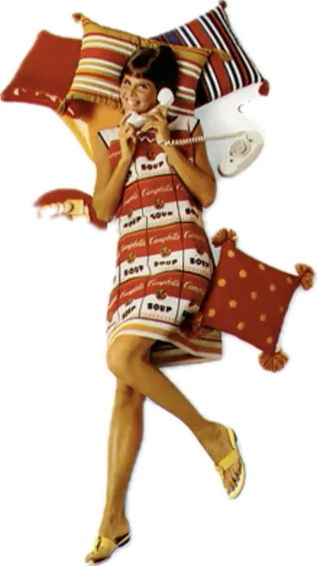
Courtesy | Maria Grazia Stroik
In the 1960s, high fashion was paper clothes, according to Helen Jean, the keynote speaker at the third annual hybrid Hillsdale College Visual Arts Colloquium on Feb. 7.
The Colloquium, which was student-led by seniors Claire Bowers, Maggie McWhinnie, junior Maria Grazia Stroik, and sophomore Maria “Masha” Logvin, featured over Zoom, Helen Jean, the Jacquie Dorrance Curator of Fashion Design at the Phoenix Art Museum, and multiple student speakers.
Student speakers included Alessandra Vincelli from McGill University, Anne Wells from Benedictine College, Hillsdale seniors Oliver Beiser and Phaedra Kelley, and Hillsdale junior Mary Virginia Vietor from Hillsdale College.
Jean’s lecture, “Generation Paper: Fast Fashion of the 1960’s,” highlighted a unique fashion fad during this time period: paper clothes. A collection of these clothes, displayed in the Phoenix Art Museum, represents the obsession with this trend during the 1960s.
“The mission of the collection really is to present clothing alongside artwork,” Jean said. “To really embolden that conversation about what is happening in the period. How, not only is art inspiring life, but how is life inspiring art?”
Jean said it began when the young started to differentiate themselves from the older generations in regard to style. Paper clothes, specifically paper dresses, were marketed toward the young based on what was trending.
“In the 1960s, youth had really started to establish their own style of dressing, rejecting what was really expected from their elders, and being very experimental,” Jean said. “They were the perfect audience for a mail-in campaign led by paper companies.”
Paper companies began printing and designing dresses to be mailed to customers and marketed as “disposable fashion.” The clothes were meant to be a statement, inspiring fashion to become political and representative of ideas or movements.
“This is a flash in the pan moment. It’s an opportunity to be outrageous. It’s wearing a paper dress at a party. I mean, this is such an exciting time,” Jean said. “This is a moment in time where the human body is becoming a billboard.”
The actual construction of the dresses was experimental and caught nationwide attention, with a variety of companies marketing products through paper dresses. Seagram’s 7, Campbell’s Soup, and airplane companies came out with different designs. Although the dresses seemed to be a futuristic trend, they were impractical from the beginning, Jean said.
“In interviews with a few of the people that I was able to find that actually wore these, they were not comfortable,” Jean said. “Again, they were exciting. This was to be part of a wild moment, not to be practical. Air-hostesses that I had the pleasure of interviewing joked that their repair kit was a roll of Scotch tape.”
Designers at the time were convinced the movement was a wave of the future, while others believed the materials could be used like regular clothes and sold for high prices. Ultimately, the paper dress trend ended a few years after it began, largely due to its impractical nature, Jean said.
“You can pack for a weekend and just take an envelope. You can travel around the world with just your purse or briefcase,” Jean said. “It ended because it wasn’t practical. These were not comfortable. They were not recyclable. This is the rise of Earth Day, which was established in 1970, and this was antithetical to wanting to save the planet.”
The colloquium provides an opportunity for students to meet artists or scholars who specialize in different areas of art and art history, according to Assistant Professor of Art Christina Chakalova.
“Part of being on the committee is understanding that it’s not just putting on the event,” Chakalova said. “It’s having a chance to network with art historians and do your best to reach out to them.”
Jean’s talk offered students a different perspective on the fashion industry as a whole, but also provided the interesting parts of its history. The colloquium is a great tradition that the Art department hopes to continue by highlighting elements of important art history, Stroik said.
“The board did a good job of publicizing the event,” Stroik said. “I am excited to keep it going. This year was the best we’ve had. Next year I hope to get our keynote speaker in person.”
