
Novels create the habits of mind necessary for a democracy: a knowledge of human nature, a moral imagination, and sympathy towards others, according to Christopher Scalia, a senior fellow at the American Enterprise Institute.
“Storytelling helps us appeal to the hearts of readers through beauty and by telling compelling stories, by creating myths, myths that ring true, myths that are compelling because they are grounded in truth,” Scalia said.
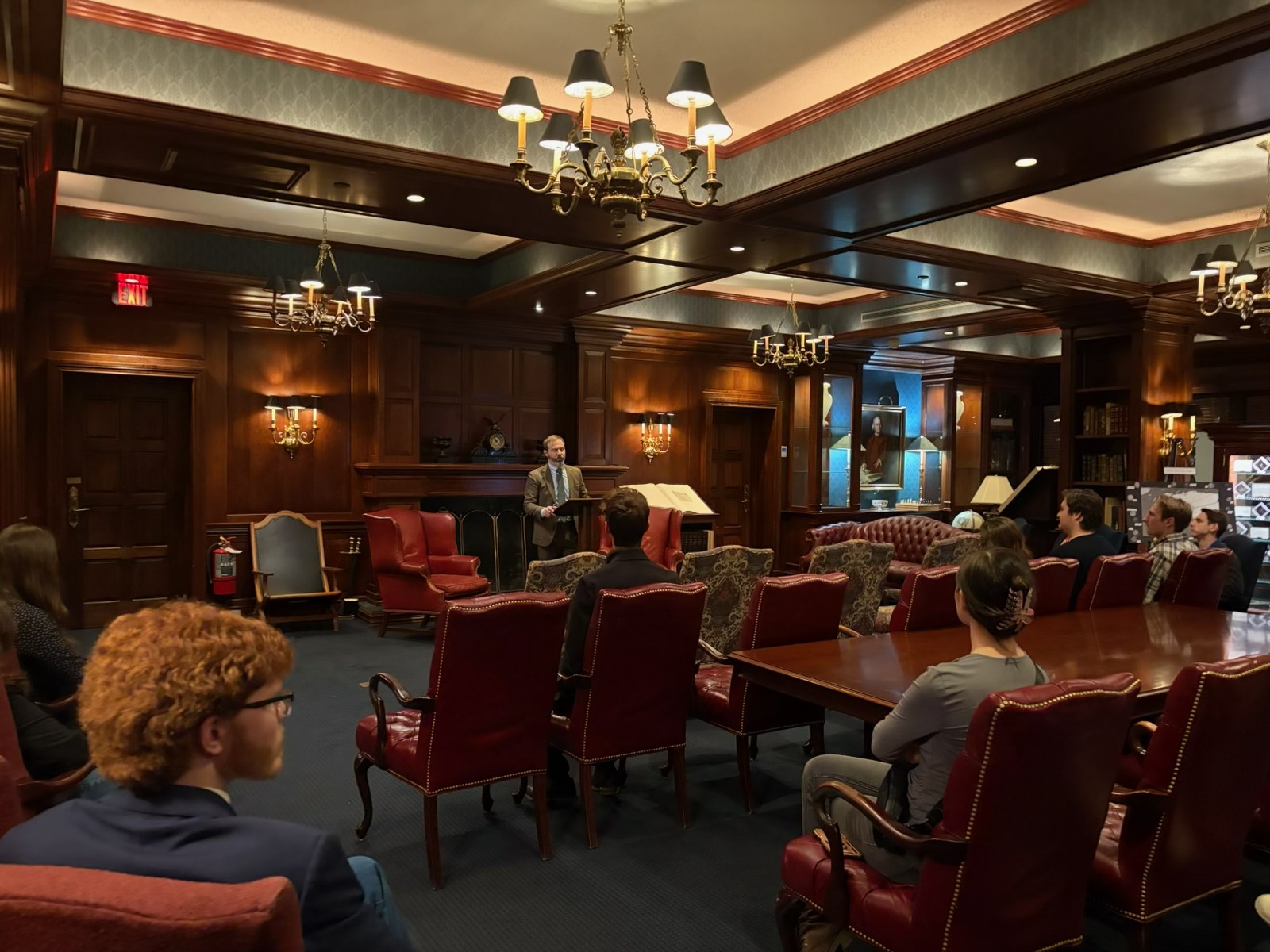
He gave a talk based on his book titled “13 Novels Conservatives Will Love (But Probably Haven’t Read)” Feb. 17 at 6:30 p.m. in the Heritage Room.
Scalia said only a handful of novels tended to come up in conversation when conservatives discussed fiction, such as “The Lord of the Rings,” “1984,” and “Animal Farm.”
“Many conservatives have gotten into a little bit of a rut with that handful of books, and we are not aware of the extent of the literary tradition that discusses ideas of particular concern to conservatives, or that explores conservative themes, or depicts conservative characters with particular sympathy, nuance and understanding,” Scalia said.
The Citizens for Self-Governance club hosted the talk. The CSG vice president and senior Annika Monson said junior Alex Mooney approached CSG about hosting Scalia’s talk.
“It fits in really well with what we’re trying to do as a club,” Monson said. “Obviously, our big focus is for individuals to educate themselves and be educated by others that they can govern themselves well. And so I think a lot of what he touched on this talk, developing that empathy, developing that moral imagination through reading great novels that we haven’t really been exposed to, I think that really fits in to what we’re trying to do as a club.”
In the talk, Scalia quoted the 20th century literary critic Lionel Trilling, who called the novel “the most effective agent of the moral imagination,” and argued novels taught the extent of different personalities.
Scalia also claimed that novels can help people be more sympathetic to each other. He referenced a letter Pope Francis wrote in which Francis explained that studying literature can help form a person’s spiritual life.
“One of the things he focused on was the empathetic abilities, the empathetic imagination, and that’s very important in a democracy,” Scalia said. “We have to be able to understand other people. Pope Francis made an important distinction, though. He said that empathy does not mean that you suspend judgment.”
Scalia said NPR reported on a study that found that 30% of Americans now say they may have to resort to violence to get the country back on track, with 31% of Republicans and 28% of Democrats affirming this belief.
“I don’t think reading a lot of Jane Austen will solve that problem,” Scalia said. “I’m not that delusional about it. But I think a lack of fiction in our diet is probably both symptomatic and a cause of what we’re seeing around us.”
Scalia said not all great fiction tries to develop sympathies, especially not satire, but much of it does.
Scalia recommended Samuel Johnson’s “Rasselas,” Walter Scott’s “Waverley,” Nathaniel Hawthorne’s “The Blithedale Romance,” Evelyn Waugh’s “Scoop,” Willa Cather’s “My Antonia,” and Zora Neale Hurston’s “Their Eyes Were Watching God.”
Sophomore and CSG co-president Noah Abrudeanu said that he enjoyed listening to Scalia answer questions.
“The way that Dr. Scalia answered questions was very indicative of his deep knowledge of literature,” Abrudeanu said.
