

Students walk toward Jerusalem in the footsteps of Christ.
Moira Gleason | The Collegian
In Jerusalem, you can walk through an ancient biblical tunnel during the day and party in a marketplace at night. I know, because I went to Israel with 18 other Hillsdale students over Christmas break.
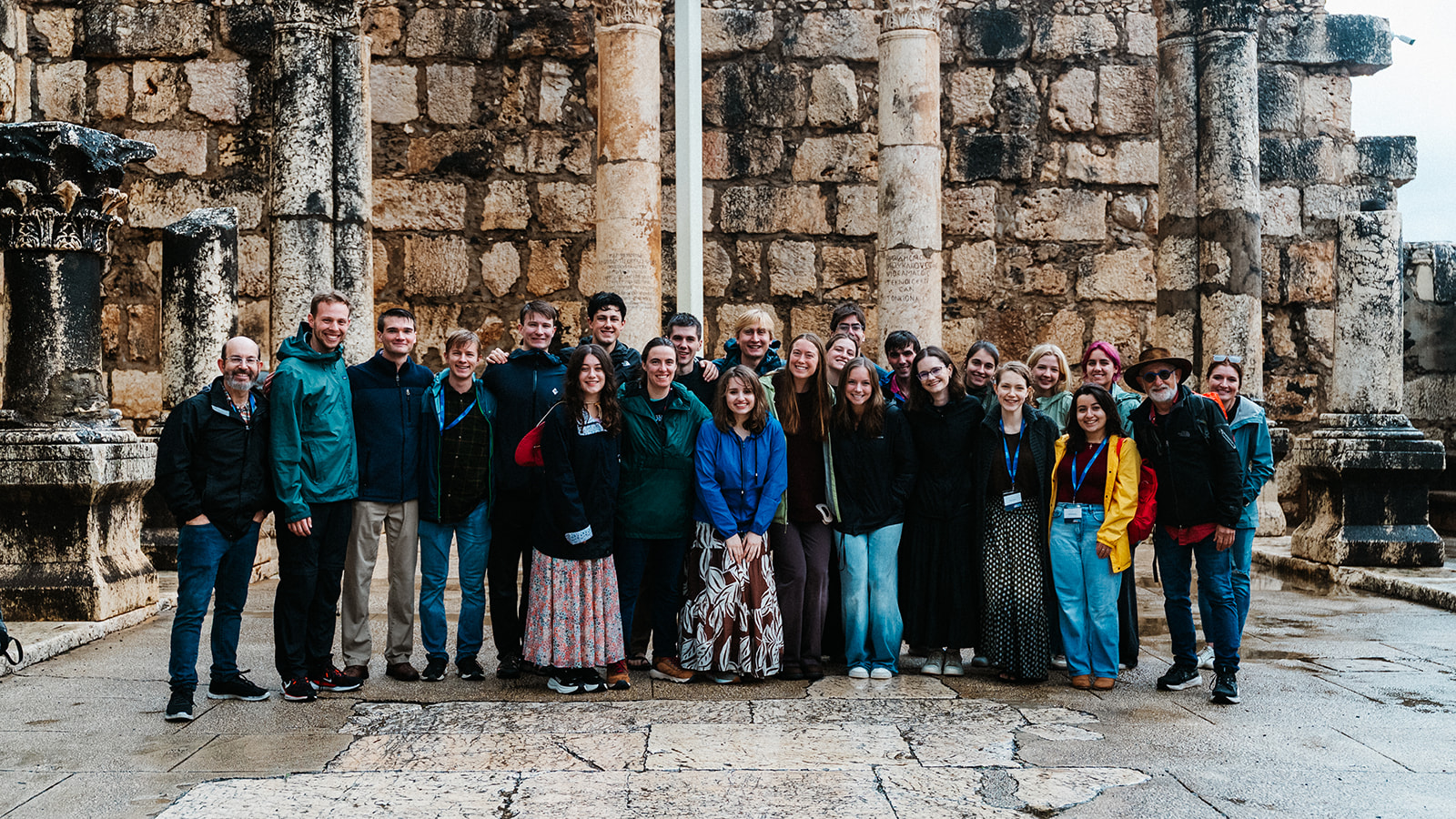
Christian nonprofit organization Passages took a group of students from Hillsdale, along with other college students and young professionals, to Israel for 10 days. For me, the trip was both a pilgrimage to the Holy Land and an immersion in the post-Oct. 7 Israeli culture of resilience.
We began with the Sea of Galilee (which, by the way, is a lake). We made our way around Magdala and Capernaum, and, unlike the Apostles, we had a comfortable tour bus. We traveled to the holy sites where Jesus gave us the Beatitudes, told Peter to feed his sheep, and calmed the sea. “Put your faith in God when the winds of life rock you,” our chaplain told us on our cruise around the lake. Immediately, a gust of wind rocked our boat. God indeed has a sense of humor.
In Nazareth, I asked myself the 2,000-year-old question “What good can come from Nazareth?” In this little town, God became man and lived his hidden life. But aside from the Basilica of the Annunciation and religious gift shops, it appeared rather run-down and quiet, with the exception of the Muslim call to prayer.
Today, the town is more than two-thirds Muslim with a Christian minority. It has Catholic and Orthodox churches, both claiming to be the spots where the Angel Gabriel appeared to the Virgin Mary to announce the Messiah’s coming. After partaking in some Nazarean shawarma (thinly-sliced meat served in a pita with vegetables and sauce), we stood on Mount Precipice, the mountain that overlooks Mount Tabor and the Valley of Armageddon. It’s also where the crowd tried to throw Jesus off the mountain in the Gospel of Luke.
In Jerusalem, we walked through Hezekiah’s tunnel, which the books of Kings and Chronicles say protected the city from an Assyrian siege. We also visited the Southern Steps and Western Wall of the Temple Mount. We saw traditional sites of the Upper Room where the Last Supper took place, the spot where the Virgin Mary was assumed into heaven, and King David’s tomb.

Courtesy | 4th Shore Production
At Yad VaShem, the Holocaust museum in Jerusalem, Israel Defence Force soldiers around the same age as us walked by, some with guns strapped across their chests. In Israel, soldiers are required to learn the history of the Holocaust and the state of Israel. Because many Jews came to Israel after the Holocaust, threats to the Jewish people and the land they consider their home harken back to that time.
The next day, we visited the site of the Nova Music Festival, where Hamas massacred 378 and kidnapped 44 people on Oct. 7, 2023. We walked around a nearby kibbutz in Kfar Aza where Hamas murdered 62 residents and took 19 hostage. In a country of only 9.8 million citizens, every Israeli either knows someone or knows of someone who was killed by Hamas, if not on Oct. 7 alone.
I admit that I came into the trip uneducated and apathetic about the conflict. But as I stood in the spots where people my age were slaughtered, learned from traumatized people, and heard from afar as nonstop artillery fire went off in Gaza and shook the ground beneath me, I changed my mind. I understood better the Israeli character and the necessity of defending Israel.
Between the Holocaust and Oct. 7, I’d never considered so much suffering at once. There is no sufficient philosophical answer to why so many innocent people died. But, as a Christian, I was reminded that even God was unjustly killed — and that somehow this is a cause for hope.
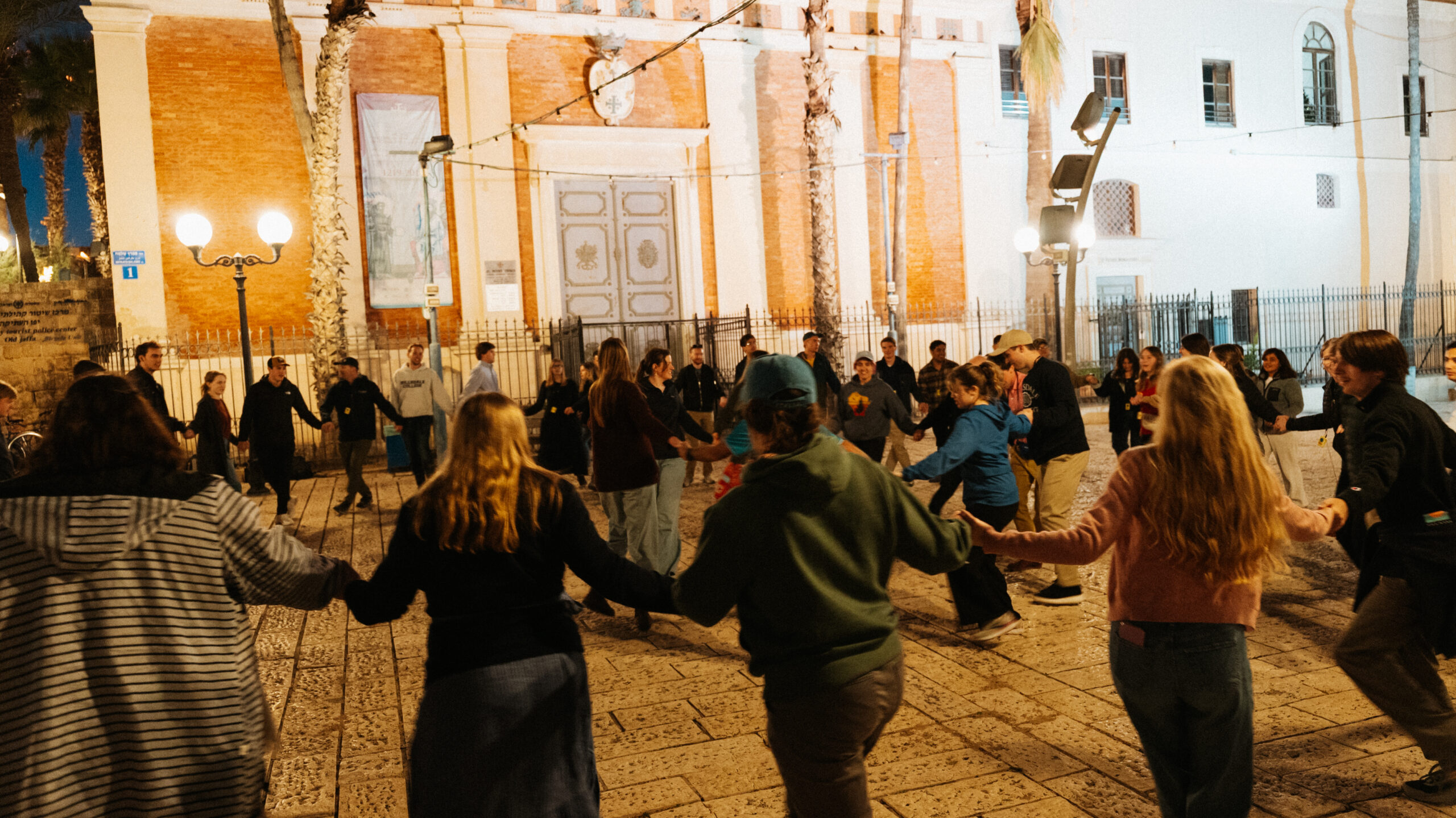
We walked the Via Dolorosa in Jerusalem, the path that tradition claims Jesus took to his death on the cross, and made our way to the Holy Sepulchre, the spot which Christians have venerated for 1,600 years as the place of the crucifixion and burial of Christ. Praying at the site of the cross, celebrating Mass in the tomb, and touching the stone on which Jesus’ body was anointed were the most moving and deeply spiritual moments of my life. In the midst of the greatest death and destruction came a glorious resurrection. This is our answer to death. And it suffices.
The Passages trip opened my eyes to great suffering, and it also opened them to intense joy. From the warmth of the Orthodox Jewish family that welcomed us into their home for Shabbat to the liveliness of the young Israelis singing and dancing in the marketplace — these are people who still have hope.
Am Yisrael Chai — the people of Israel live.
