
Courtesy | Unsplash
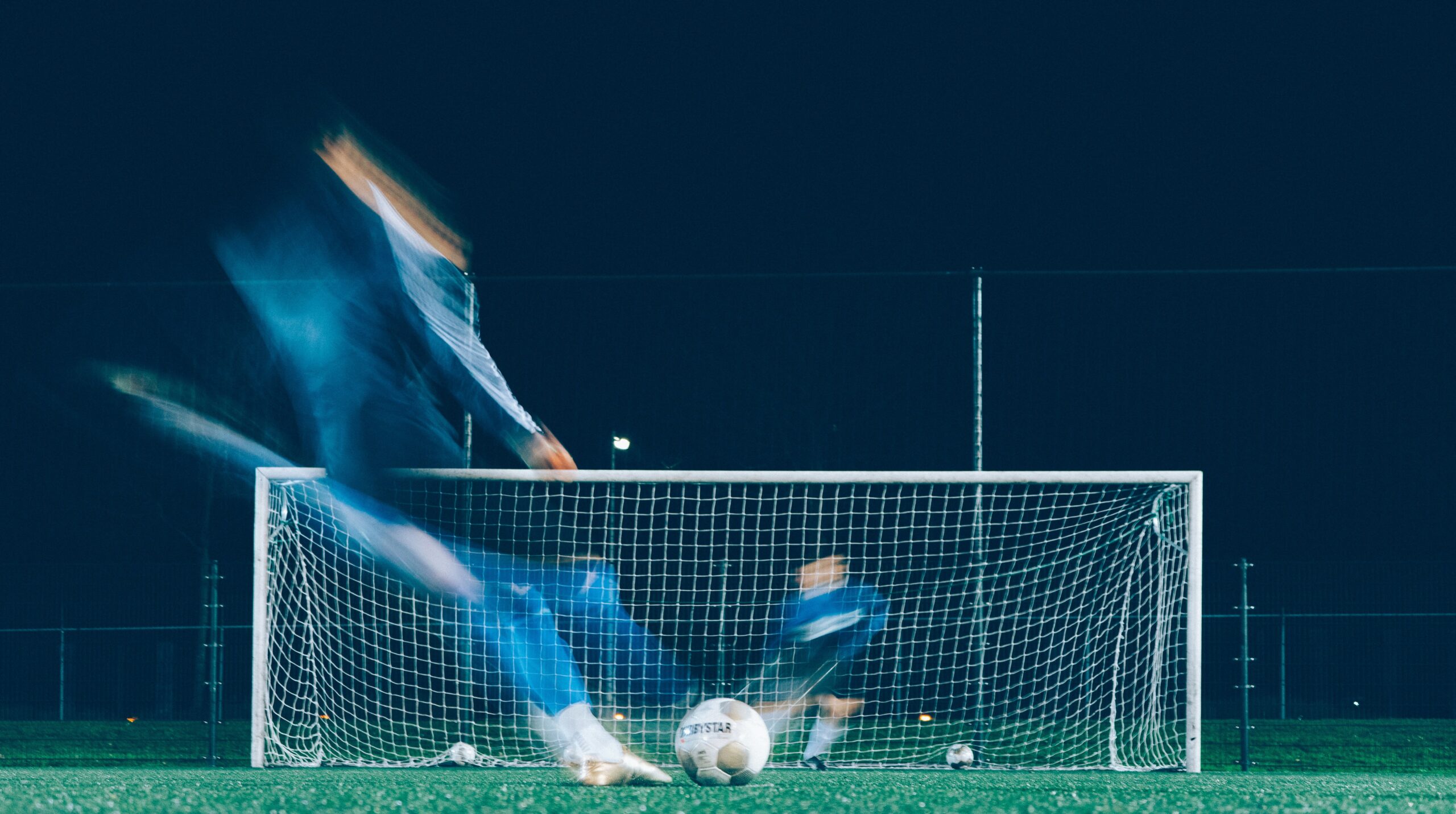
Lionel Messi places the ball on the penalty spot and glances down the field to where the French goalkeeper, Hugo Lloris, stands, anticipating the coming shot. All Messi has to do is land the ball somewhere within the 24-foot wide by 8-foot tall goal a mere 12 yards away — in the presence of nearly 90,000 spectators and millions viewing online. It is the 23rd minute of the 2022 FIFA World Cup final, a matchup between Argentina and France.
He makes the shot, placing it in the bottom right corner of the goal and bringing Argentina into an early 1–0 lead. They would go on to win the game in a penalty shootout, 4–2.
A penalty kick 12 yards from the 24-foot-long goal line is an unjust way to punish the defensive team for a penalty, especially at the largest soccer event in the world.
A rule change to move the penalty spot to the 18-yard line in professional soccer would challenge players and ensure that a penalty in the box is not, practically speaking, a goal. Currently, approximately 75% of professional penalty kicks result in a goal. This conversion rate is too high and takes the competitiveness out of the game at this level.
Just because the ball was in the 18-yard box at the time of the foul does not mean that play had a 75% chance of resulting in a goal; yet the current penalty line seems to suggest that the play would have almost assuredly resulted in a goal had there not been a foul. This is incorrect. The offensive team was fouled, but 12 yards does not rebalance the fairness scale, it only tips the scale in the opposite direction.
Manchester City Football Club forward Erling Haaland has a penalty kick conversion rate of 85.9%, Inter Miami CF forward Messi’s conversion rate is 77.9%, and Real Madrid CF forward Kylian Mbappé’s conversion is 82.35%. There is nothing challenging these professional players and forcing them to improve their penalty kicks.
The 2026 Men’s World Cup will run from June 11 to July 19 this year, with games held at stadiums across the Americas, including in Boston, Mexico City, and Toronto. No spectator wants to recreate the final match from four years ago.
At a 12-yard distance, the odds are stacked, unfairly, against the goalkeeper. Yes, the offensive team should have an advantage because it was the team that took the foul, but the defending team should still have a reasonable chance of saving itself. With the conversion rate this high, goalkeepers and their teams are practically doomed once the referee blows the whistle inside the 18-yard box. The only exceptions to this rule are special actions, such as goalkeeper infringements, which rarely happen and award the opposing team an indirect free kick.
Moving the line back 6 yards forces the player taking the kick to overcome more distance, which is a fair challenge. The accuracy of a penalty kick is crucial. A player must be able to place it wherever he likes, preferably one of the bottom two corners, to avoid the goalkeeper. These bottom corners are the hardest for goalkeepers to cover and finding the perfect window will become more difficult for players, thus challenging players to improve their accuracy.
The near-certainty of penalty kicks adding a mark to the scoreboard also encourages players to fake a foul or seek other avenues of drawing an ill-awarded foul. A player can know that, should a foul be awarded in the 18-yard box, they will score a goal. This practice encourages players to fake fouls while simultaneously discouraging officials from calling true fouls because the stakes are high if they do.
This proposed change would also assist the goalkeepers by granting them a few more seconds to make decisions and act — making it harder for the player taking the penalty kick. Currently, goalkeepers have 0.3 seconds to react to a penalty kick. Because of the lack of reaction time, goalkeepers often study game footage of their opponents before matches, especially their penalty kicks. Goalies are encouraged to use this information to choose the corner they will dive to before the penalty kick is taken. Maybe this change would give goalkeepers a complete half-second to react to a direct shot.
Imagine sitting at a game for more than 90 minutes to see one goal — basically an automatic goal — and nothing else. The goal was not an amazing action shot, did not have an impressive pass, and did not force offensive players to outsmart defenders. Instead, the ball was placed directly 12 yards in front of the goal, with the goalkeeper having 0.3 seconds to respond. This is widely anticlimactic and unjust. Should a game end with a 0–0 score, the teams and their supporters can rest knowing that, at the very least, the teams battled and no unjust goals were awarded by the officials.
If the goal of athletic rules is to establish an outline of conduct that ensures legitimate skill triumphs, and penalties are awarded when the conduct is breached, then penalties must match the severity of the foul. Otherwise, athletic rules are not accomplishing their end, and are not serving the game as they were intended to. If this is the case, referees might as well begin awarding the offensive team a goal instead of a penalty kick in the interest of time.
Ellie Fromm is a junior studying history.
