
The Hillsdale City Council scheduled public hearings for Feb. 16 to establish 2026 Special Assessment Districts.
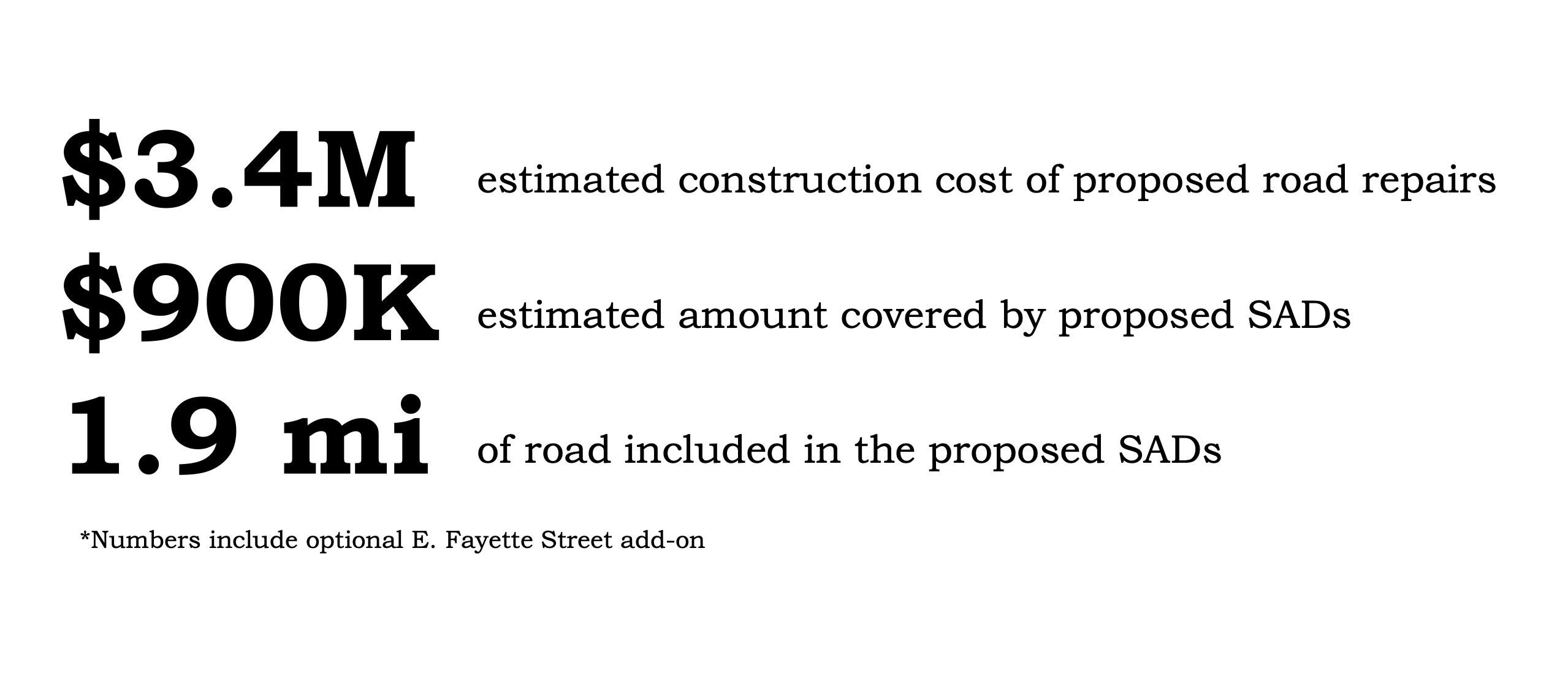
Director of Public Services Jason Blake and City Engineer Robert Stiverson introduced a three-phase SAD plan for the 2026 construction year. The plan would repair just under two miles of roads deemed dilapidated by the city and would cost between $3 million and $3.4 million dollars, according to Blake. A SAD designates run-down roads for repair and funds the work by taxing property owners in the specified district up to $5,000.
Assistant City Manager Sam Fry explained council must agree to set public hearings for the three phases of the proposed SAD plan before construction can move forward.
“If council wants to set up public hearings for these three projects, you would go ahead and adopt the resolutions to do so,” Fry said. “The purpose of a public hearing is we also have to verify, if we get any petitions, whether they are coming from folks inside that district.”
The work for 2026 would be broken down into three overarching districts. The first would repair sections of Arch Avenue, Industrial Drive, and Proctor Drive and would cost an estimated $1.3 million. Part of the cost of the Arch Avenue SAD would be offset by federal funding, as previously reported by The Collegian.
The second SAD would repair South Street from South Broad Street to Reading Avenue and would cost roughly $775,000.
The third SAD would repair Oak Street from the St. Joseph River to East Fayette Street, with an optional add-on of East Fayette to East College Street. Depending on whether the city goes ahead with the optional add-on, the cost could be either $960,000 or $1.3 million.
“What we’re doing right now, or what we’ve proposed, is roughly $3.5 million of road work effectively, with about $900,000 or so coming from special assessments,” Fry said.
While the first phase of the 2026 SADs is relatively certain, the second two have sparked controversy.
Ward 2 Councilman Matthew Bentley told The Collegian Oak Street residents have been fighting the proposed SAD for months. Typically, SADs are capped at $5,000 per parcel. According to Bentley, Oak Street residents have been requesting that the cap be lowered to $2,800 each.
“Our city has systematically failed to maintain our streets through regular budget allocations. Now, we’re proposing to transfer the cost of decades of neglect directly onto the shoulders of residents who are already struggling to make ends meet,” Jill Hardway, an Oak Street resident, said at Tuesday’s meeting. “This is not just an inconvenience. It’s a potential financial catastrophe for working families and seniors living on a fixed income.”
It is possible for the residents in a proposed SAD to reject the proposal if it can acquire signatures from 51% of its parcel owners, according to Ward 4 Councilman Robert Socha. Then, it can petition the city council to reject the road repairs. Currently, Oak Street residents are working on getting these signatures. The council can then override a SAD rejection if seven of the nine council members agree.
Socha suggested returning the discussion to committee so as to avoid the projects being shot down.
“If there aren’t seven of us that are willing to vote against those letters of opposition, then I would suggest that we not spend the city’s resources to do any further work on those projects,” Socha said.
Socha proposed the council discuss lowering the SAD cap from $5,000 to something more manageable for residents. City staff pushed back against this, however, saying that it would delay construction substantially.
“If the caps are lowered or we change the percentage that’s assessed, we’d have to scale back the work,” Fry said.
Ward 4 Councilman Joshua Paladino told The Collegian that he believed construction would continue at the same pace should the cap be lowered, thanks to added funding from the college’s city endowment and the Michigan Road Funding Package passed in early 2025.
Paladino expressed his frustration with Hillsdale’s system of road funding in general.
“I think we need a new funding source, long story short,” Paladino said. “These debates are not going anywhere; there will always be a claim of injustice or inequity, and parties will be right, and Councilman Socha will be right in saying that we just need to move on. And everyone will be saying something that’s correct, but we’re not really getting anywhere.”
The council agreed to set the public hearing for Feb. 16, but will meet before then to discuss possible changes to the cap, according to Paladino.
“If we don’t do something, the projects are going down,” Bentley said.
