
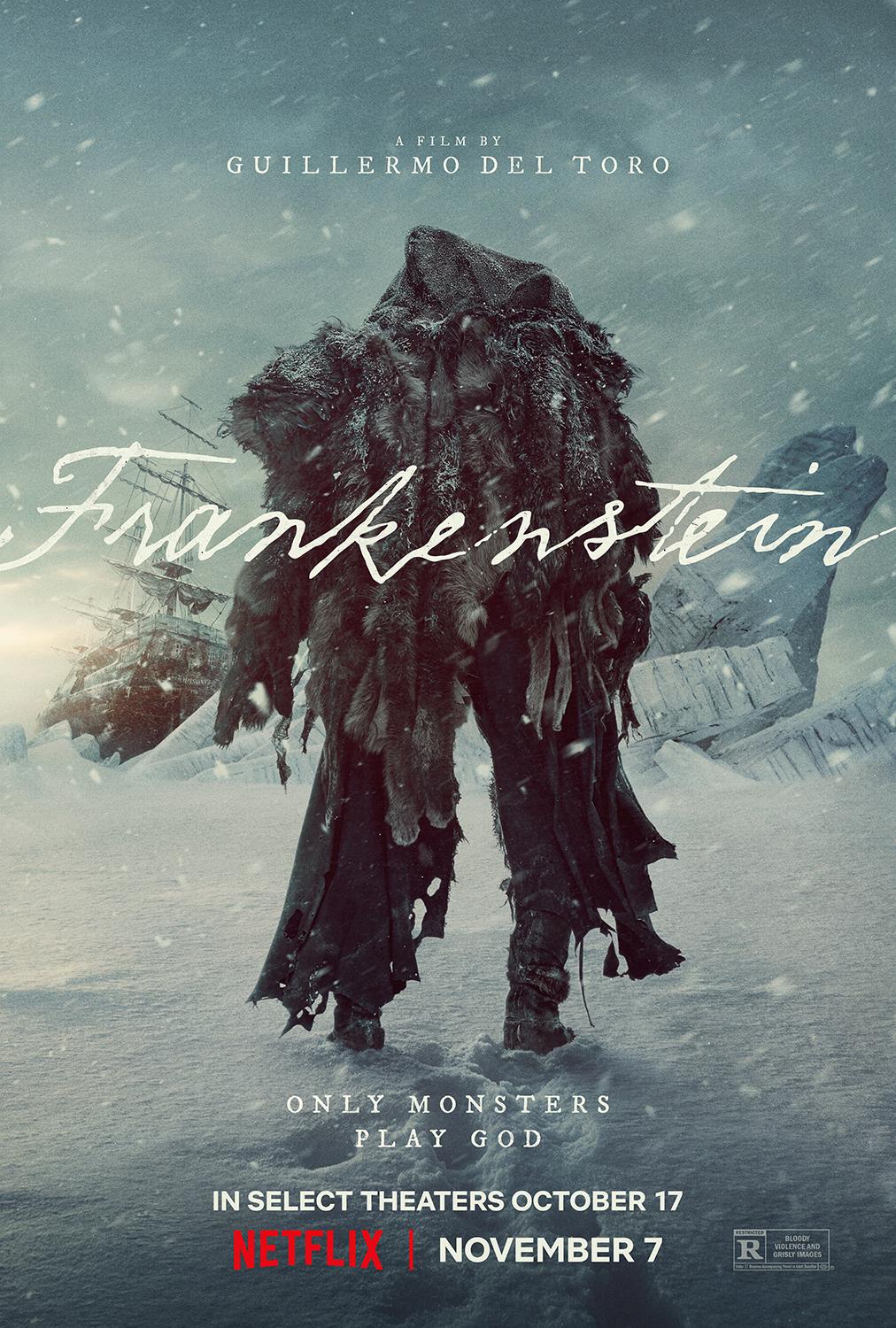
The poster for Frankenstein
Courtesy | IMDb
Director Guillermo del Toro’s latest creature feature delivers a thrilling, philosophical, and stylized take on Mary Shelley’s classic story “Frankenstein.”
“Frankenstein” hit select theaters on Oct. 17 before its Nov. 7 release on Netflix, debuting with an 85% critics’ score and a 95% audience score on Rotten Tomatoes.
The movie follows the book’s well-known plot: Victor Frankenstein, an egotistical scientist, sows together a humanoid creature from various body parts and brings it to life. However, because of repeated mistreatment and rejection from humanity, the creature becomes vengeful and murderous, vowing to destroy his creator’s happiness.
This new adaptation delivers thrills — such as the creature’s birth and the lab’s destruction — and takes enough liberties to leave the audience guessing what will happen next. The cast that includes Oscar Isaac as Frankenstein, Jacob Elordi as the creature, and Mia Goth as Elizabeth, delivered on all their fronts. Their performances were subtle during emotional moments and haunting during horror scenes. Hollywood news outlets have already suggested the film’s potential for an Oscar win.
Del Toro’s cinematic style — grotesque and macabre, but somehow beautiful — is its own character in the movie. The shockingly gory violence that earns the film its R rating feels fitting in the context of the story, though those with queasy stomachs might want to shut their eyes. The cinematography, color grading, and elaborate gothic costumes seem ripped right out of classic Hollywood movies. Del Toro used as little CGI as possible, emphasizing practical effects, grand sets, and stunts. As a result, the film has a sense of realism that many modern-day blockbusters don’t.
Perhaps the most famous elements of “Frankenstein” are its philosophical themes about the creation of life and the nature of evil. Del Toro takes liberties with how he handles these themes. In the book, Shelley leaves it ambiguous as to whether Frankenstein or the creature is the true monster. Del Toro, however, takes a clear stance: Victor Frankenstein is the monster, and del Toro went as far as to have one character say this out loud. Frankenstein even commits one of the killings that the creature did in the original novel, and even though it’s an accident, it cements him as careless and deranged.
Though some might complain about the director’s liberties, del Toro’s choice to focus on a select few of the novel’s themes, like man’s arrogance in playing God, makes for a more grounded film.
Still, some of del Toro’s changes missed the mark. Having Frankenstein and the creature reconcile at the end was out of place at best and cringeworthy at worst, especially after the amount of murders committed. The scenes of graphic nudity had no bearing on the story and were clearly slipped in to sell tickets (clicks?). As such, some viewers might want to steer clear.
Despite these minor flaws, Guillermo del Toro’s “Frankenstein” is a long-anticipated film that is worth the hype. It’s a beautifully shot and phenomenally acted piece of cinema that will keep living long after its creator is not.
