
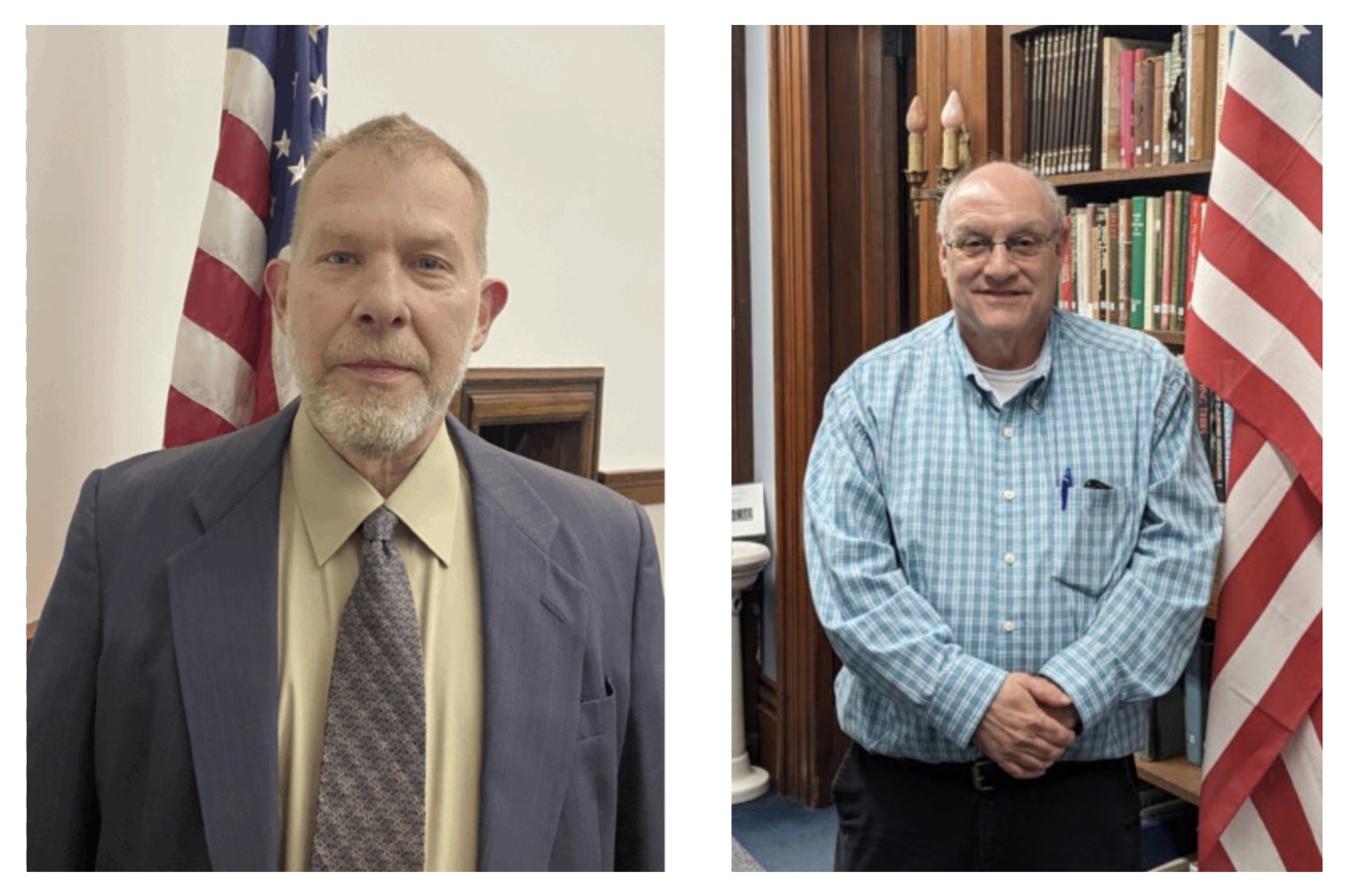
Students can vote as Bentley and Sessions compete for one-year term.
Voters will head to the polls to choose the next mayor of Hillsdale on Tuesday, Nov. 4, as criticism of city staff and road repair funding divide the two candidates seeking a one-year term.
Ward 2 Councilman Matthew Bentley and former mayor Scott Sessions will face off in the special election for mayor Tuesday. The winner will hold the office for one year and then decide whether to run again in 2026 for a full, four-year term. Key issues on the line next week include accountability for city staff, special assessment districts for road repairs, and an ongoing homelessness problem.
Hillsdale residents can vote from 7 a.m. to 8 p.m. Nov. 4 at the Hillsdale Community Library at 11 E. Bacon St. College students can also register to vote in local elections if they are a U.S. citizen, at least 18 years old, not a felon, and have been a resident of Michigan for the last 30 days, according to state law. Students not yet registered to vote in the state can register in person at the county clerk’s office up until or on Election Day using their campus address.
Bentley and Sessions, who both had children graduate from Hillsdale College, have openly encouraged students to vote in the election.
Culture of City Politics
The two candidates differ on how they view city staff and criticism within city government. Five city officials have resigned since March: the city’s engineer, zoning administrator, airport manager, and two public utilities supervisors. Sessions blames Bentley and Mayor Pro Tem Joshua Paladino for creating a “negative culture” in city politics.
“A negative atmosphere on council has hurt staff morale and driven away good employees,” Sessions said. “Restoring respect and teamwork is essential to effective governance.”
This narrative of negativity is unfounded, according to Bentley. He said he has a decent working relationship with the council and city staff and will continue to cultivate those relationships should he become mayor. Any criticism of city staff aims at accountability, he said.
“Before accountability comes clarity,” Bentley said. “We need clearer lines between council and city staff and who is responsible for what. I am of the opinion that it’s the council’s job to, in some sense, drive the agenda as they hear from their constituents. This is called representative government.”
Sessions, who held the mayor’s gavel 2013-2017, said he wants to rebuild trust and culture within the city government.
“Hillsdale is such a great community to live in, and I am truly honored to call it my home. What makes Hillsdale special isn’t just beautiful surroundings — it’s the people,” Sessions said. “From our residents and local businesses to Hillsdale College and everyone who works hard to make this city thrive, each of you is part of what makes our community strong. I want to be a voice for all of Hillsdale, for everyone who lives here, works here, studies here, and calls this city home. Because together we make Hillsdale the community we’re all proud to be a part of.”
If elected, Sessions said he would institute a chain of command within city government.
“The city council goes to the mayor, and the mayor goes to the city manager, and the city manager goes to the staff,” Sessions said.
Bentley said he would like city residents to participate more in city politics by joining committees and speaking up at city council meetings. The people should hold the council accountable, and the council should hold the city staff accountable, Bentley said.
“There is no threshold for knowledge, as my case proves,” Bentley said. “I got on city council [last] November, knowing none of the issues and none of the players, and you learn as you go. And it can and should be fun.”
Road Repairs
A councilman since 2024, Bentley said he decided to run for mayor to oppose the M-99 Traffic Calming Plan, or “road diet,” which would narrow Broad Street from four lanes to three through downtown, reconfigure the middle lane as a turn lane, and add bike lanes.
The issue of the road diet is now mostly dormant after the city council approved the plan over the summer and allocated $135,000 toward the project in August, Bentley said. The elected mayor will have little leeway to stop the road diet now that it has been approved, but Bentley said he would be open to revisiting the decision in the future.
As Election Day nears, Bentley said his campaign comes down to special assessment districts, which require individual property owners in a designated district to pay up to $5,000 for repairs on their street. Bentley said he wants to reform the system and lower the residential caps because residents will not tolerate the current price tag of special assessments.
Residents in a district can override the council’s approval by collecting letters from a majority of property owners opposed to the special assessment. A group of citizens on Barry Street rejected the city’s special assessment in April 2025, The Collegian previously reported. The council would need to vote 7-1 to override these objections.
“If the council doesn’t take responsibility and reform the special assessment program, it will become all but obsolete,” he said.
Sessions said he supports the responsible and equitable use of special assessment districts but wants to bring back the Funding Alternative Identification Recommendation committee to explore sustainable ways to fund infrastructure improvements.
“We need a long-term funding strategy that keeps our roads and utilities maintained without relying solely on increased taxes or assessments,” Sessions said.
Homelessness
Concerns about homelessness have reached a new height in recent weeks after the city removed the Camp Hope structure Oct. 16. The charity housed 16 homeless residents but was voted unsafe for occupancy by the city council.
Sessions said he wants to partner with local organizations and community leaders to address homelessness in a way that treats homeless people with dignity while also maintaining public safety. To achieve this, he said he would reconvene the homelessness task force. The task force last convened in 2022 and recommended more rigorous law enforcement and a permanent homeless shelter.
Bentley said he does not see a reason to reconvene the task force but would support putting its previous findings into action. He said the next steps are to support HOPE Harbor and Share the Warmth, both of which are seeking to establish permanent shelters in the community.
