
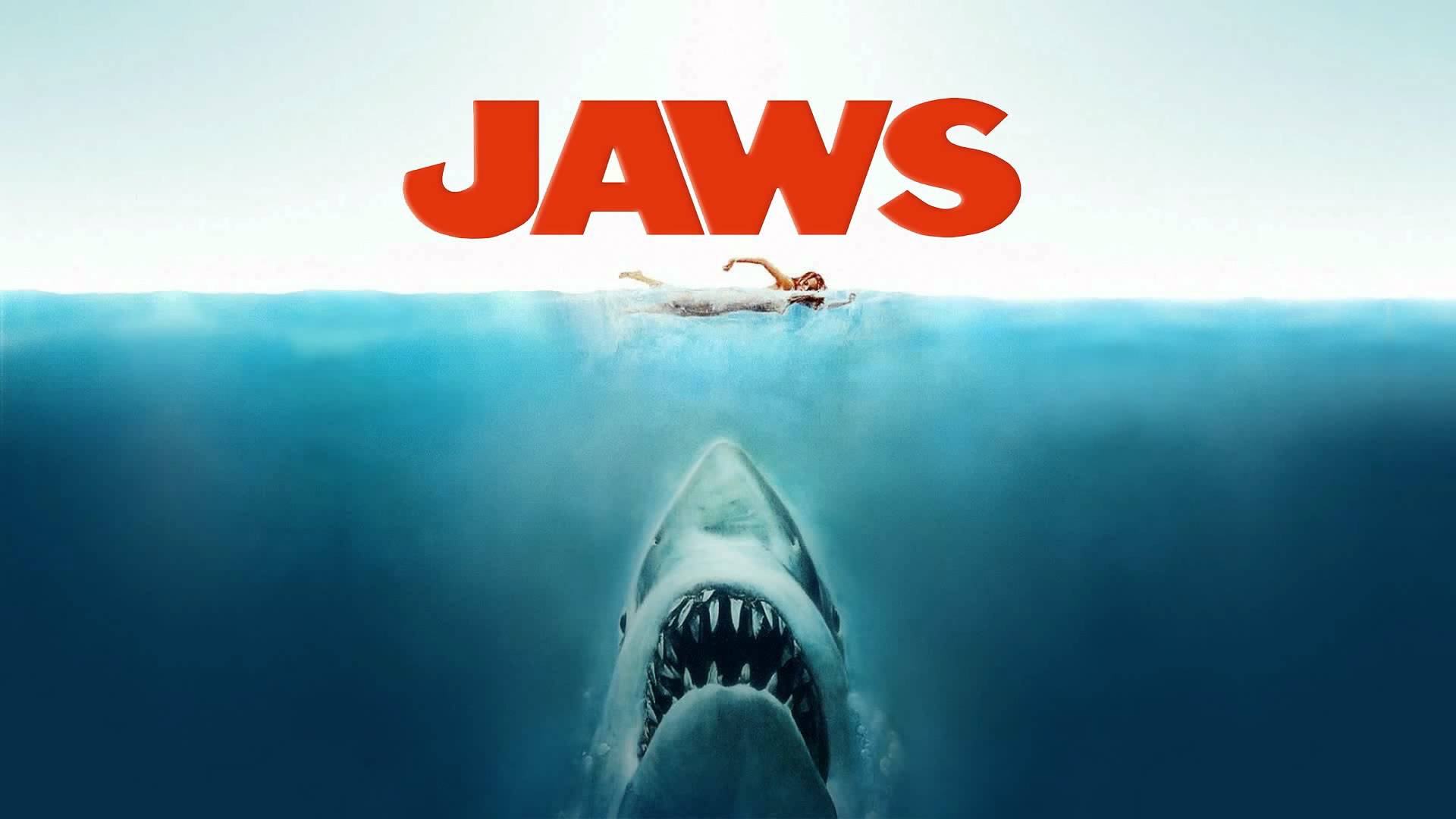
“Jaws” made waves in Hollywood when it premiered in June 1975. Director Steven Spielberg’s masterpiece continues to strike fear into the soul of anyone who even thinks about setting foot in the ocean.
Re-released in theaters over Labor Day weekend this year for its golden anniversary, the movie opened in second place at the box office with $9.9 million behind Zach Cregger’s new horror flick “Weapons.” Any film that outranks dozens of new releases after 50 years deserves a second look.
Based on the 1974 novel by Peter Benchley, the film takes place off the coast of fictional Amity Island in New England and follows police chief Martin Brody (Roy Scheider) as he hunts down a man-eating great white shark with the help of marine biologist Matt Hooper (Richard Dreyfuss) and sea-worn shark hunter Quint (Robert Shaw).
The thriller gave us an iconic movie poster, an ominous staccato score by pre-“Star Wars” John Williams, and three too many sequels. Among the most referenced and imitated movies of all time, it launched Spielberg’s career and became the first movie to break $100 million at the box office, initiating the genre of the summer blockbuster.
For many, the film is nostalgic, a callback to a different age of entertainment when movie-goers would stand in actual lines at the box office to purchase physical tickets from real people. But its popularity has endured with younger generations. A May 2025 Gallup poll found 53% of Americans ages 18 to 29 have seen the movie. The figure is lower than the 91% of my parents’ generation (ages 50 to 64) who have seen it, but not bad for a 50-year-old film about a shark.
The last time I watched “Jaws” was through my fingers when I was about 10 years old. This weekend, I rewatched the original film to figure out why it became such a cultural phenomenon in the ’70s and why it has stood the test of time.
Practical effects, score, and casting play a role. But the movie endures because it feels real.
The audience never sees the shark head-on until the last 15 minutes of the film. Part of this choice was due to the limited technology of the time. The crew filmed in the ocean with a set of robot sharks named Bruce, operated by means of pneumatics and hydraulics. The cameras couldn’t show the whole shark because half of him was carved out, with dozens of tubes spilling out of his side.
But rather than diminishing the terror effect, Spielberg’s cinematography, combined with Williams’ ominous score, monopolizes on the common human fear of the unknown and unseen. Suspense builds as the film moves from showing just the victims struggling in bloody water to giving a glimpse of a fin, head, tail, and finally the whole damn thing when it launches itself onto the deck of the Orca to devour Quint.
As computer-generated imagery improves, it’s easier now for movie-makers to artificially generate monsters than to use practical effects like Bruce to elicit fear. But compare Godzilla and Kong from the 2024 film “Godzilla x Kong: The New Empire” to the shark. The 400-foot CGI monsters are so unrealistic they’re laughable instead of terrifying.
Spielberg was doing something new for the time, but his plot doesn’t hide behind the novelty of the shark. He also created a pretty good story.
The movie’s premise feels familiar. Not only does it tap into a very natural fear, it draws upon classic literature for characters and action. Quint clearly takes inspiration from Captain Ahab of “Moby-Dick” in his monomaniacal pursuit of the shark, and the man v.s. nature trope nods to Ernest Hemingway’s “Old Man and the Sea.”
No big-name actors appear on screen, which allows the audience to more easily relate to the three men aboard the Orca, despite their fantastic circumstances. Anyone can picture Brody as a neighbor or family friend trying to do his job and protect his family, and it’s easier to buy into that identity when you don’t know the actor’s name.
Most importantly, the film offers a reflection on unlikely friendship that transcends its cultural moment. Three men from very different backgrounds join to conquer a common threat. Personalities clash, crew members fling insults, but eventually they try to save each other’s lives. In an extreme way, it’s the kind of friendship in the face of crisis many of us will experience at difficult moments in life. But in the case of the Orca and its crew, the crisis just happens to be a 45-foot long man-eating shark.
Even for those of us who weren’t alive at its release, “Jaws” is just as relevant as ever. Modern Hollywood should take notes.
