
Courtesy | Unsplash
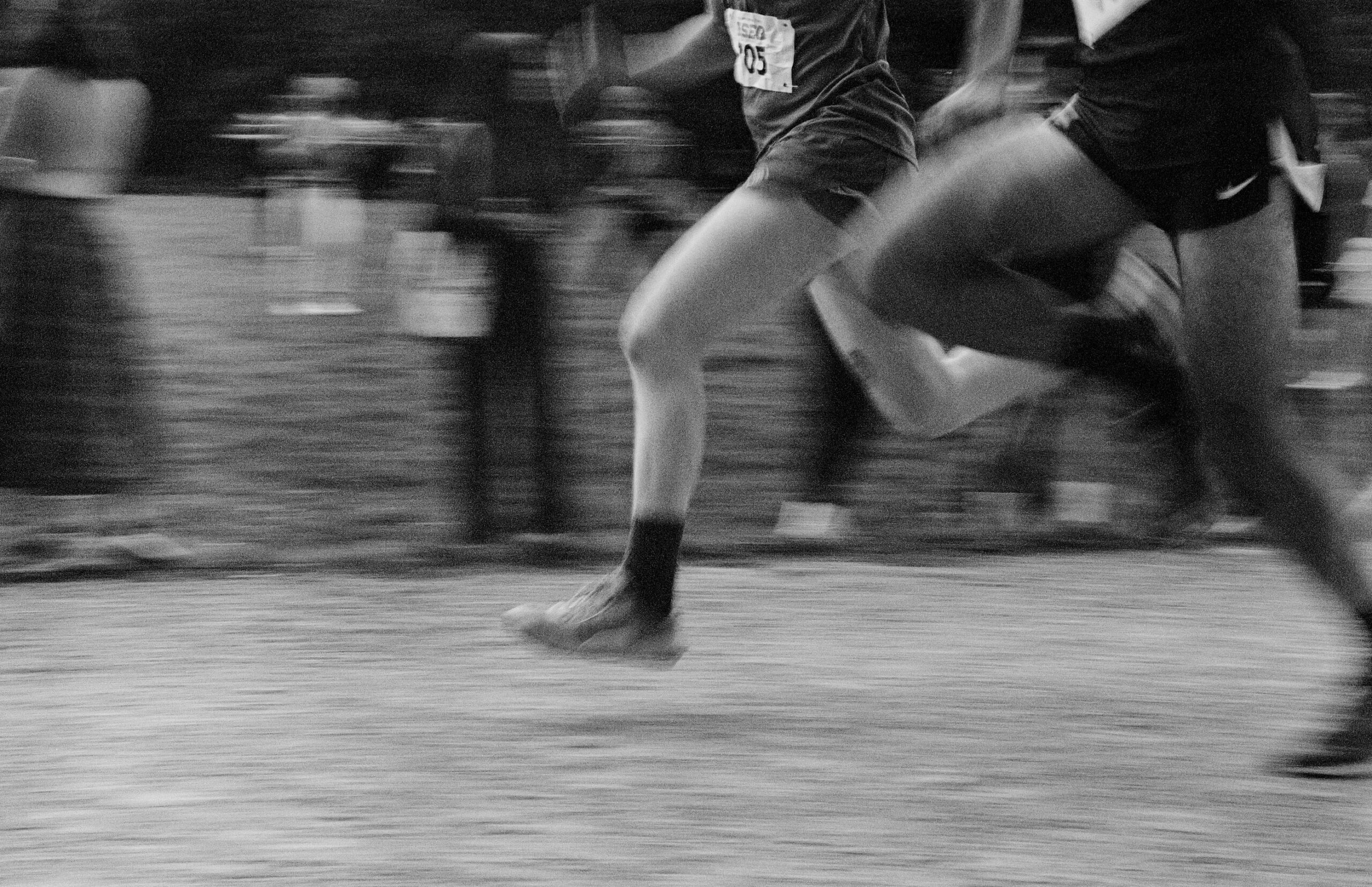
When I was 13, an incoming freshman in high school, I realized that joining a fall sport would be a great way to make friends in a school where I knew only one other student. So, despite never having run a mile in my life, I signed up for the cross country team. My first practice resulted in panic, regret, and an inability to breathe, but by the end of my freshman season, I had cut almost seven minutes off my first 5k race time and was recognized as “most improved” by my coaches.
While I was surprised by the improvement in my times, I was even more surprised to discover that the mental and physical challenges of cross country were conquerable. This newfound fortitude helped me persevere through rocky friendships, calculus homework, and the tricky balance of school and extracurriculars.
Running countless hill practices, competing in 100-degree heat at one meet and freezing sideways rain in another, and recovering from injuries taught me that hardships could be rewarding once I worked through the immediate pain of the situation. This is what President Donald Trump hopes the Presidential Fitness Test will teach young Americans.
Trump issued an executive order in July to create the “President’s Council on Sports, Fitness, and Nutrition, and the Reestablishment of the Presidential Fitness Test,” emphasizing his dedication to the “Make America Healthy Again” movement. Trump has said he wants to bring back the Presidential Fitness Test, a cardiovascular assessment of middle and high school students’ physical capabilities that was instituted during the Cold War in an effort to keep students strong amid America’s culture of leisure. Adults of our parents’ generation will remember running the dreaded timed mile, doing as many sit-ups and pull-ups as they could, battling dizziness during the shuttle run, and harnessing their inner gymnast with the famed sit and reach test.
In his 1960 essay, “The Soft American,” President-elect John F. Kennedy expressed concern about the nation’s physical deterioration. He saw the negative effects of a comfortable world on Americans’ mental and physical health in his time and hoped to prevent further decline in our society.
“Of course, physical tests are not infallible,” Kennedy wrote. “But the harsh fact of the matter is that there is also an increasingly large number of young Americans who are neglecting their bodies — whose physical fitness is not what it should be — who are getting soft. And such softness on the part of individual citizens can help to strip and destroy the vitality of a nation.”
President Barack Obama eliminated the mandatory test in 2013, but Trump wants it back. In his executive order, Trump reminds the country that obesity, chronic disease, inactivity, and poor nutrition are constantly on the rise, particularly for young Americans.
School-aged students used to walk to school, have a morning paper route or after-school job, or play baseball in the cul-de-sac or at the park. Most of today’s kids ride to school while tapping on their iPads, sit in a classroom all day, and play video games with their friends. The technology of today creates comfort in all aspects of life, as well as removes the challenges that face-to-face interactions bring. Although we still sit in class and participate in sports like the generations before us, we must go even further out of our way to get active and go outside our comfort zones.
Because of these modern-day privileges, Americans are becoming lazy, uninspired, and unhealthy. According to research by Columbia University and the National Institute of Health, today’s kids are more depressed and suicidal, and have shorter attention spans than when this test was considered necessary in the late 1950s. This only proves Trump’s wisdom in bringing it back.
If we want to be the strongest nation in the world, we need to create the strongest citizens in the world, which means challenging Americans to do what is difficult. Trump says his hope for bringing back this fitness test is to provide children with greater access and physical ability to participate in sports and play, to have stronger mental and physical health, and to excel in their daily lives.
In a time of luxury, perseverance and discipline are not given. Trump’s dedication to Americans’ health and fitness includes this test, which will push kids past their comfort zones and bring our nation to a new level of greatness. My time running four years of high school cross country and now jumping for the Hillsdale track and field team continually reminds me of the benefits physical activity provides to my mental health and work ethic.
Kids need to be challenged in every aspect of life: academics, relationships, and athletics. Learning to overcome adversity while young equips children with skills that will benefit them later on in their lives when big challenges present themselves. Participating in a fitness test may seem menial compared to what life really throws our way, but by developing the skills and confidence to endure trials, Trump knows our nation can be made of happy and successful American citizens.
Elaine Kutas is a junior studying English.
