
Courtesy | Unsplash
When we picture liberal arts, we usually envision discussions on the merits of Aristotelian philosophy, studying Homer’s epic poetry in its native language, or having that third debate on predestination versus free will.
College President Larry Arnn doesn’t.
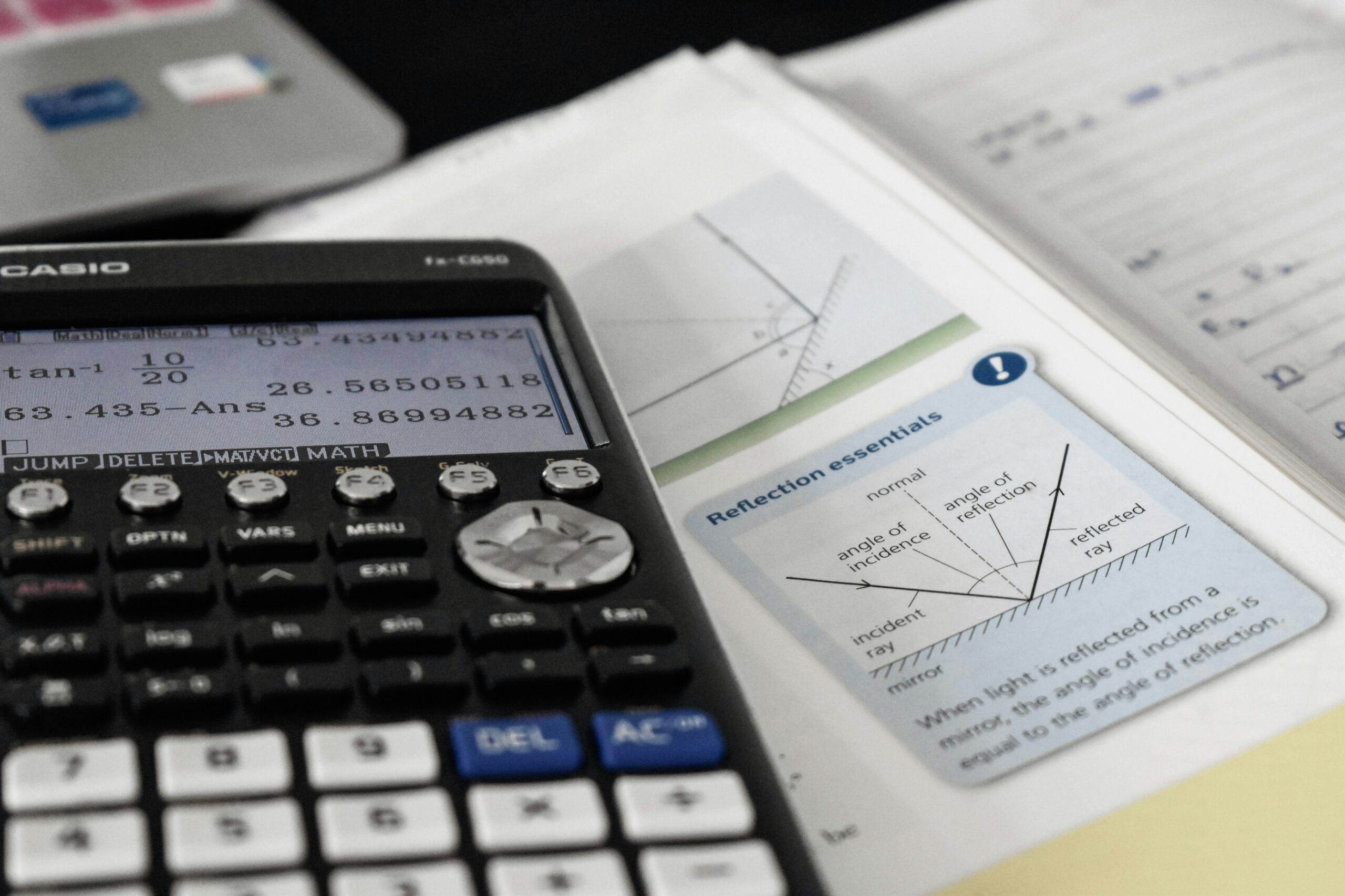
At this semester’s first senior capstone lecture, he said physics and mathematics are the “most liberal of the liberal arts.”
They epitomize what the liberal arts are about: the pursuit of universal truth through observation and logical thinking about natural phenomena.
Students who value the liberal arts tradition must first attempt to understand the logical basis of the physical world before they can hypothesize about the abstract one.
Even classicists and philosophers benefit from a fundamental understanding of physics. By studying the mathematical proofs that explain how the universe works, non-scientists can see empirical applications of the logic they use in metaphysics.
As Galileo Galilei wrote in a 1623 treatise on astronomy, “Philosophy is written in this grand book, the universe, which stands continually open to our gaze. But the book cannot be understood unless one first learns to comprehend the language and interpret the characters in which it is written. It is written in the language of mathematics, and its characters are triangles, circles, and other geometrical figures.”
Until the 19th century, scientists were called natural philosophers because they, like the thinkers who studied morality and theology, were attempting to extrapolate universal truths from nature.
Often, the natural and moral philosophers were the same people.
Tradition says that engraved on the doors of Plato’s Academy were the words “Let no one ignorant of geometry enter.”
While remembered more for their political philosophies, Plato and Aristotle were both prolific natural philosophers. Plato’s “Timaeus” proposed the theory of Platonic solids — geometric shapes that act as the basis of all matter — which can still be related to modern particle physics. Aristotle wrote a whole tome about his exploration of physics, biology, and chemistry. The details of their theories were wrong, but the fundamental rationale still holds.
The mathematical consistency isn’t only beautiful — it acts as a revelation of a higher order.
As French mathematician Henri Poincaré put it, “The scientist does not study nature because it is useful; he studies it because he delights in it, and he delights in it because it is beautiful … that deeper beauty coming from the harmonious order of the parts, and that a pure intelligence can grasp.”
The formulas can convey the hidden properties of the universe in just a few symbols, and every symbol has a purpose. Every procedure has an explanation.
Mathematics, like a profound work of art, intertwines the beauty of a well-made piece with an observable truth.
That truth can be a stepping stone to the higher one: if there are such logical rules governing the formation and perpetuation of the universe, then the rules must be made by some sentient being capable of a logic that humanity is still piecing together.
Saint Paul says, “For since the creation of the world, his invisible attributes are clearly seen, being understood by the things that are made.”
If a modern objective of liberal arts is to seek the ultimate truth, God, through human rationality, then physics is a necessary component and embodiment of what we study for.
Malia Thibado is a senior studying international studies in business and foreign language.
