
Americans love their plastic. From bottles and take-out to food storage and construction, plastic is ubiquitous. It is a material we hold in our hearts — literally.
In 2023, a pilot study by the American Chemical Society found tens to thousands of individual microplastic pieces — particles ranging in size from a grain of sand to microscopic shards — embedded in the hearts of patients undergoing cardiac surgery.
Chemicals such as polyethylene terephthalate, commonly found in clothing and packaging, and polyvinyl chloride, found in PVC pipes, were among the eight types of plastic identified.
The heart isn’t the only place microplastics have been discovered either. They have appeared in human blood, kidneys, reproductive organs, and breast milk. The smallest particles, those known as nanoplastics, with a length less than one-thousandth of a millimeter, have even infiltrated the cell nucleus, the home of our biological blueprint DNA.
The health consequences of this are still under investigation, but they don’t look good.
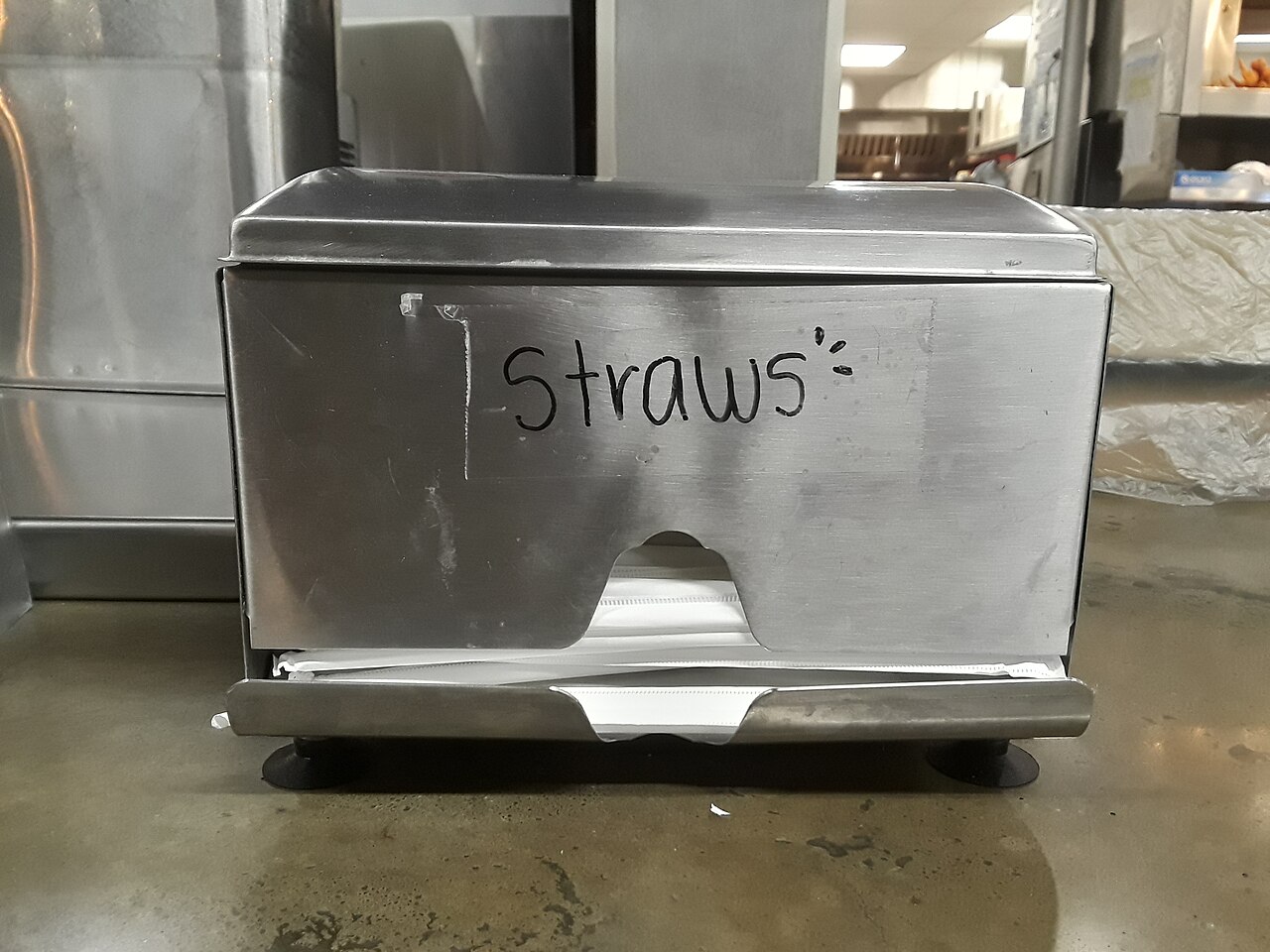
Unfortunately, President Donald Trump’s Feb. 10 executive order “Ending Procurement and Forced Use of Paper Straws” pushes America in the wrong direction for tackling this critical issue.
“I will be signing an executive order next week ending the ridiculous Biden push for paper straws, which don’t work. BACK TO PLASTIC!” Trump posted to Truth Social Feb. 7.
“Back to Plastic” has become more than a statement — it has become a rallying cry for the plastic industry.
“Straws are just the beginning,” said President and CEO of the Plastics Industry Association Matt Seaholm in a press release. “‘Back to Plastic’ is a movement we should all get behind. We appreciate President Trump’s leadership in recognizing the value of plastics and look forward to working with his administration to advance our industry.”
Despite the plastic industry’s wishes, however, America cannot go back to plastic. Although current replacements for plastic may be lackluster, America cannot give up her efforts. This nation of innovators must continue in her search for safer alternatives. Our very health and fertility are at stake.
Recall how microplastics can enter the nucleus, the home of DNA. Studies have shown that, once there, these plastics cause DNA damage and altered gene activity, known risks for cancer development. Another study published in Nature Medicine has found a link between microplastic concentrations in brain tissue and dementia.
If cancer and dementia were not bad enough, microplastics have also been linked to decreased fertility, especially in men.
Between 1973 and 2018, male sperm counts have decreased from 104 million sperm per milliliter to 49 million/mL, an average decrease of 1.2% per year. Since the year 2000, the rate has accelerated to 2.6% per year. At that rate, it won’t be long until the average male sperm count drops below 40 million/mL, the threshold below which chances of natural conception plummet drastically.
Efforts to explain this phenomenon have proven difficult, but research by the National Institutes of Health has firmly indicated microplastics as a suspect.
Plastic cannot become a partisan issue in this country. It needs to go, period. America must continue to seek clean, healthy, biodegradable alternatives to petroleum-based plastics. The material doesn’t belong in our hearts — it belongs in the past. The transition may be inconvenient, at least for now. But which is ultimately more inconvenient: a mediocre substitute for plastic, or being robbed of health and parenthood?
James Joski is a freshman studying the liberal arts.
