

Chevrolet, which has a dealership in Hillsdale, is weighing how much to raise prices due to tariffs. Charles Hickey | Collegian
Hillsdale auto dealers said although President Donald Trump’s recent tariffs are causing uncertainty within the industry, they are necessary to ensure fairness in the global economy.
Trump implemented a 25% tariff on all imported cars and light trucks April 3. The same day, Stellantis — the multinational owner of American brands Jeep, Dodge, Chrysler, and Ram — announced it would temporarily close factories in Canada and Mexico and lay off 900 American employees, according to Scott McKinney, a sales consultant at Cronin Hillsdale JDCR.
McKinney said the layoffs are a “short-term solution” while the auto industry evaluates the tariffs’ impact, which is still “up in the air.”
Mike Braman, a sales consultant with the Frank Beck Chevrolet Company, said it is uncertain whether dealerships and customers will face the full 25% price increase, as major corporations like Ford and Chevrolet may choose to absorb some of the cost.
“We are waiting to see how the auto industry responds, whether they come out with incentives,” Braman said. “Anything that could bring the cost down.”
He said the duration of the tariffs is an important factor to consider.
“If Trump keeps the tariffs up for the rest of his presidency, as opposed to just a couple of months, that will definitely affect the business,” Braman said.
Eric Hoffman, president of Stillwell Ford, declined to comment.
Trump also announced plans to levy an additional 25% tariff on imported auto parts such as engines, transmissions, and electrical components no later than May 3.
McKinney said American-made vehicles often use large numbers of foreign components.
“Take a Grand Cherokee, for example, that’s assembled right here in the Detroit area,” he said. “The final assembly is on the Monroney label, which says parts, content, and information. Fifty-nine percent of the components of this car were built either in the U.S. or Canada, and 23% of the parts are from Mexico. The country of origin for the engine is Mexico, and the transmission is from Germany.”
McKinney said no car assembled in America will be completely unaffected by the tariff.
“All the manufacturers have parts from other countries,” McKinney said. “An American model like the Jeep Wrangler, which has always been assembled in Toledo, uses almost 20% Mexican auto parts.”
Don Hawkins, owner of Hawkins Motor Sales, said factories in the U.S. and Canada have grown accustomed to shipping auto parts back and forth across the international border multiple times during the manufacturing process, due to decades of free trade agreements like the North American free trade agreement.
“Parts of a Ford dashboard are made in Canada by a Canadian manufacturer, then brought across the bridge to Detroit, where it’ll have work done to it, electronics and chips. Then the dash goes back over to another Canadian manufacturer to finish it, and then back over here for more work,” Hawkins said. “Then finally, back to Canada. So if it goes across the bridge four times, and if it gets tariffed every time, it’s going to be much more than the old price.”
Hawkins said the price of used cars could also rise, and added that this would depend on the scarcity and price of newer options.
“The last time we were short of new cars, during COVID, the price of used cars got really high,” he said. “If these tariffs stay up for long, something similar will happen.”
McKinney also said there is a possibility of a surge in used car prices.
“One of the concerns is that used car prices will go up like during COVID,” McKinney said. “You’ve artificially taken new cars off the table for a lot of people because of the 25% markup in price. So that would obviously drive more people to buy used vehicles to try to save money, and if supply decreases, prices will go up. We’ll just have to wait and see what happens with that.”
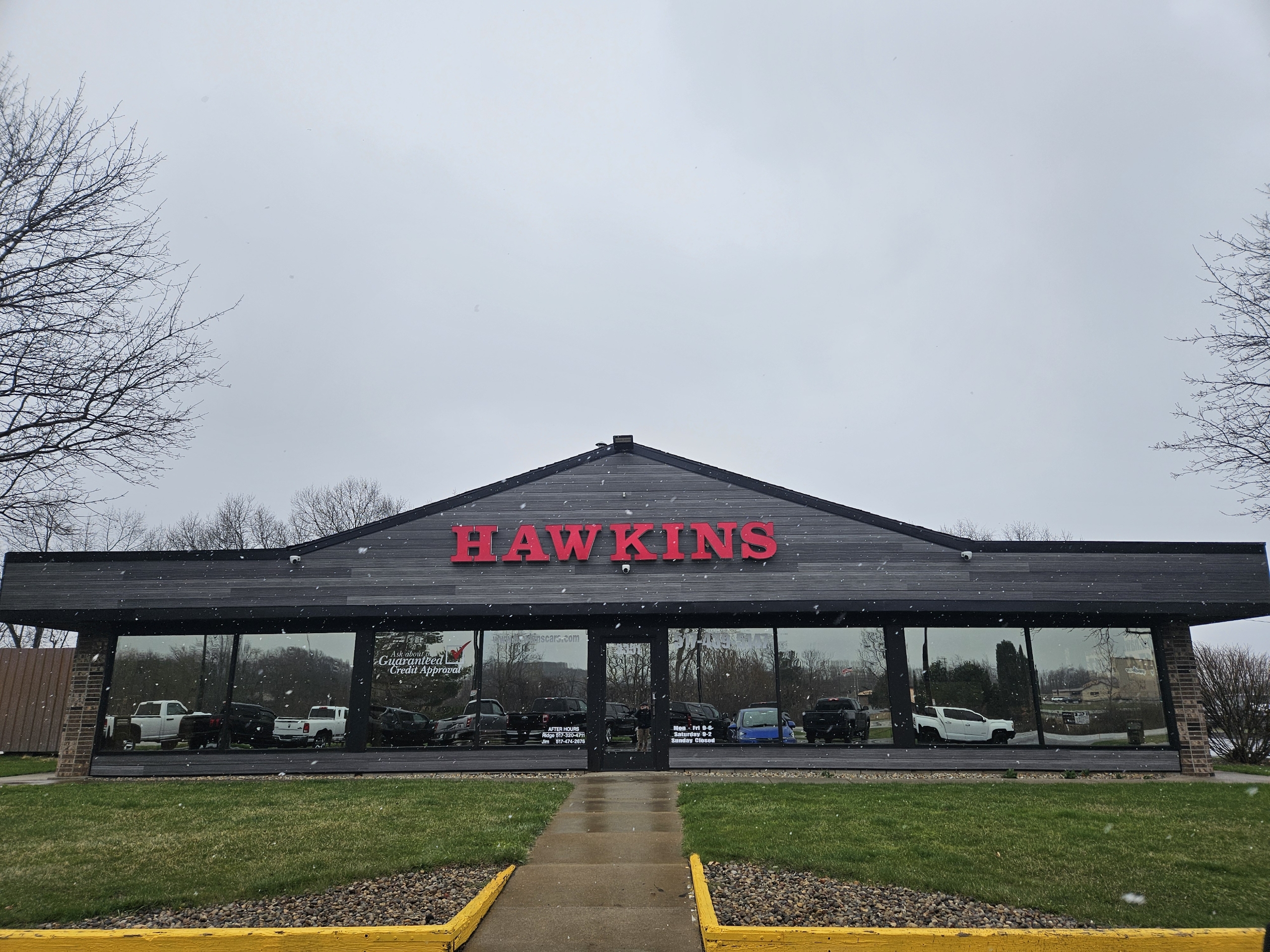
Hillsdale auto dealers emphasized their resilience, citing a long history of hardships overcome by the auto industry.
“People have been selling cars for 100 years. We’ve been through COVID-19,” McKinney said. “We went through the recession in 2008, when General Motors and Chrysler both filed bankruptcy and it was just crickets and tumbleweeds at that time. We survived the oil embargo in the 1970s.”
Braman said his experience in the auto industry gives him confidence.
“In my life, I’ve gone through the 50s, the 60s, the 70s, and all the things that went on then and affected the economy. But as I look outside, there’s still people driving cars. And they’re always going to be driving cars, no matter what. We’ve been through stuff like this before, we always come out OK,” he said. “As a dealership, it always initially impacts us, but we work a way through it. We’ll find a way.”
Despite the economic tumult brought by the tariffs, Hawkins said he believes in Trump’s ability to handle the burgeoning trade war.
“I trust Trump to pull this off and see us through safely,” Hawkins said. “He’s the right person for this job. The U.S. is definitely going to win big time on this.”
Trump’s handling of the economy in his first term is a reason to trust him now, according to McKinney.
“I am willing to give Trump the benefit of the doubt, personally,” McKinney said “What choice do we have as a business? Not much. But I definitely am, because I watched it play out positively eight years ago. A level playing field would be all anybody could ask for. And you can’t say that things have been a level playing field for a long time. There are changes that need to happen, and this is the most immediate, most direct way to make it happen.”
McKinney also said the tariff will encourage American companies to move industry back to the U.S.
“They made more money for their shareholders by shipping jobs overseas than they would have trying to build their widget here,” he said. “But it’s not just about a company’s bottom line. When the bottom line becomes the only line, we all lose.”
Send tips to the City News team: collegiancitynews@gmail.com
