
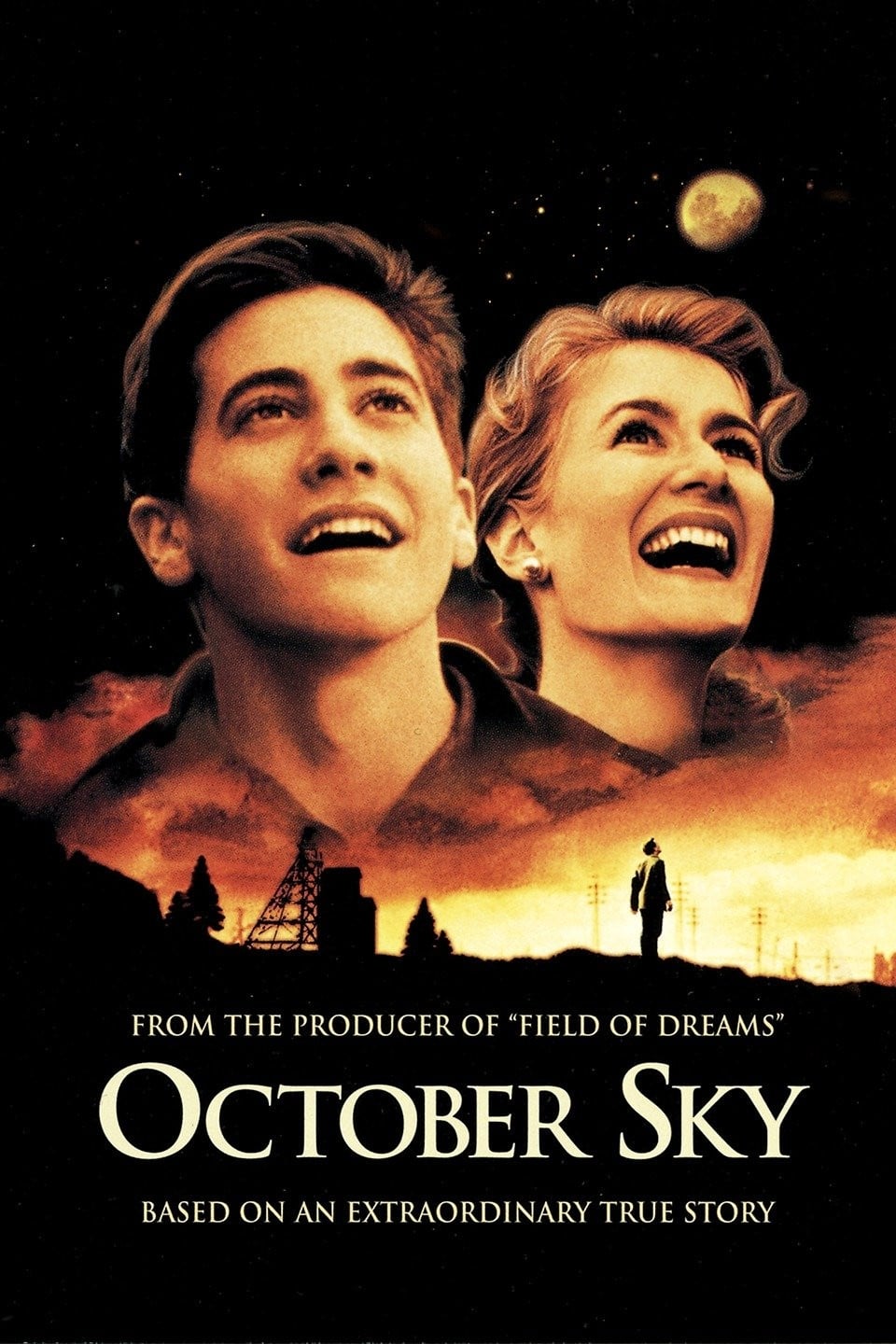
The CCA showed “October Sky” on Monday. Courtesy | Film Hafizasi
Historical dramas both demonstrate and provoke society’s reaction to the actual events, speakers said in Hillsdale College’s fourth Center for Constructive Alternatives, “History on Film” March 2-5.
This final CCA of the academic year featured four films that covered major historical events, each followed by lectures on those topics.
The 2024 motion picture “Reagan” was shown on Sunday. After the movie, Kenneth Khachigian, a speechwriter for the Reagan administration, spoke on his personal experiences with the president in his speech titled “The Reagan I Knew.”
“Reagan was uncomfortable with strangers in his life,” Khachigian said. “Telling jokes and his genial personality was how he dealt with uncomfortable situations.”
Khachigian characterized Ronald Reagan as a crusader, communicator, competitor, and friend. He also shared treasured moments with the president that depicted Reagan outside his political demeanor.
“One day, we were meeting Nancy Reagan for lunch at the Century Plaza Hotel and he brought me up to the roof where he was flying paper airplanes made of presidential stationery and watching them fall to the ground in the Century studio,” Khachigan said. “I’m sure there was a janitor down there sweeping up like eight airplanes.”
Monday featured a showing of “October Sky,” a 1999 film about Homer “Sonny” Hickam and his friends’ adventures building rockets in Coalwood, West Virginia. The film was based on Hickam’s memoir about his childhood, “Rocket Boys.” Hickam gave the evening lecture entitled “NASA and the Movies” and reflected on the adaptation of his book into the film.
“I always wanted to be a writer, and though I loved working for NASA, I wanted to write,” Hickam said. “One day in 1995, I got a call from the editor of Smithsonian Air and Space Magazine and she asked for 2,000 words due in two days. I told her, ‘I could write you 2,000 words about when I was a boy building rockets in West Virginia.’”
His publication in the Smithsonian magazine prompted calls from publishers who knew him from his first book, “Torpedo Junction,” and according to Hickam, he had auctioned the book to movie producers before the book was even written. He wanted to write a story about his NASA career and include references to his childhood, but the story wasn’t working as planned.
“I was going to have to let that 14- to 17-year-old boy tell the story,” Hickam said. “I had to find Sonny Hickam and let him tell the story.”
After the showing of “A Bridge Too Far” on Tuesday, Wayne and Marcia Buske Distinguished Fellow in History at Hillsdale College Victor Davis Hanson spoke about World War II on film. Hanson spent the beginning of his talk pointing out how the war was portrayed in film in the different decades after the war.
“During the 1940s and ’50s, people began to critique the common ideal about the war,” Hanson said.
According to Hanson, this social critique launched an abundance of good-guy, bad-guy movies understating the grittiness of the war. Hanson said the 1960s saw the anti-war agenda during Vietnam, but soon, a counter-reaction arose.
“We finally got a reaction of gritty and great movies that were not ambiguous about the Allies’ role in the war,” Hanson said. “These movies have to have an element of tragedy and a realistic depiction of history.”
According to Hanson, “A Bridge Too Far” is a great World War II movie because it showed the reality of the war — the death, the risks, and most importantly, the lost battles. The film depicts the Market Garden plan by the British and English to capture and hold bridges in Holland closest to the German border to infiltrate Germany and bring about the end of the war.
“The Market Garden mission was a bad idea from the start,” Hanson said. “It was a crazy idea and General Montgomery later said the allies never lost the territory they gained, but at what cost. It was an ungodly disaster.”
The showing of “Chariots of Fire” on Wednesday was followed by a talk from Titus Techera, executive director of the American Cinema Foundation, titled “Character in the Olympics Then and Now.”
The CCA will conclude with a faculty roundtable March 6.
