
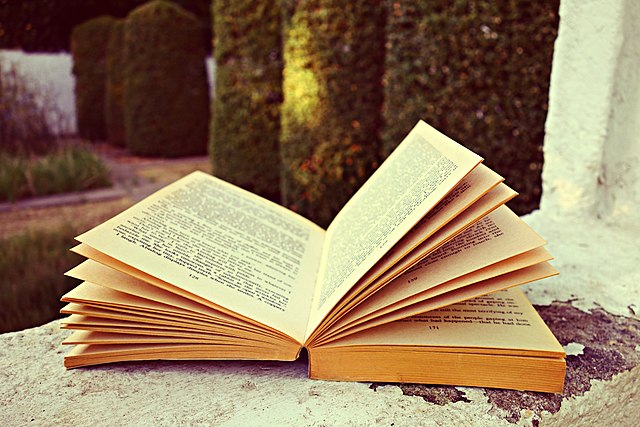
Rather than helping people through increased media exposure, digitized media robs us of deep experiences. Yet omnipresent as digital media is, it will never usurp physical, tangible media.
Surprising though it may seem at first, generations with no memory of a pre-digital world value owning physical media as much as older generations. This signals that physical media’s presence is still valuable in and of itself.
Annotating in a novel’s margins is meaningful. Leaving fingerprints on a record sleeve is beautiful. Putting a piece of yourself and your art into the same space creates a deep connection.
Ethan Stoneman, chairman and associate professor of rhetoric and media, affirmed physical media’s importance in the 21st century. Rather than being outdated, he said physical media is irreplaceable.
“Material engagement anchors memory and knowledge and does so in a way that digital formats simply cannot match,” Stoneman said.
Stoneman explained that engaging with a personal copy of a physical medium allows greater privacy and autonomy free from an algorithm’s manipulation. What we view online is carefully curated to display the content the server wants us to see. The Top 10 featured Netflix films are there to keep you binge-watching. Using physical media gives you control and focus.
“One of the most relevant forms of physical media today is the book,” Stoneman said. “A printed book carries marks of use — creases, annotations, a distinct history, et cetera, that an e-book can’t replicate. The tactility of books is no small thing. It allows us to foster deeper engagements with the text, from the act of turning pages and marking passages to physically handling the book. That all works to create a unique, embodied experience.”
Physical media also gives you a level of sensory engagement unavailable with digital versions. Humans spend hours organizing DVD cabinets and CD collections. They drive to stores to peruse books on sale. The visual memory of starting a DVD or holding a book aids memory.
Ownership of physical media is growing, possibly because younger generations view the act of collecting as a hobby. Because physical media isn’t the only option, many people have taken up using it as a hobby. Vinyl record fanatics search through bins of 25 cent vinyl. Cassette fans start collecting, even before they have a tape recorder. And some people still hold onto their sleeves of early 2000s CDs. Collecting media connects us to the art more completely than digital media.
Freshman Ross Phelps makes the conscious decision to use tangible media, despite the higher utility of digital alternatives. He’s often clacking on an old typewriter, pushing through the inefficiency to retain the physical experience.
“I believe digital media is an addition, not a replacement,” Phelps said. “I am a fan of physical media, whether that be a hardcover book over a Kindle read, vinyl or cassettes over Spotify, or in my unusual case, using typewriters over computers.”
Ross said physical media offers something entirely different from anything digitized. Physical media can be impractical. It is often fragile, untidy, and difficult to use.
“But that’s what I believe people underestimate,” Ross said. “There is a connection that you have now between these activities that you would miss entirely had you not gone for the physical alternative. This, in my opinion, is the reason why I am very careful about choosing utility over everything else. Because that ‘everything else’ is often what makes that activity human.”
Physical media keeps us connected to our history. While digital alternatives are helpful, innovation has its limits. When given the opportunity to buy the hard copy, use the disc, or take notes on paper, do it. Scrapbook rather than using digital photo albums. Send physical love letters instead of lengthy texts. It makes you more human.
Charlotte Knobloch is a freshman studying the liberal arts.
