
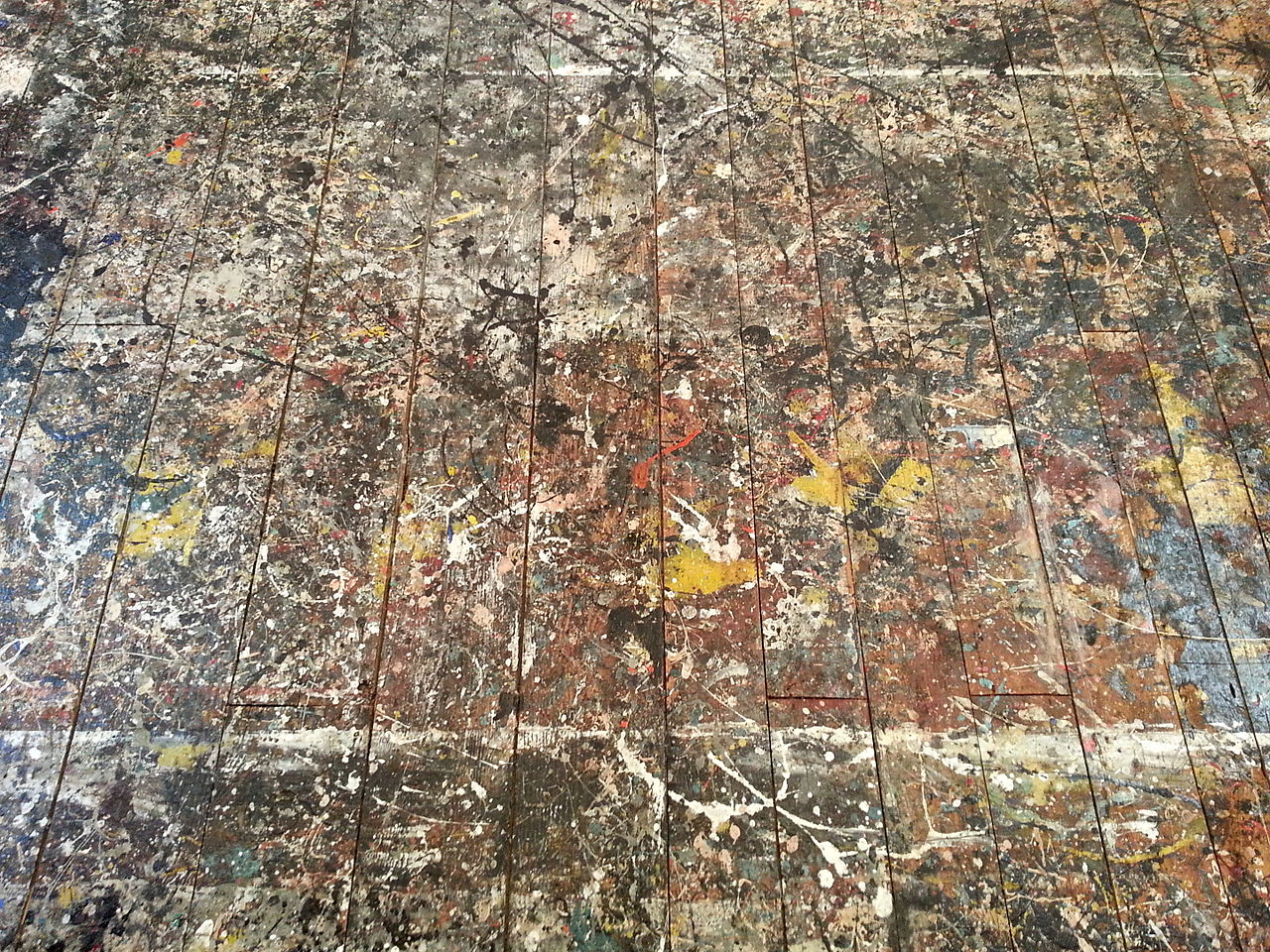
The inability to separate artistic style from a work’s quality creates unfair criticism of contemporary art.
Conservative critics often belittle abstract art and deplore its increasing popularity in the contemporary world. Abstract art may be a difficult style to understand, but that does not necessarily mean the quality of the art is bad.
Those who claim all abstract art is bad make a hasty generalization which is often based on preference. Think about it: the claim is as lazy as stating all coffee is bad simply because you don’t appreciate coffee.
Each artist has his or her own stylistic preference, and each style requires mastery. Just as it is possible for an impressionist artist to make excellent artwork through a deep understanding of the impressionist style, so an abstract artist can create beautiful abstract artwork.
Associate Professor of Art Anthony Frudakis explained how the abstract movement builds on the classical realist movement — a revelation which might be surprising to those who love to hate on contemporary art.
“Ever since prehistoric times, there’s evidence in the cave paint, not only of the bison and the deer and the horse, but also abstract characterizations of human figures,” Frudakis said.
Abstract art, which rose to popularity in the 20th and 21st centuries, is also present in other forms of art as well, such as cinema, literature, music, or theater.
“Written language itself is an abstraction,” Frudakis said. “Ever since our origins, as we move towards civilization, there’s been these two great streams of the abstract and the more realistic.”
Frudakis said even his own art, which is more traditionally classical, contains abstract elements.
“As a young sculptor growing up in the midst of the popularity of abstract sculpture at the time, I never felt threatened by it,” Frudakis said. “I actually felt a certain kinship because I was not trying to create exact copies of specific models, but I was trying to create a visualizing concept that I had, which was born of imagination.”
Frudakis said famous artists, such as Leonardo da Vinci, Raphael, and Francesco Laurana, employed abstract elements. Even during the Renaissance, abstract art played a pivotal role, Frudakis said.
“Francesco Laurana, an Italian Renaissance sculptor, did some beautiful female portraits carved out of Italian stone,” Frudakis said. “You can see those simple geometric shapes and yet you would recognize the person at the same time. That balancing act between nature and the abstract is what classical art sculpture is about.”
People often criticize abstract pieces because interpreting abstract art is harder than analyzing realistic art. Just because it is difficult to understand something, however, does not mean it is bad.
Chairman and Associate Professor of Art Julio Suarez presents a vision of how an artist can achieve this balance. An artist must first master realism, and by recreating the scenes of nature, the artist learns to create good art, according to Suarez.
Suarez said many modern artists skip this essential formation. As a result, many abstract artists do not create good quality art.
Suarez said if modern artists master the art of the past, contemporary and abstract art will benefit.
Don’t dismiss abstract art — or contemporary art more broadly — without first understanding that it can be done well: Look for excellence in modern art before writing it off.
Hannah Foster is a freshman studying the liberal arts.
