
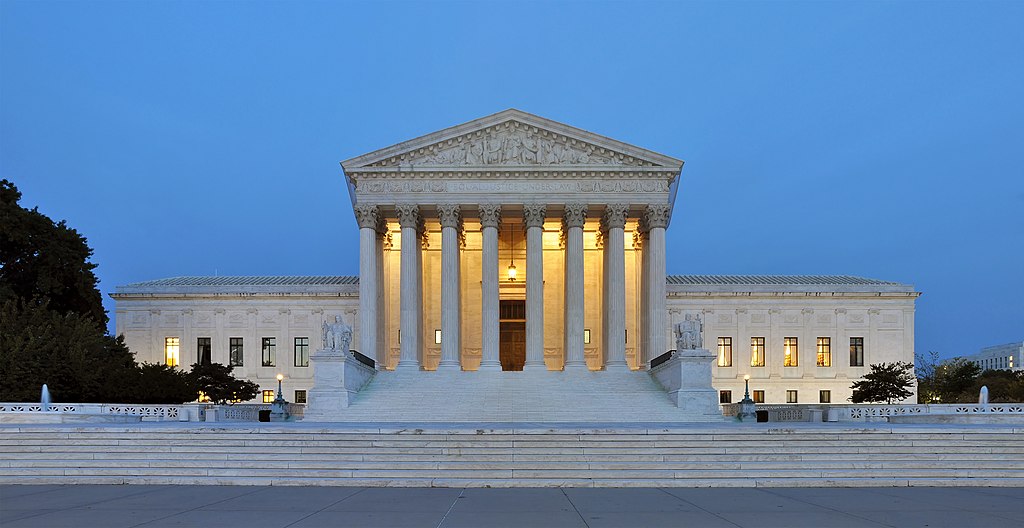
The Supreme Court will decide by the end of June whether age restrictions on pornography websites violate free speech rights after a Jan. 15 hearing over Texas’s age verification law.
The decision shouldn’t be difficult — in fact, it ought to be one of those no-brainer, unanimous outcomes. Of course, pornography sites should have age restrictions, and they in no way silence free speech. Yet the case has incited more debate than such a clear-cut moral and safety issue should.
Pornography is sexually explicit content — images, videos, or writing — intended to arouse viewers, according to the Institute for Family Studies. Pornography is, by definition, addictive because of its clear purpose to hook viewers and entrap them in the thirst for dopamine hits.
Adolescent exposure to pornography can damage child development, including the acceptance of sexual harassment or activity as a minor, body dissatisfaction, sexual aggression, anxiety, and depression, according to the IFS.
Despite these damaging effects, the IFS reports that 93 percent of boys and 63 percent of girls are exposed to internet pornography as young as age 12.
Protecting children from this obscene online content is the responsibility of parents but requires legal reinforcement. Parents face an impossible task if laws do not enforce age restrictions to access such material. Even the fiercest helicopter mom can’t filter every minute of her child’s screen content. As soon as the child has a phone, parents have surrendered some control. They are trusting other established precautions, on apps and the internet, to keep their children from vile content.
Despite this logical, seemingly universal, hope to protect children, many in America believe such efforts either hinder adult rights or are undependable. In a recent Free Press article, River Page argued that porn is inevitable, that restricting access is equivalent to book bans, and that laws attempting such restrictions are pointless.
“The day an American teenager with a normal IQ can’t access porn on an unfiltered internet connection is the day freedom no longer exists in the United States,” Page said.
Page’s argument presents an oversimplified dichotomy: either citizens have access to everything, or they aren’t free.
But with that reasoning, American citizens face oppression daily because of simple traffic and moral laws. Porn is “inevitable,” just as murder, car accidents, and sickness are inevitable. This doesn’t mean, however, that nothing should be done. Murder is illegal. Laws set standardized speed limits. Doctors encourage healthy lifestyles. These are all precautions in place to decrease potential harm to Americans. Similar precautions should regulate porn sites.
Companies providing such obscene content should require presentation of federal ID. Requiring proof of age identification for access to explicit material is a reasonable and necessary policy. Young adults have to provide identification to purchase alcohol, tobacco, and even certain medications. If alcoholic consumption is age-restricted to protect kids, porn access should also be age-restricted.
Page overreacts in his comparison of age restriction to book bans and the “Great Firewall of China” censorship. Enforcing age requirements is not censorship — no adult suffers oppression or limitation. The inconvenience of an extra five minutes to provide legal ID ensures safety, not censorship.
The claim that government limitation of porn is pointless stems from laziness and passivity. Yes, people will break the law. But those laws remain laws. Just because some will violate the laws doesn’t mean the laws are pointless.
Page’s best point in his entire article was his emphasis on familial responsibility.
“The institution most capable of stopping children from viewing pornography is the family: If you don’t want your kid watching porn, don’t give them unlimited access to the internet,” Page said.
The government does have a duty to protect its citizens, which includes sheltering children from damaging and disgusting content, but parents must also be alert and proactive in shielding their children from outright evil.
Phones and internet access are dangerous tools that can quickly turn corrupt. Allowing use of these tools under parental supervision is a natural and logical step in training children how to use tools well and how to avoid the pitfalls along the path.
But the responsibility and enforcement doesn’t end with the parents. The people have given the government authority and power. The government is responsible to use that power to protect children from corruption.
Michaela Estruth is a senior studying history.
